Theopolis Logo

Writing

Explore our collection of theological essays, biblical studies, and reflections on faith and culture.

See all
kelly-sikkema-gpoh17dxqdm-unsplash
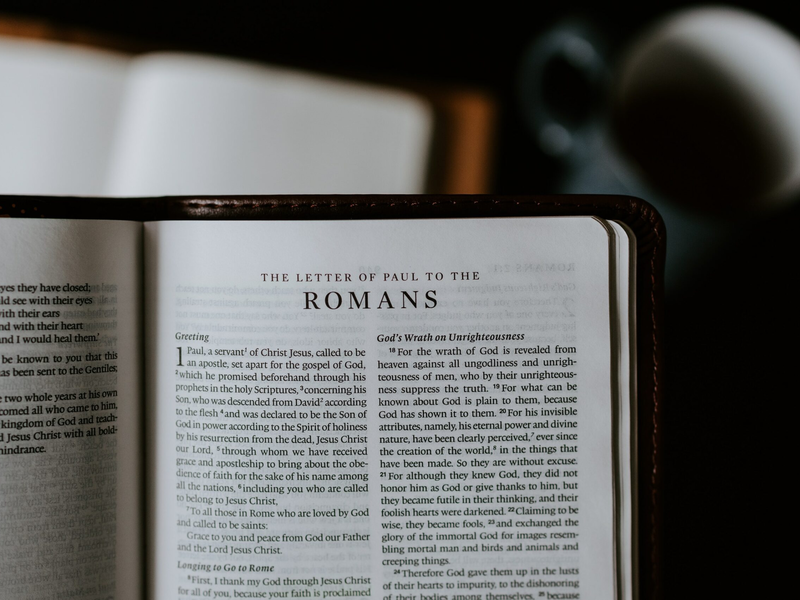
Romans

Paul’s Gospel & the Theme of Romans

Paul, a bond-servant of Christ Jesus, called as an apostle, set apart for the gospel of God, which He promised beforehand through His prophets in the holy Scriptures, concerning His Son, who was born of a descendant of David according to the flesh, who was declared the Son of God…

by Mark HorneJune 6, 2003

screenshot-2023-07-27-at-10-25-35-am
History

The Nelda Boswell Scroll: The Apostle Paul’s Town Hall Meeting in Iconium

With the surprising discovery of the Nelda Boswell scroll historians have deciphered its contents and concluded that the apostle Paul returned to the region of Galatia shortly after he wrote the letter that we call Galatians. The evidence suggests that a number of local pastors, elders, and deacons, along with…

by Jeff MeyersJune 6, 2003
aaron-burden-qjdzyt_k8xg-unsplash
Jonah

Jonah, the Judaizers, and the Gospel

Second Temple Judaism was a form of covenantal nomism, according to E. P. Sanders’ terminology. This means that Torah-observance was a way of expressing loyalty to the Lord of the covenant who had graciously elected Israel. I think Sanders’ view (taken up in bits and pieces and with some modifications…

by Rich LuskJune 6, 2003
Theologia

Gratitude or Faith?

We often hear that the key to Christian obedience is thankfulness for what God has done. But the Bible stresses faith and hope much more than gratitude. The Baptist pastor and author John Piper has written, “Nowhere in the Bible is gratitude connected explicitly with obedience as a motivation. We…

by Mark HorneJune 6, 2003
aaron-burden-qjdzyt_k8xg-unsplash
Federal Vision

God’s Righteousness & Our Justification

One of the questions that is commonly asked about Tom Wright regards his teaching about how Paul uses the term “the righteousness of God.” Since Wright’s interpretation of the term in Paul’s epistles is commonly mentioned in passing but rarely analyzed, it seems like a good idea to explicitly spell…

by Mark HorneJune 6, 2003
jordan-wozniak-xp_agmeea6s-unsplash
Genesis

Forever Means Forever: God’s Promises to the Jews

If God promised a certain land to the seed of Abraham, saying that it would be theirs “forever” (Gen. 13:15), why do Reformed churches teach that the Jews permanently lost their right to the land? What about all these Old Testament “forever” promises and prophesies made to the Jews? How…

by Jeff MeyersJune 6, 2003

Showing page 230 of 309

See all

Showing page 5 of 43

See all

The Church and Civil Power

The church’s stance with regard to civil order is neatly articulated in Romans, provided we read chapters 12-13 together. Romans 13 makes it clear that God has given rulers the sword, and that they are to use it for just vengeance. They bear the sword to punish evildoers and to…

May 17, 2017
Liberalism

Limitless Liberalism

D espite its claims to the contrary, Patrick Deneen writes in a 2014 piece in The American Conservative , “liberalism was never about ‘limited' government” or curbing absolutism. Rather, liberalism is about “the pursuit and exercise of potentially limitless power toward seemingly ‘limited' ends of securing Rights.” The limitation on…

May 16, 2017

Greatening Greatness

I n David's final speech (1 Chronicles 29), he offers a fivefold praise of God's perfections (v. 11): Yours is . . . 1. Greatness ( gedolah ) 2. Power ( giburah , related to gibbor , “mighty man”) 3. Glory 4. Victory 5. Majesty He adds an expansive note…

May 16, 2017

That Old Capitalist Religion

P atrick Murray's essay in Culmination of Capital lays out sixfold aim of Marx's Capital : to present and examine in the form of a systematic dialectic the social forms constitutive of the capitalist order, beginning with the (generalized) commodity; to expose capitalist society, in its enlightened secularism, to be…

May 15, 2017

Parents as Strangers

I n the Divine Institutes , Lactantius takes on Plato's endorsement of common property. He makes a grudging admission that it might be “supported so long as it appears to refer only to money.” After all, “everyone should be wise enough to despise money!” (translation from From Irenaeus to Grotius…

May 12, 2017

Justice Christianized

“W e dismiss what philosophers take to be the fundamental exercise of justice,” writes Ambrose in his Christianized Ciceronian treatise de officiis (translation, F rom Irenaeus to Grotius , 84-5). According to Ambrose's summary, philosophical justice takes as “the primary criterion . . . that we do no harm except…

May 12, 2017

Showing page 175 of 2212

Browse by Category

In Medias Res

Your weekly digest for all things Theopolis.

Donate

Theopolis is nearly 100% donor-supported. Consider joining us on our mission.