
Theopolis Logo

Writing

Explore our collection of theological essays, biblical studies, and reflections on faith and culture.

See all
giammarco-zeh-ljawhtg-unsplash
Biblical Horizons

OPEN BOOK: Views and Reviews

Isaac E. Mozeson, The Word: The Dictionary that Reveals the Hebrew Sources of English (Northvale, NJ: Jacob Aaronson Inc., 1995), 310 pp. Reviewed by James B. Jordan. Once there was only one language in the world, the language God spoke to Adam. At the Tower of Babel, there came to…

by James B. JordanJune 28, 1996
tim-wildsmith-j6jv-mkdzqs-unsplash
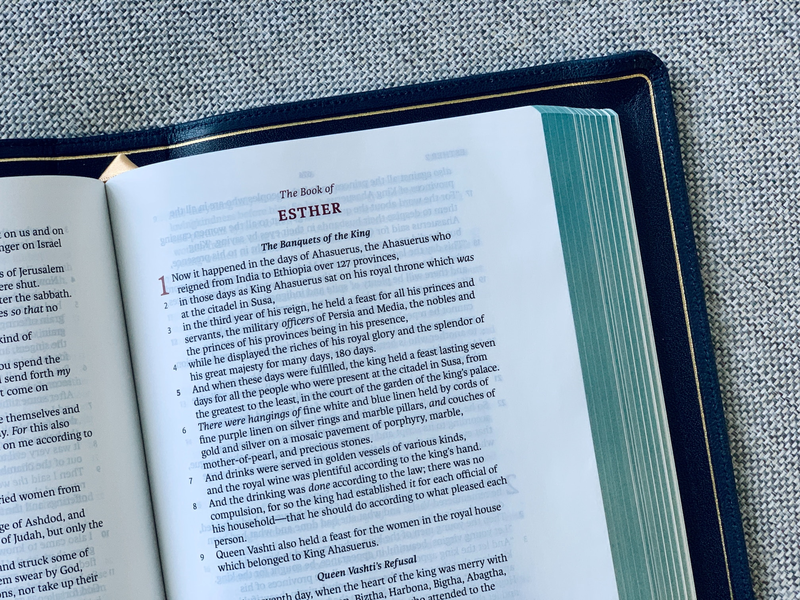
Esther

Esther: Historical & Chronological Comments (IV)

2. The Setting of the Book of Esther A. Xerxes (continued from previous issue) Ezra 6:14 says that the Jews finished building "according to the command of the God of Israel and the decree of Cyrus and Darius and Artaxerxes king of Persia." The problem with this verse is that…

by James B. JordanJune 28, 1996

ales-krivec-4mibe6zg5r0-unsplash
Acts

Jesus and Amalek

This essay goes with our previous study of the Amalek pattern back in Biblical Horizons No. 2. Since many do not have this essay, entitled "The Battle of Gog and Magog," let me cite the relevant paragraphs: Note in Genesis 12-15 that Abram moves into the land after escaping Pharaoh…

by James B. JordanJune 28, 1996

aaron-burden-1ebsmyrau-s-unsplash
Proverbs

The Strange Woman

Proverbs 7:6-23 is one of several passages early in the Proverbs in which Solomon warns his son about the wiles and dangers of the "strange woman." It is certainly quite proper to take these as straightforward warnings against sexual sins, and these are certainly warnings that need to be impressed…

by Peter LeithartJune 27, 1996
jan-kahanek-g3o5ztrk2e4-unsplash
Biblical Studies

Some Observations

1. In Luke 4:20 we read that after Jesus finished reading from Isaiah, "the eyes of all in the synagogue were fixed upon Him." This is usually taken in a psychological sense: They were amazed at Jesus somehow. I suggest that, as always, a merely psychological reading is a modern…

by James B. JordanMay 28, 1996
tim-wildsmith-j6jv-mkdzqs-unsplash
Esther

Esther: Historical & Chronological Comments (III)

2. The Setting of the Book of Esther Up to now we have assumed what we must prove, that the king in Esther is Darius the Great. While Biblical chronologists have usually taken this position, commentators on the book of Esther have often taken others as the king. One view,…

by James B. JordanMay 28, 1996

Showing page 265 of 309

See all

Showing page 5 of 43

See all

The Church and Civil Power

The church’s stance with regard to civil order is neatly articulated in Romans, provided we read chapters 12-13 together. Romans 13 makes it clear that God has given rulers the sword, and that they are to use it for just vengeance. They bear the sword to punish evildoers and to…

May 17, 2017
Liberalism

Limitless Liberalism

D espite its claims to the contrary, Patrick Deneen writes in a 2014 piece in The American Conservative , “liberalism was never about ‘limited' government” or curbing absolutism. Rather, liberalism is about “the pursuit and exercise of potentially limitless power toward seemingly ‘limited' ends of securing Rights.” The limitation on…

May 16, 2017

Greatening Greatness

I n David's final speech (1 Chronicles 29), he offers a fivefold praise of God's perfections (v. 11): Yours is . . . 1. Greatness ( gedolah ) 2. Power ( giburah , related to gibbor , “mighty man”) 3. Glory 4. Victory 5. Majesty He adds an expansive note…

May 16, 2017

That Old Capitalist Religion

P atrick Murray's essay in Culmination of Capital lays out sixfold aim of Marx's Capital : to present and examine in the form of a systematic dialectic the social forms constitutive of the capitalist order, beginning with the (generalized) commodity; to expose capitalist society, in its enlightened secularism, to be…

May 15, 2017

Parents as Strangers

I n the Divine Institutes , Lactantius takes on Plato's endorsement of common property. He makes a grudging admission that it might be “supported so long as it appears to refer only to money.” After all, “everyone should be wise enough to despise money!” (translation from From Irenaeus to Grotius…

May 12, 2017

Justice Christianized

“W e dismiss what philosophers take to be the fundamental exercise of justice,” writes Ambrose in his Christianized Ciceronian treatise de officiis (translation, F rom Irenaeus to Grotius , 84-5). According to Ambrose's summary, philosophical justice takes as “the primary criterion . . . that we do no harm except…

May 12, 2017

Showing page 175 of 2212

Browse by Category

In Medias Res

Your weekly digest for all things Theopolis.

Donate

Theopolis is nearly 100% donor-supported. Consider joining us on our mission.