Theopolis Logo

Writing

Explore our collection of theological essays, biblical studies, and reflections on faith and culture.

See all
screen-shot-2022-08-04-at-9-36-57-am
Matthew

Paul Doesn't Care About Universal Individual Sinfulness or General Revelation

One reason readers assume Paul is trying to prove that all human beings are sinful is that they understand him to be arguing that no one can keep the law. That means, they think, his opponents must believe that human nature is potentially sinless. Taking Paul’s statement that, if you…

by Mark HorneJune 17, 2013

karsten-wurth-imegmbunara-unsplash
Mission

Dreams and Visions

[Note: This post was written prior to our name changing to Theopolis Institute.] What is Trinity House for? Three things: We aim to advance the reformation of the church and, through the church, to promote the renewal of culture; in furthering reformation, we aspire to be a site of fraternal,…

by Peter LeithartJune 12, 2013
sixteen-miles-out-al48tflf4e8-unsplash
Deuteronomy

Sons to Yahweh your God!

This is the third in a series of studies of the Third Word, and especially of Deuteronomy 14. In 1979 Stephen Kaufman penned a groundbreaking essay on Deuteronomy, arguing that it was a meticulously structured and carefully composed book. In his view, chapters 12 to 26 in particular follow the…

by Ralph Allan SmithJune 10, 2013
kelly-sikkema-gpoh17dxqdm-unsplash
Romans

How is Wrath Revealed?

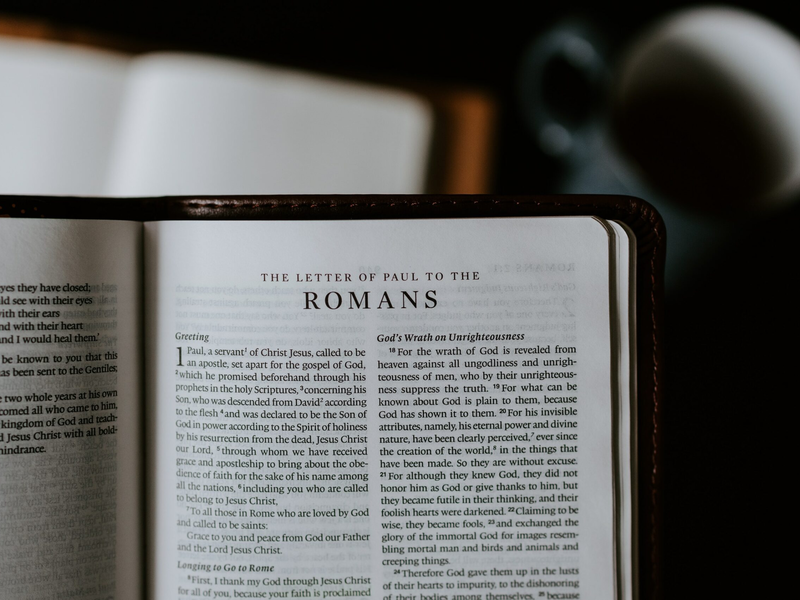
A large mistake is made in understanding Romans if one assumes that Paul is concerned with proving the fact that no one can ever live without sin—or that all attempts at obeying God’s commands are at least tainted with human sinfulness. The first problem with such an assumption is that…

by Mark HorneJune 5, 2013
chris-bair-ndczc5739ck-unsplash
Deuteronomy

The Third Word

This is the second in a series of studies on the Third Word, and especially on the food laws of Deuteronomy 14. In the second part of this series, I argue that Moses’ reworking of the Ten Words in Deuteronomy 5 includes adding nuance to the Third Word. This prepares…

by Ralph Allan SmithJune 3, 2013
yannis-papanastasopoulos-if_29sed7ta-unsplash
Culture

Turning Babel into a Beast

Recent months have brought a lively discussion of Christian participation in the culture war. On the one hand, the pro-life movement appears to be making some slow progress on the abortion issue. The trial of abortionist and serial murderer Kermit Gosnell has the potential to awaken those who are nominally…

by Joe RigneyMay 29, 2013

Showing page 193 of 309

See all

Showing page 5 of 43

See all

Ahab in Micah

A student, Luke Nieuwsma, pointed out several references to Ahab in the prophecy of Micah. Micah 2:1-2 condemns those who covet fields and take them by violence, as Ahab did to Naboth; 6:15 is an explicit allusion to Omri and Ahab; and the “she” who is trampled like mud sounds…

December 12, 2006

Sermon Notes, Third Sunday of Advent

INTRODUCTION Modern Christians instinctively spiritualize the story of the gospel. When Jesus is called “King of the Jews,” we think that refers to His “spiritual” kingdom. Herod didn’t think so. Herod knew that Jesus’ birth was a threat to his power. THE TEXT “Now after Jesus was born in Bethlehem…

December 11, 2006

Eucharistic meditation, Second Sunday of Advent

Psalm 23:1: The Lord is my Shepherd; I shall not want. At Jesus’ birth, shepherds come to worship Him because He is the chief Shepherd. He is Shepherd Yahweh in human flesh. He is the Shepherd of Israel. He is the Davidic king who will shepherd His people with skillful…

December 10, 2006

Exhortation, Second Sunday of Advent

As we’ll see in the sermon this morning, in the Bible a “shepherd” is a king. Shepherds lead, guide, rule, control, feed, discipline, and judge their sheep. To say that Jesus is the Good Shepherd is to say He’s king of His people, king of all. Jesus’ kingship is not…

December 10, 2006

Lacan’s style again

Terry Eagleton puts it this way: “for Lacan all discourse is, in a sense, a slip of the tongue: if the process of language is as slippery as he suggests, we can never mean precisely what we say, or say precisely what we mean. Meaning is always in some sense…

December 7, 2006

Lacan’s style again

Terry Eagleton puts it this way: “for Lacan all discourse is, in a sense, a slip of the tongue: if the process of language is as slippery as he suggests, we can never mean precisely what we say, or say precisely what we mean. Meaning is always in some sense…

December 7, 2006

Showing page 1754 of 2212

Browse by Category

In Medias Res

Your weekly digest for all things Theopolis.

Donate

Theopolis is nearly 100% donor-supported. Consider joining us on our mission.