Theopolis Logo

Writing

Explore our collection of theological essays, biblical studies, and reflections on faith and culture.

See all
31-03-0213
Hermeneutics

Apocalyptic Eyes

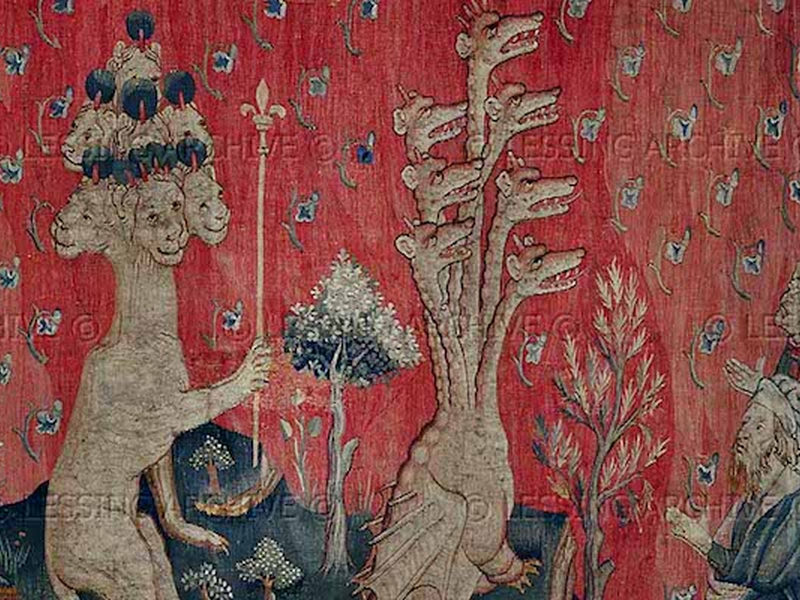
Flying scrolls. Red horses. Beasts coming out of the sea. Winged women. The list goes on. Apocalyptic literature in the Bible is like a cross between science fiction and Marvel comics. And the Bible has a fair bit of this sort of thing. Daniel sees visions in Babylon, Zechariah sees…

by Toby SumpterNovember 4, 2014

bhm-skyline-2
Theopolis News

New Name, New Look

Trinity House Institute has taken a new name, the Theopolis Institute. This striking new name expresses our unique vision and mission and captures the unified purpose behind all our specific programs and activities. We still have Bible, liturgy, and culture in our tagline. We still offer the same courses on…

by TheopolisNovember 4, 2014
istock_000012860926small
Atonement

Not Fearing the Devil

Adam Kotsko offers a socio-political variation on the Christus Victor atonement theory in his 2010 study, The Politics of Redemption: The Social Logic of Salvation . He does this by explaining "the devil" in terms of the Hegelian concept of "objective spirit," Geist . As Kotsko puts it, Geist "refers…

by Peter LeithartOctober 13, 2014
jez-timms-8muutamcwu4-unsplash
Leviticus

The Meaning of Sacrifice

Two factors keep Nahtali Meshel from discussing the meaning of sacrifice until late in his The "Grammar" of Sacrifice . The first has to do with the texts he draws from: "P says little about the meaning of its rituals" (174). The other has to do with the grammatical theory…

by Peter LeithartOctober 8, 2014
jez-timms-8muutamcwu4-unsplash
Leviticus

Praxemics

Chapter 5 of Naphtali Meshel's The "Grammar" of Sacrifice focuses on "praxemics," the physical actions of sacrificial ritual. Praxemes are constituted by six elements: an "atomact," an elementary physical act or gesture; an actor; an object that is acted up; a target for the action and often for the object…

by Peter LeithartOctober 6, 2014
markus-winkler-aid-xyrtlec-unsplash
Leviticus

Jugation and Hierarchy

Two chapters of Naphtali Meshel’s The “Grammar” of Sacrifice cover what he calls “jugation” and “hierarchies.” The first involves the addition of other materials to an animal offering. Jugates include wine, cereal, and oil that are added to the animals (zoemes) that are offered in sacrifice. Some jugates are coordinated…

by Peter LeithartOctober 1, 2014

Showing page 167 of 309

See all

Showing page 5 of 43

See all

Knowing the “From the Begining”

1 John 2:13-14 twice says that groups within the church “know the one from the beginning.” That is a perfectly fine way to translate it, but the Greek has TON AP’ ARXES, “the from the beginning.” To whom is this phrase referring? The more awkward translation suggests the possibility that…

October 12, 2006

Overcoming the world

The sequence from 1 John 2:14-15 seems abrupt: John moves from addressing children, fathers, and young men to the warning not to love the world. But there is a link between the “overcoming” in 2:14 to the “world” in 2:15. Every other time the verb “overcome” is used in John,…

October 12, 2006
Theology

Persistence of the past

The doctrine of original sin is bound up with the conviction that the past inheres in the present, for the human race and for individuals. And for this the denial of original sin is the necessary premise for all revolutionary politics and also explains why revolutionary politics invariably ends up…

October 12, 2006
History

Political religion

Few have said it with the forthrightness of Joseph II, the Habsburg emperor from 1780 to 1790, who justified his 1781 Edict of Toleration because “with freedom of religion, one religion will remain, that of guiding all citizens alike to the welfare of the state. Without this approach we shall…

October 11, 2006
History

Enthusiasts of reason

Since Carl Becker’s book on the heavenly city of the philosophes, historians have recognized that the Enlightenment was motivated, by a secularized version of the biblical story - a fall from the Golden Age of the classical world into the darkness of superstitution and priestcraft, the gospel of Enlightenment and…

October 11, 2006
History

Cleric and Philosophe

Battle lines are never, in reality, as clean as we see them in retrospect. Some 700 of the 20,000 freemasons in pre-Revolutionary France were Catholic clergy, and Michael Burleigh reports that “revolutionaries and counter-revolutionaries, clergy and laity shared a taste for the same authors. In 1778 Marie Antoinette attended the…

October 11, 2006

Showing page 1779 of 2212

Browse by Category

In Medias Res

Your weekly digest for all things Theopolis.

Donate

Theopolis is nearly 100% donor-supported. Consider joining us on our mission.