Theopolis Logo

Writing

Explore our collection of theological essays, biblical studies, and reflections on faith and culture.

See all
aaron-burden-qjdzyt_k8xg-unsplash
Biblical Horizons

Twelve Fundamental Avenues of Revelation, Part 2

Theophanic revelation is historically progressive, or eschatological, in character. First of all, in Genesis 1:2, the Spirit appeared inside the creation, sent by the Father. After the creation of man, the Spirit worked and works with humanity to bring us to maturity, from Daughter to Bride to fruitful Mother. He…

by James B. JordanFebruary 28, 1997

gang-coo-nt7tyrsofwk-unsplash
Biblical Studies

The Calf of the Purification Offering

On the eighth day of the rite of "filling the hand," Aaron began his service at the altar. His first offering was a "calf" (Heb. `egel ), which served as a purification offering for himself and (apparently) his household (Leviticus 9:2, 8). This is striking for a couple of reasons.…

by Peter LeithartFebruary 27, 1997
sergey-shmidt-koy6flccy5s-unsplash
Exodus

A Blossom of Yahweh’s Garden

One of the distinctive items of the high priest’s clothing was the "golden plate" inscribed with the words "Holy to Yahweh" (Exodus 28:36-38). The word translated as "plate" is tsits , which literally means "flower." The verbal and noun forms are both used in Numbers 17:8, which describes Aaron’s rod…

by Peter LeithartFebruary 27, 1997
davide-ragusa-slgtmf8ejye-unsplash
Biblical Horizons

Squaring Off and Crossing Up

The square, rectangle, and cross shapes appear all over the sanctuaries God reveals in the Bible: Tabernacle, Solomon’s Temple, Ezekiel’s Temple, New Jerusalem. One thing that can be said right away about these designs, and the occasional perfect circle (the lavers), is that they do not occur in nature. They…

by James B. JordanJanuary 28, 1997
schlanger_jonah_prison_090913_620px
Biblical Studies

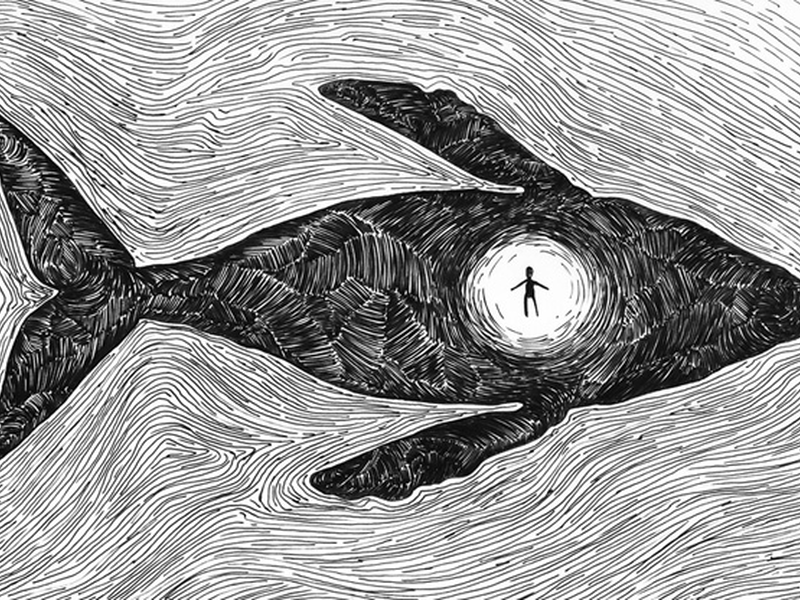
In the Fish: The Church as Tomb

"For just as Jonah was three days and three nights in the belly of the sea-monster, so will the Son of Man be three days and three nights in the heart of the earth" (Matthew 12:40). Some reflections on Jonah’s Big Fish have led to the following essay. Let me…

by James B. JordanJanuary 28, 1997
Hermeneutics

God Most High

Citing Melchizedek in Genesis 14:18-20, James Jordan has written that "the name of God in use among the nations was God Most High’" (Hebrew, `el `elyon ; in Through New Eyes , p. 176). In addition to Melchizedek, one could cite the example of Balaam, who invokes the Lord both…

by Peter LeithartJanuary 27, 1997

Showing page 260 of 309

See all

Showing page 5 of 43

See all

Exhortation

When John first talks about sin, he connects it to fellowship and walking in the light. He does not say, “If we walk in the light, the blood of Jesus cleanses us, and as a result we have fellowship with one another.” He says, “If we walk in the light,…

October 1, 2006
Economics

Bakhtin the capitalist

Stallybrass and White critize Bakhtin for conceptualizing the fair purely as a place of communal celebration, ignoring the commercial activities of the fair: “In developing this concept, Bakhtin succumbs to that separation of the festive and the commercial which is distinctive of capitalist rationality as it emerged in the Renaissance.…

September 29, 2006
History

Classical bodies and modernity

Stallybrass and White again: The classical form “was far more than an aesthetic standard or model.” It might be better to say that there was a classicist aesthetic at work in other areas besides art. In any case, the classical body “structured, from the inside as it were, the characteristically…

September 28, 2006
Art

Classical and other bodies

Peter Stallybrass and Allon White ( The Politics and Poetics of Transgression ) summarize a point from Bakhtin: “Bakhtin was struck by the compelling difference between the human body as represented in popular festivity and the body as represented in classical statuary in the Renaissance. He noticed how the two…

September 28, 2006

Humilation and Exaltation

Theologians normally treat the incarnation-to-burial of Jesus as the humiliation of the Son; resurrection-to-ascension exaltation. That’s correct, but there are other angles too. God hid His face behind a veil from the time of Moses to the incarnation. This is His humiliation - we might almost say, a display of…

September 28, 2006
Literature

Metaphysical Hamlet

Andre Gide wrote: “Has anyone, in explaining Hamlet’s character, made full use of the fact that he has returned from a German university? He brings back to his native country the germs of a foreign philosophy; he has plunged int a metaphysics whose remarkable fruit seems to me ‘To be…

September 28, 2006

Showing page 1784 of 2212

Browse by Category

In Medias Res

Your weekly digest for all things Theopolis.

Donate

Theopolis is nearly 100% donor-supported. Consider joining us on our mission.