Theopolis Logo

Writing

Explore our collection of theological essays, biblical studies, and reflections on faith and culture.

See all
rembrandt-main
Art

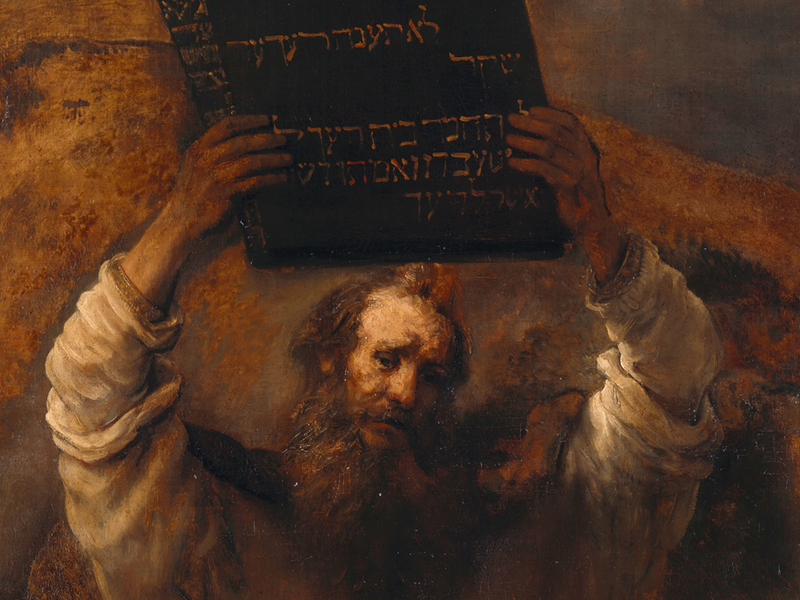
The Second Word V: On Images and Art, Part 3

The Failure of the Church Yet a third factor played an important role in this historical development, in addition to the imperial adoption of icons and the rise of the icons of the holy man. Brown writes: "The great Christian basilicas of the previous centuries tended to stand empty, except…

by James B. JordanSeptember 4, 1998

screenshot-2023-09-11-at-11-34-45-am
Biblical Horizons

Patriarchal Dominion

The three large patriarchal narratives of Genesis concern the three aspects of the cosmos: matter, space, and time. Over these three is man given dominion. Lucifer was originally appointed to train man in this dominion, but he chose to lead man into rebellion instead. Thus, the Angel of Yahweh replaced…

by James B. JordanAugust 4, 1998
trnava-university-beeyeib-am8-unsplash
Biblical Horizons

The Case Against Western Civilization, Part 6

Part 6: Living in a Dying World (continued) The "Trivium" (continued) The five stages of education are simply the five stages of the covenant as God administers it in human life and history, and in the liturgy of covenant renewal: First, God announces Himself. "I am Yahweh Your God." He…

by James B. JordanAugust 4, 1998
screen-shot-2022-05-12-at-12-07-23-pm
Biblical Studies

Re-creation in the Ascension Offering

The following essay is tentative and exploratory, offered for your consideration. It seems to me that the ritual of the Ascension Offering (incorrectly translated as Burnt Offering) of Leviticus 1 is a symbolic recapitulation of Genesis 1, which thereby portrays the sacrificial ritual as way of moving from a fallen…

by James B. JordanJuly 4, 1998
Biblical Horizons

The Framework Hypothesis: A Gnostic Heresy

Just as the vast majority of evangelical Christians in America today are Arminian and Baptist, so the vast majority do not believe in a creation around 4000 BC. I don’t expect any of these three situations to change anytime soon. Powerful presuppositions are at work in all three instances, along…

by James B. JordanJuly 4, 1998
picture-mosaic-cathedral-jesus-christ-cefalu-italy-copy
Art

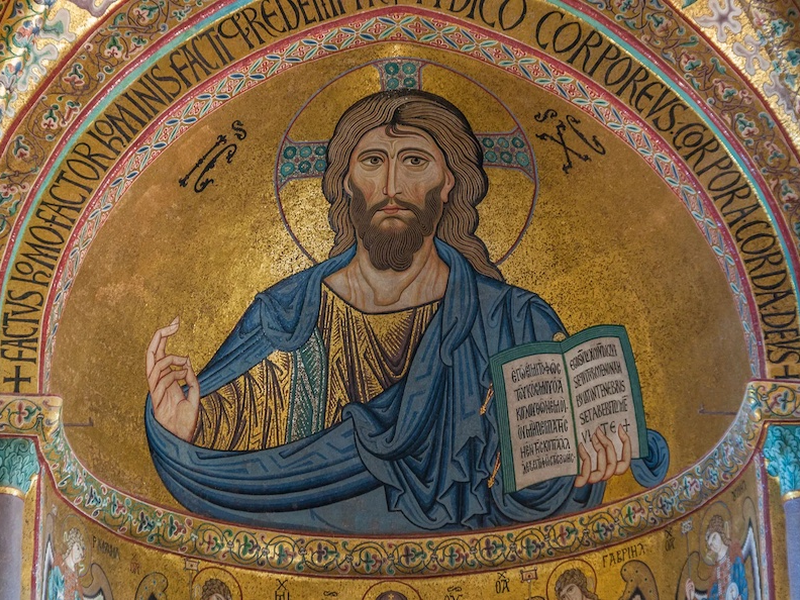
The Second Word V: On Images and Art, Part 2

The Iconoclastic Controversy Continuing Pagan Influence How did images creep in? To begin with, there was in the post-Constantinian Church a concerted effort on the part of the semi-pagans to interpret Christianity in essentially pantheistic terms. The heretics put God and man on a continuum of "being," so that God…

by James B. JordanJuly 4, 1998

Showing page 248 of 309

See all

Showing page 5 of 43

See all

Really Lost

Last year, we got the first season of Lost on DVD and were instantly hooked. These guys sure know how to hold an audience. But for me the hold is weakening as we begin watching the second seson, as it becomes increasingly clear that all these people escaped from a…

September 21, 2006

In Praise of Coffee

An early modern document celebrates the purifying qualities of coffee: Coffee is good for “fat persons whose thickened humors circulate with difficulty.” And, it reduces impurities and generally clears out the system: “it restores the stomach, consumes its superfluous humidity, dissipates wind, dissolves the phlegm of the bowels, where it…

September 20, 2006
History

Descartes’s exorcism

Madness in what Foucault calls the “classical period” is conceived as a dazzlement - the madman is darkened with excessive light. In this context, “the Cartesian formula of doubt is certainly the great exorcism of madness. Descartes closes his eyes and plugs up his ears the better to see the…

September 20, 2006
History

Divine madness

For the Renaissance, Foucault argues, the line between madness and reason was thin and easily crossed. The madman, in fact, frequently gained insight that the sane did not; think Lear howling on the heath. Over time, madness and truth had been clearly distinguished, and madness ceased to be instructive. Foucault…

September 20, 2006

Exorcizing Zwingli

Dr Jim West is annoyed at me (http://drjimwest.wordpress.com/2006/09/19/confession-time-im-annoyed), though he doesn’t name me. He is responding to an article I wrote attacking what I called “Zwinglian poetics,” where I suggested that Protestants must “exorcise the ghost of Zwingli” if we are going to develop a solid Protestant poetics, which, I…

September 20, 2006

Showing page 1790 of 2212

Browse by Category

In Medias Res

Your weekly digest for all things Theopolis.

Donate

Theopolis is nearly 100% donor-supported. Consider joining us on our mission.