Theopolis Logo

Writing

Explore our collection of theological essays, biblical studies, and reflections on faith and culture.

See all
screen-shot-2022-04-12-at-7-14-44-am
Biblical Horizons

Christ Is Risen! He Is Risen Indeed!

"Vanity of vanities", says the Preacher. "All is vanity". Life, we are told in the book of Ecclesiastes, is a repetitious, wearisome cycle; all that is and all that will be has already been. There is nothing new under the sun. What is crooked cannot be made straight, what is…

by Peter LeithartFebruary 23, 1991
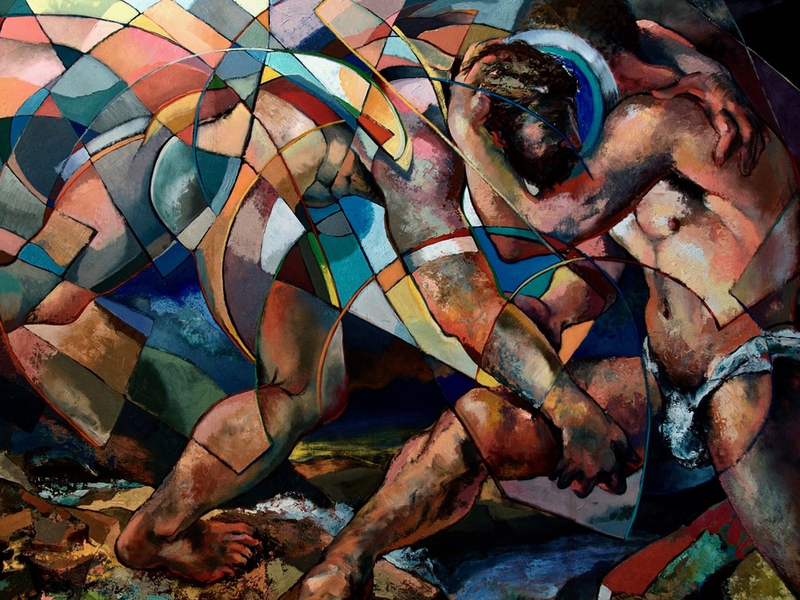
jacob-wrestling-the-angel
Biblical Studies

Three “Falls” and Three Heroes

The Bible tells us that when God created the earth, He set up three zones of life. The first was the world itself. The second was the holy land of Eden. And the third was the Garden in Eden, God’s sanctuary. God told Adam and Eve that every tree was…

by James B. JordanFebruary 22, 1991
mick-haupt-eq2z9ay9wws-unsplash
Biblical Studies

The Chronology of Ezra & Nehemiah, Part 1

In our survey of Biblical chronology we have arrived at the books of Ezra and Nehemiah, which provide chronological information for the period after the return from exile, the Restoration Period of Old Testament history. The question we begin to address in this essay is whether the Artaxerxes of these…

by James B. JordanFebruary 22, 1991
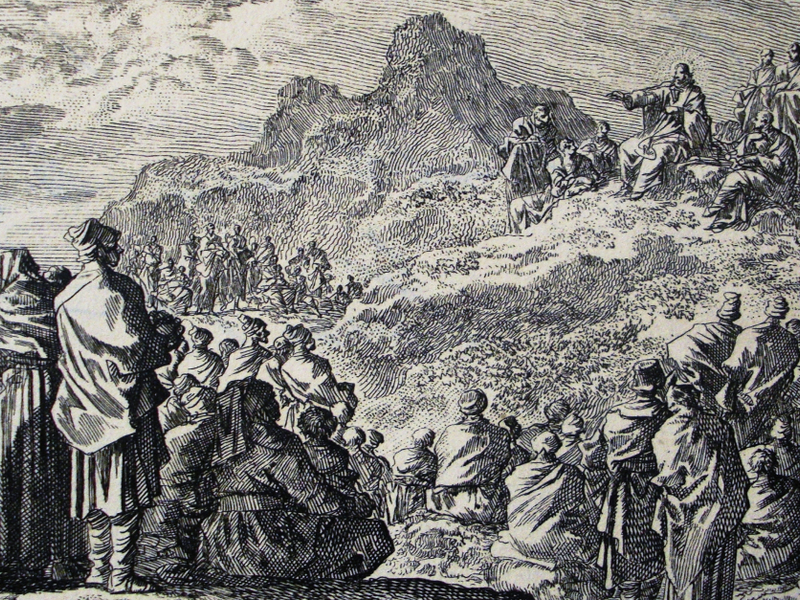
8226-sermon-on-the-mount-painting-2
Matthew

Pluck It Out!

These verses from the Sermon on the Mount are generally taken in connection with Jesus’ earlier statement concerning adultery in the heart (vv. 27-28); the eye and the hand have obvious relevance to the sin of adultery. At the same time, most commentators admit that the principle of avoiding occasions…

by Peter LeithartFebruary 2, 1991
49980-nicolas_poussin_-_the_judgment_of_solomon_-_wga18330-800w-tn
Proverbs

Advice From a Sojourner, Part 9

17. The eye that mocks a father, And despises to obey a mother, The ravens of the valley will pick it out, And the young eagles will eat it. 18. There are three things that are too wonderful for me, Four that I do not understand: 19. The way of…

by James B. JordanJanuary 30, 1991
screen-shot-2020-12-03-at-1-47-33-pm
Biblical Horizons

The Dominion Church

The modern Church in America and virtually everywhere else is ideology-centered, not geographical. This is because various Churches believe different things and have different customs of worship and sacraments. The ideological Church has gradually developed from the time of the Reformation, because accuracy of doctrine has become more important to…

by James B. JordanJanuary 30, 1991

Showing page 299 of 309

See all

Showing page 5 of 43

See all
Philosophy

Continental v. analytic

Continuing through Simon Critchley’s book on Continental philosophy, the following analogy seems to capture some aspects of the contrast of Continental and analytic: Continental is Catholic: conscious of tradition, respectful of saints, aware of historical contextualization. Philosophy is the history of philosophy. Analytic is Protestant: deals with de-contextualized philosophical problems,…

September 14, 2006
History

Modernist postmoderns

Postmodern critics of modernity sometimes treat the latter not only as the pursuit and ambition for totality; they treat it as a totality, as an undifferentiated whole. But if postmoderns are right, even modernity was fragmented and frayed at the edges, and the appearance of totality is a modernist ruse.…

September 13, 2006
History

Modernity and dirt

A subsidiary thesis: Modernity is motivated by a desire for purity, by dirt-avoidance - dirt being, as Mary Douglas says, “matter out of place.” Counter-modernity is dirt’s revenge, celebration of dirt.

September 13, 2006
History

Modernity as court culture

Featherstone once again. He points out that sometime in the 18th century, upper class culture divided from lower class culture: “in 1500 the educated strata despised the common people although they shared their culture. Yet by 1800 their descendants had ceased to join spontaneously in popular culture and were rediscovering…

September 13, 2006
History

Romantic ethic and Consumption

In his 1987 book, The Romantic Ethic and the Spirit of Modern Consumerism , C. Campbell attempts to explain the origins of contemporary obsession with novelty, pleasure in the new, self-expression through consumption of goods. He traces it to romanticism’s focus on “imagination, fantasy, mysticism, creativity and emotional exploration” (Featherstone’s…

September 13, 2006
History

Consumption, Body, and the Sacred

A couple of further notes from Featherstone’s very stimulating book. First, citing Pierre Bourdieu, he notes the limits of seeing consumption as an isolated marker of status. The signs “that betray a person’s origins and trajectory through life are manifest in body shape, size, weight, stance, walk, demeanour, tone of…

September 13, 2006

Showing page 1794 of 2212

Browse by Category

In Medias Res

Your weekly digest for all things Theopolis.

Donate

Theopolis is nearly 100% donor-supported. Consider joining us on our mission.