Theopolis Logo

Writing

Explore our collection of theological essays, biblical studies, and reflections on faith and culture.

See all
hard-to-be-a-god
Books

Let us Fix the World: An Admonition from the Strugatsky Brothers

That there is something wrong with the world is obvious. It does not take much time or brilliance to notice it. Once we get the feeling that we could imagine a better world, we are tempted to fix it or, if we cannot, to escape it. For both the world-fixers…

by Bogumil JarmulakApril 6, 2021

patrick-fore-b_shpu5m3nk-unsplash
Prayer

The Lord’s Prayer Exposited

“Our Father in heaven,” what is man that we should be called your sons and daughters, beloved children of God Almighty, Maker of heaven and earth, Yahweh of Hosts, the Ancient of Days. You are not a father preoccupied with work or engrossed in your smartphone; you are a present…

by Drew KnowlesMarch 30, 2021
lisanto-4irss8spks4-unsplash
Pastoral Ministry

Pastoral Reflections on Purity Laws

The Son of God took on human flesh and entered into the sin and suffering of our world. His life and teaching and suffering from His conception to His suffering on the cross teaches us a lot about how the good news enters into the world. Recently, I was teaching…

by Nathan ZekveldMarch 23, 2021
foster_balaam
Hermeneutics

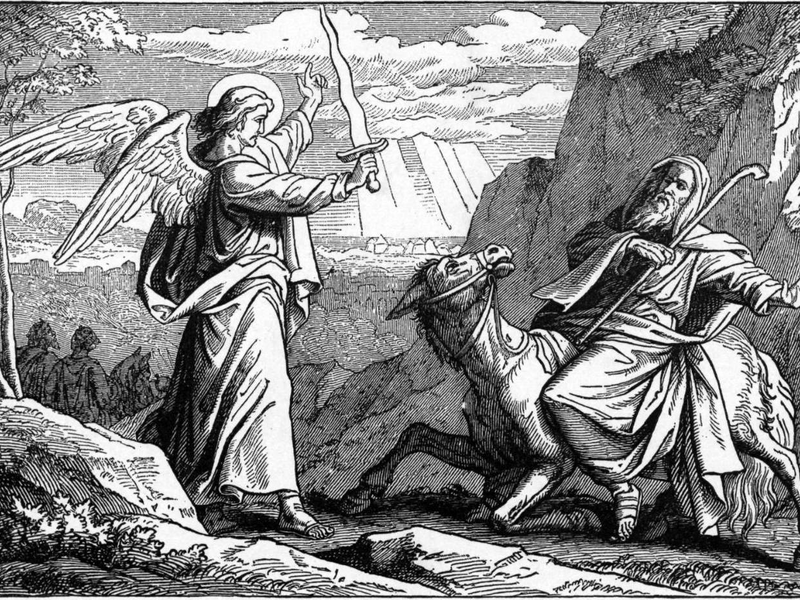
The Ass and the Messiah

There is an unspoken rule about typology that permeates Evangelical thinking. It goes something like this: “If the New Testament authors don’t use an Old Testament character as a type, we don’t either.” There is a soundness in this reasoning, at least in a preliminary sense. There is no better…

by Garrett SoucyMarch 16, 2021
screen-shot-2021-03-08-at-8-57-36-am
Church Calendar

The Sound of Silence

In The world of Silence, Max Picard writes, “There does not seem to be any space left where there could possibly have been anything but noise. We take it for granted much as we take the air itself for granted. Everything begins and ends with noise.” Is it fair to…

by Jacob SkogenMarch 9, 2021
esther
Hermeneutics

The Absent Presence of God: The Storied Theology of Esther for the Modern Age

God is Not There God is not in the book of Esther. Do a word search and you will get 0 results. Also try Lord, Yahweh, Prayer, Temple, or Sacrifice. Even names with God’s name in them, like Elijah, Jeremiah, or Daniel are missing. The fool says in his heart,…

by Ryan HandermannMarch 4, 2021

Showing page 57 of 309

See all

Showing page 5 of 43

See all
Philosophy

Continental v. analytic

Continuing through Simon Critchley’s book on Continental philosophy, the following analogy seems to capture some aspects of the contrast of Continental and analytic: Continental is Catholic: conscious of tradition, respectful of saints, aware of historical contextualization. Philosophy is the history of philosophy. Analytic is Protestant: deals with de-contextualized philosophical problems,…

September 14, 2006
History

Modernist postmoderns

Postmodern critics of modernity sometimes treat the latter not only as the pursuit and ambition for totality; they treat it as a totality, as an undifferentiated whole. But if postmoderns are right, even modernity was fragmented and frayed at the edges, and the appearance of totality is a modernist ruse.…

September 13, 2006
History

Modernity and dirt

A subsidiary thesis: Modernity is motivated by a desire for purity, by dirt-avoidance - dirt being, as Mary Douglas says, “matter out of place.” Counter-modernity is dirt’s revenge, celebration of dirt.

September 13, 2006
History

Modernity as court culture

Featherstone once again. He points out that sometime in the 18th century, upper class culture divided from lower class culture: “in 1500 the educated strata despised the common people although they shared their culture. Yet by 1800 their descendants had ceased to join spontaneously in popular culture and were rediscovering…

September 13, 2006
History

Romantic ethic and Consumption

In his 1987 book, The Romantic Ethic and the Spirit of Modern Consumerism , C. Campbell attempts to explain the origins of contemporary obsession with novelty, pleasure in the new, self-expression through consumption of goods. He traces it to romanticism’s focus on “imagination, fantasy, mysticism, creativity and emotional exploration” (Featherstone’s…

September 13, 2006
History

Consumption, Body, and the Sacred

A couple of further notes from Featherstone’s very stimulating book. First, citing Pierre Bourdieu, he notes the limits of seeing consumption as an isolated marker of status. The signs “that betray a person’s origins and trajectory through life are manifest in body shape, size, weight, stance, walk, demeanour, tone of…

September 13, 2006

Showing page 1794 of 2212

Browse by Category

In Medias Res

Your weekly digest for all things Theopolis.

Donate

Theopolis is nearly 100% donor-supported. Consider joining us on our mission.