Theopolis Logo

Writing

Explore our collection of theological essays, biblical studies, and reflections on faith and culture.

See all
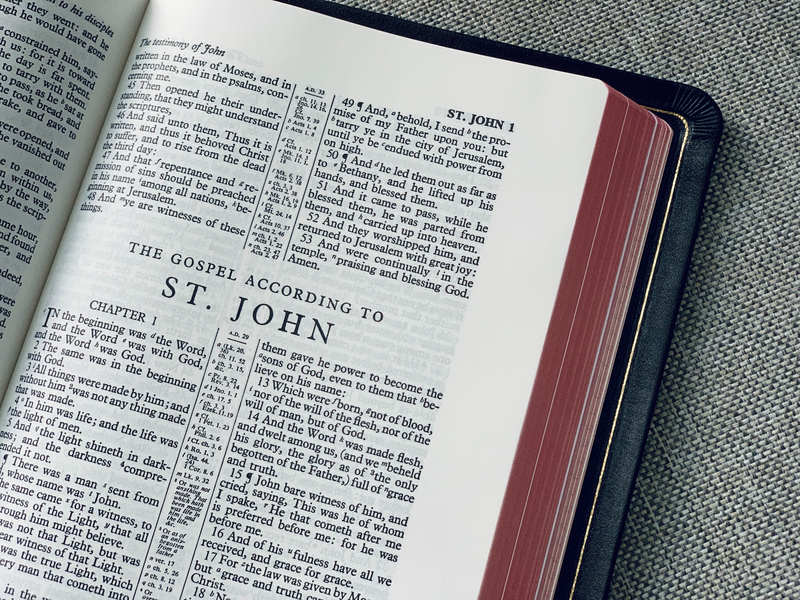
tim-wildsmith-gzggi42wggm-unsplash
John

Sin Leading to Death?

First John 5.16-17: If anyone sees his brother committing a sin not leading to death, he shall ask, and God will give him life–to those who commit sins that do not lead to death. There is sin that leads to death; I do not say that one should pray for…

by Mark HorneFebruary 1, 2008

jordan-wozniak-xp_agmeea6s-unsplash-2
Authority

Mediated Authority

A few years back I read Lesslie Newbigin’s little book Truth and Authority in Modernity . 1 I was particularly impressed with his argument in chapter 2 “The Mediation of Divine Authority.” Now, maybe this is old hat to many of you, but I don’t think I’ve ever heard it…

by Jeff MeyersJanuary 30, 2008
ryan-loughlin-a8cewc-qgq-unsplash
Baptism

The Circumcision of Christ

Baptism is not Christian circumcision. There’s a lot of loose talk to that effect in Presbyterian circles; but it’s not accurate. The old world rite of circumcision was fulfilled in the death and resurrection of Jesus. Baptism unites us to Christ and therefore makes us participate in the circumcision of…

by Jeff MeyersJanuary 29, 2008
edwin-andrade-6liebveafry-unsplash
Biblical Horizons

Handraising in Worship: Questions

In recent years I’ve observed a number of Reformed-type churches trying to institute corporate handraising in certain sung parts of worship. This often does not seem to work very well. Some people don’t do it. Some do it half-way. Some do it with one hand. Some dramatically stretch to the…

by James B. JordanJanuary 28, 2008
screenshot-2023-09-21-at-3-59-23-pm
Christology

Yes, I’m a Theopaschite

Most modern scholars recognize that behind Arius’s campaign to differentiate Jesus from God was the Hellenistic theological conviction that the high God cannot suffer. Rowan Williams argues that Arius had the right idea about divine suffering, but the wrong idea of God, which “puts the unavoidable question of what the…

by Jeff MeyersJanuary 26, 2008
john-matychuk-yvfp5yhwgsc-unsplash
Biblical Horizons

In Defense of Praising God When You Can’t Find A Parking Place

Charismatics have been much maligned for constantly “praising the Lord.” They would say if you hit your finger with a hammer, you should instantly say, “Thank you Jesus that You let me hit my finger…” This of course, as we all know, is stupid. There was once a lady who…

by Richard BledsoeJanuary 25, 2008

Showing page 217 of 309

See all

Showing page 5 of 43

See all

Objective/Subjective

McGrath notes that Augustine interpreted the genitive in the phrase “righteousness of God” in Rom 1 objectively, so that it was understood as the righteousness that God gives in saving sinners (in “making” them righteous). Ambrosiaster, as I pointed out in an earliet post, interpreted the genitive subjectively - the…

April 20, 2006

Old Perspective on Paul

Ambrosiaster writes, “Iustitia est Dei, quia quod promisit dedit, ideo credens hoc esse se consecutum quod promiserat Deus per prophetas suos, iustum Deum probat et testis est iustitiae eius” (PL, 17.56b). McGrath explains: “God, having promised to give salvation, subsequently gives it, and as a result is deemed to be…

April 20, 2006
History

Unfinished Reformation

Nevin wrote: “There is more a great deal in Christianity, I firmly believe, more in the idea of hte Holy Catholic Church, than has yet been attained, either in the way of knowledge or in the way of life, by the Protestant Reformation.”

April 20, 2006

Factitive Justification

There was a consensus among the theologians of Trent, McGrath argues, that justification was “factitive,” a view that excluded that “a sinner may be justified solely as a matter of reputation or imputation, while remaining a sinner in fact.” But of course that raises the question, What exactly is a…

April 20, 2006

True Lutherans

McGrath traces the odd development in Lutheran Orthodoxy of the notion that regeneration and faith precede justification in such a way that “where Luther had understood justification to concern the unbelieving sinner, orthodoxy revised this view, referring justification to the believing sinner.” This takes Lutheran Orthodoxy back in the direction…

April 20, 2006

Ontological change

McGrath notes, “While justification was universally understood to involve the regeneration of humanity, the opinion that an ontological change is thereby effected within humans is particularly associated with the period of High Scholasticism and the development of the concept of created grace. The earlier medieval theologians expressed the change effected…

April 20, 2006

Showing page 1854 of 2212

Browse by Category

In Medias Res

Your weekly digest for all things Theopolis.

Donate

Theopolis is nearly 100% donor-supported. Consider joining us on our mission.