Theopolis Logo

Writing

Explore our collection of theological essays, biblical studies, and reflections on faith and culture.

See all
31-03-0213
Hermeneutics

Apocalyptic Eyes

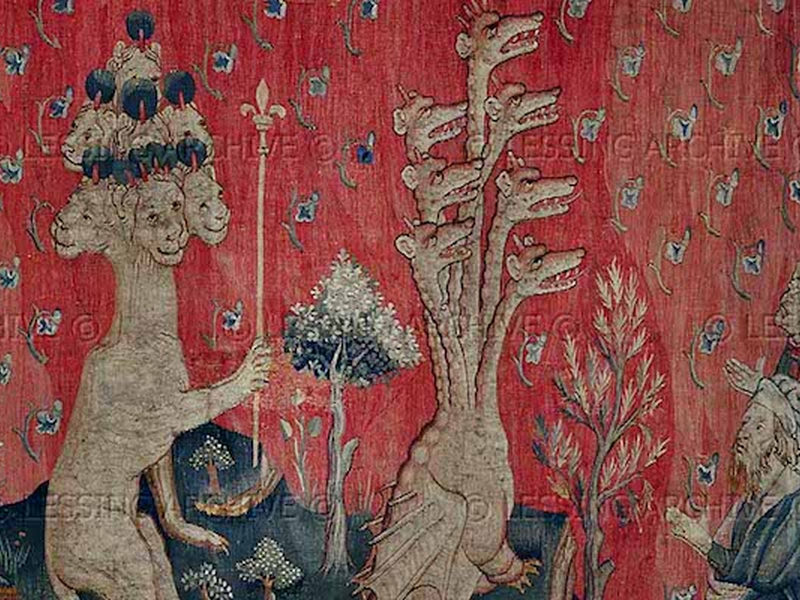
Flying scrolls. Red horses. Beasts coming out of the sea. Winged women. The list goes on. Apocalyptic literature in the Bible is like a cross between science fiction and Marvel comics. And the Bible has a fair bit of this sort of thing. Daniel sees visions in Babylon, Zechariah sees…

by Toby SumpterNovember 4, 2014

bhm-skyline-2
Theopolis News

New Name, New Look

Trinity House Institute has taken a new name, the Theopolis Institute. This striking new name expresses our unique vision and mission and captures the unified purpose behind all our specific programs and activities. We still have Bible, liturgy, and culture in our tagline. We still offer the same courses on…

by TheopolisNovember 4, 2014
istock_000012860926small
Atonement

Not Fearing the Devil

Adam Kotsko offers a socio-political variation on the Christus Victor atonement theory in his 2010 study, The Politics of Redemption: The Social Logic of Salvation . He does this by explaining "the devil" in terms of the Hegelian concept of "objective spirit," Geist . As Kotsko puts it, Geist "refers…

by Peter LeithartOctober 13, 2014
jez-timms-8muutamcwu4-unsplash
Leviticus

The Meaning of Sacrifice

Two factors keep Nahtali Meshel from discussing the meaning of sacrifice until late in his The "Grammar" of Sacrifice . The first has to do with the texts he draws from: "P says little about the meaning of its rituals" (174). The other has to do with the grammatical theory…

by Peter LeithartOctober 8, 2014
jez-timms-8muutamcwu4-unsplash
Leviticus

Praxemics

Chapter 5 of Naphtali Meshel's The "Grammar" of Sacrifice focuses on "praxemics," the physical actions of sacrificial ritual. Praxemes are constituted by six elements: an "atomact," an elementary physical act or gesture; an actor; an object that is acted up; a target for the action and often for the object…

by Peter LeithartOctober 6, 2014
markus-winkler-aid-xyrtlec-unsplash
Leviticus

Jugation and Hierarchy

Two chapters of Naphtali Meshel’s The “Grammar” of Sacrifice cover what he calls “jugation” and “hierarchies.” The first involves the addition of other materials to an animal offering. Jugates include wine, cereal, and oil that are added to the animals (zoemes) that are offered in sacrifice. Some jugates are coordinated…

by Peter LeithartOctober 1, 2014

Showing page 167 of 309

See all

Showing page 5 of 43

See all

Luther and Medieval Piety

T he great question haunting late medieval piety was that of the inadequacy of human piety. As Berndt Hamm puts it ( Reformation of Faith ), the “harrowing question” was that of the “spiritual inadequacy” of Christians (88). The late medieval answer was to reduce the requirements necessary to meet…

April 14, 2017

Politics of the Picturesque

I n his Landscape, Liberty and Authority , Tim Fulford examines the paradox of William Gilpin's travel writings and tour-leading in the picturesque wilds of Wales, England, and Scotland. Gilpin was aware that “the picturesque might be socially dangerous,” so much so that he apologizes to the noble landowners whose…

April 14, 2017

Separation and Incorporation

I n his contribution to Signifying Identities , Fredrik Barth suggests that our notion of political, economic and social boundaries is an extension of the feeling that a tool extends the body: When you hold a knife or a spoon in your hand and use it as an implement, the…

April 14, 2017

Early Christian Disenchantment

G uy G. Stroumsa writes in The Making of the Abrahamic Religions in Late Antiquity that “For Weber, as is well known, the most striking ‘disenchantment of the world' in history occurred with the rise of the ‘inner-worldly' asceticism ( innerweltliche Askese ) of the Calvinist Reformation. And yet, it…

April 14, 2017

From Reform to Revolution?

M ichel de Certeau ( The Writing of History , 126-7) quotes Alphonse Dupront on the post-Reformation situation of the church: “a first piece of raw material, as obvious as capital for the modern mind, is the progressive promotion of heresy in confession and of confession in church. . .…

April 14, 2017

The Unity of Christian Europe

In a 1971 essay, H.G. Koenigsberger challenged the notion that the Reformation broke up a unified Europe. He criticizes historians and social scientists for assuming a norm of unity: “We have assumed that the theological and ecclesiastical unity of Catholic Christendom was its natural condition and that, in consequence, the…

April 13, 2017

Showing page 186 of 2212

Browse by Category

In Medias Res

Your weekly digest for all things Theopolis.

Donate

Theopolis is nearly 100% donor-supported. Consider joining us on our mission.