Theopolis Logo

Writing

Explore our collection of theological essays, biblical studies, and reflections on faith and culture.

See all
tree-2
Creation

This Is Our Home

In the beginning, this was home. The world, I mean. Creation wasn’t just a series of unconnected events, a flashy display of building prowess. Yes, creation was intended to give God glory—which I guess you could say means that the creation was supposed to show the greatness—the weight —of God.…

by Tim GallantSeptember 19, 2017
img_5107
Theopolis News

Theopolis Institute Regional Course: Who is God?

We think we know. God is a stern Rule-Maker who has a bit of an anger management problem. Or, God is the indulgent Daddy in the sky. Or, God used to be a stern Ruler, but he got nice. Christians don't believe any of that. Christians say the one God…

by TheopolisSeptember 19, 2017
e99a2313
Baptism

God is Shouting, "Baptism Saves!"

Unfortunately today, baptism seems so… tiny . It’s actually… cute (maybe sweet?) when it’s given to a child. A little baby, a small gathering of people, a little bowl of water, tiny drops sprinkled upon the little baby’s head followed by a small applause and a short prayer. How… small!…

by Mani MarprelateSeptember 14, 2017
breviaryworn
Prayer

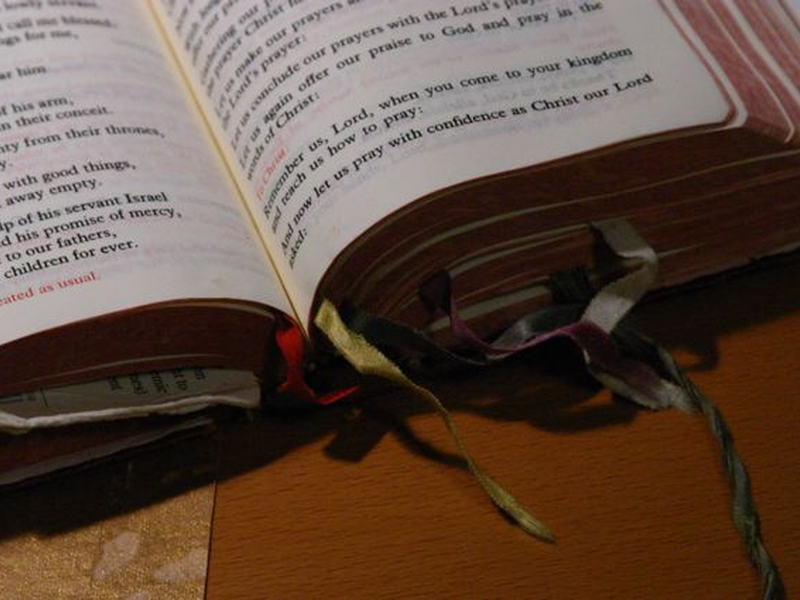
Reflections on Reformation: Why Pray the Hours?

Early on in the history of the church, Christians understood that the 1st century Jewish practice of meeting for prayer at set times of the day was a good and biblical practice to continue. We find references to this in several places in Scripture. In Acts 3 we find Peter…

by Timothy LeCroySeptember 12, 2017
emmanuel-phaeton-1bwmfmvybi8-unsplash
Biblical Studies

Navigating and Celebrating the Complexity of Scripture: A Conversation with Richard Hays

Editors’ note: For those interested in a review of Richard Hays’s latest book, see here . Richard Hays is a renowned New Testament scholar. The professor of New Testament at Duke Divinity School originally studied English literature, giving his reading of Scripture a pronounced literary sensibility. He’s perhaps best known…

by Alastair RobertsSeptember 7, 2017
hebrew-manuscript-2
Genesis

Toledoth and the Structure of Genesis

As many commentators point out, Genesis is structured by 10 uses of the word toledoth , "generations." The word means something along the lines of "begotten things," and the toledoth statements head the various sections of Genesis. When Genesis 2:4 announces "these are the begettings of heaven and earth" and…

by Peter LeithartSeptember 5, 2017

Showing page 106 of 309

See all

Showing page 5 of 43

See all
Theology

Time and the end of actions

Why should there be a final judgment when God judges in time? Aquinas answers: “Judgment on something changeable cannot be rendered fully before its consummation. Thus judgment cannot be rendered fully regarding the quality of any action before its completion, both in itself and its results, because many actions appear…

April 6, 2006

Observations on 2 Corinthians 1

1) Verse 4 moves from the affliction of the apostles (“our”) to the comfort of “those who are in any affliction.” This movement does not depend on any similarity or identity between the affliction of the apostles and the affliction of other sufferers (though cf. v. 6b). Members of the…

April 6, 2006
Philosophy

Descartes, Meditations

A few notes on Descartes, Meditations 1-2, with lots of help from Jean-Luc Marion. Descartes’s ego cogito, ergo sum is not, Marion points out, original, at least in its form. It has origins in Augustine, who offered this response to the skeptics: “I have no fear of the arguments of…

April 6, 2006

Copernican Revolution

Some scattered thoughts inspired by comments from Chris Schlect and Doug Wilson at a faculty discussion of de Lubac today: How is it that theologians (like Norman Shepherd, Steve Wilkins, Rich Lusk, and others) who want to expunge the notion of merit from theology get accused of being “neo-nomians” and…

April 5, 2006
Theology

Surnaturel and Protestantism

Milbank asks the intriguing question of whether de Lubac’s surnaturel thesis “rather deconstructs the terms of the Schleiermacher/Barth divide.” He appears to mean that the polarization of Schleiermacher’s “intrinicism” and Barth’s “extrinicisim” is dissolved by de Lubac’s Thomist understand of nature and grace. To adopt, for the moment, an idiom…

April 5, 2006

Against Yale

Milbank contrasts de Lubac’s advocacy of patristic and medieval hermeneutics, which insists that the allegorical fulfills and completes the literal, with the Yale school, which he sees as living in “the no-man’s land of ‘history-like narrative’ which at once abolishes real history and ignores the essential allegorical underpinning of Christian…

April 5, 2006

Showing page 1862 of 2212

Browse by Category

In Medias Res

Your weekly digest for all things Theopolis.

Donate

Theopolis is nearly 100% donor-supported. Consider joining us on our mission.