Theopolis Logo

Writing

Explore our collection of theological essays, biblical studies, and reflections on faith and culture.

See all
e99a1994
Theopolis News

Water, Bread, and Wine

"The faithful use of sacraments, and indeed a fully sacramental view of creation, is vital to the life of the Church. Baptism and the Lord's Supper are rites that directly shape the community and the Body, because they were given by God for that express purpose. A deficient practice of…

by Brian MoatsMay 27, 2016

astronauts
Culture

Detached People Can Only Float

Weightlessness is fun. At the beginning of Gravity (2013) , we can see one astronaut dancing the Macarena and another one playing with his jetpack. They like it out there in the space. Apart from zero-gravity they can enjoy beautiful views, and even the silence is likable, although Matt Kowalski…

by Bogumil JarmulakMay 26, 2016
trump
American Culture

A Very Good Joke?

I recently went to a lunch that is more or less quarterly. About a dozen of us go. It is a lunch held in honor of a retired professor of religion and philosophy. I have been one of his acquaintances for more than 40 years. In his tenure as professor,…

by Richard BledsoeMay 24, 2016
img_0864
Theological Education

Why Theopolis?

Why Theopolis? Don't we already have seminaries and Bible colleges and other institutions for theological education? Why do we need another one? I get this question now and again. I ask myself this question even more often. What follows is a partial answer. Back in the 1990s, seminaries seemed to…

by Peter LeithartMay 19, 2016
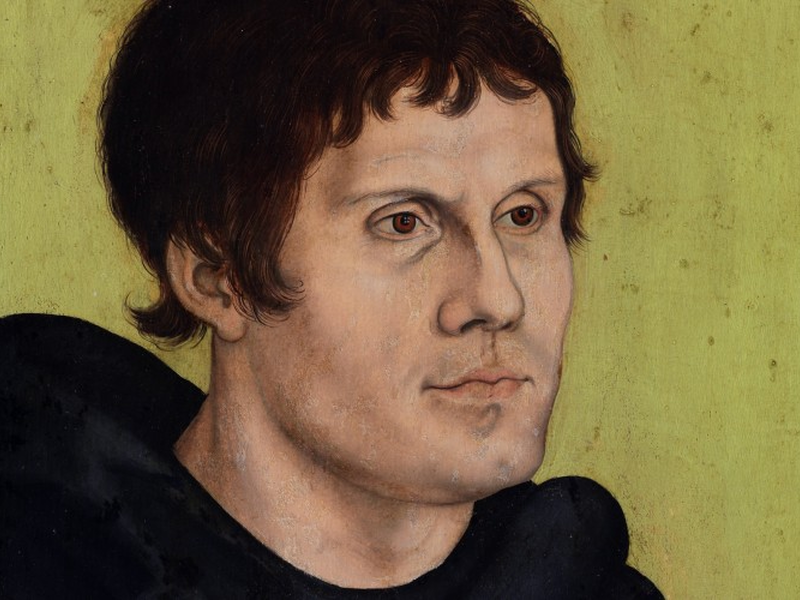
portrait_of_martin_luther_as_an_augustinian_monk-800x500
Good Works

The Logic of Luther

I think the logic of the Lutheran Reformation can be summarized in one sentence, attributed to Luther himself: "God does not need your good works, but your neighbor does." The first half of that statement is justification by faith . God doesn't need our works to satisfy his justice or…

by Rich LuskMay 17, 2016
prince
Art

Appreciating the Camera Work in Pornography

If you are looking to start a fight with Christians, there is hardly a better subject to do so than the arts. Music, movies, paintings, and literature have provided no small battlegrounds for Christians to war. We are emotionally invested in the arts. A song, a book, or a film…

by Bill SmithMay 10, 2016

Showing page 131 of 309

See all

Showing page 5 of 43

See all
Theology

Time and the end of actions

Why should there be a final judgment when God judges in time? Aquinas answers: “Judgment on something changeable cannot be rendered fully before its consummation. Thus judgment cannot be rendered fully regarding the quality of any action before its completion, both in itself and its results, because many actions appear…

April 6, 2006

Observations on 2 Corinthians 1

1) Verse 4 moves from the affliction of the apostles (“our”) to the comfort of “those who are in any affliction.” This movement does not depend on any similarity or identity between the affliction of the apostles and the affliction of other sufferers (though cf. v. 6b). Members of the…

April 6, 2006
Philosophy

Descartes, Meditations

A few notes on Descartes, Meditations 1-2, with lots of help from Jean-Luc Marion. Descartes’s ego cogito, ergo sum is not, Marion points out, original, at least in its form. It has origins in Augustine, who offered this response to the skeptics: “I have no fear of the arguments of…

April 6, 2006

Copernican Revolution

Some scattered thoughts inspired by comments from Chris Schlect and Doug Wilson at a faculty discussion of de Lubac today: How is it that theologians (like Norman Shepherd, Steve Wilkins, Rich Lusk, and others) who want to expunge the notion of merit from theology get accused of being “neo-nomians” and…

April 5, 2006
Theology

Surnaturel and Protestantism

Milbank asks the intriguing question of whether de Lubac’s surnaturel thesis “rather deconstructs the terms of the Schleiermacher/Barth divide.” He appears to mean that the polarization of Schleiermacher’s “intrinicism” and Barth’s “extrinicisim” is dissolved by de Lubac’s Thomist understand of nature and grace. To adopt, for the moment, an idiom…

April 5, 2006

Against Yale

Milbank contrasts de Lubac’s advocacy of patristic and medieval hermeneutics, which insists that the allegorical fulfills and completes the literal, with the Yale school, which he sees as living in “the no-man’s land of ‘history-like narrative’ which at once abolishes real history and ignores the essential allegorical underpinning of Christian…

April 5, 2006

Showing page 1862 of 2212

Browse by Category

In Medias Res

Your weekly digest for all things Theopolis.

Donate

Theopolis is nearly 100% donor-supported. Consider joining us on our mission.