Theopolis Logo

Writing

Explore our collection of theological essays, biblical studies, and reflections on faith and culture.

See all
screen-shot-2021-07-15-at-9-14-19-am
Biblical Studies

The Beatitudes and Woes

Mrs. Marguerite Lane of Grand Rapids writes to ask if I have ever noticed a correlation between the eight beatitudes of Matthew 5 and the eight woes of Matthew 23. I confess that I have not. A glance at various commentators reveals that such a correspondence does not seem to…

by James B. JordanMay 15, 1989
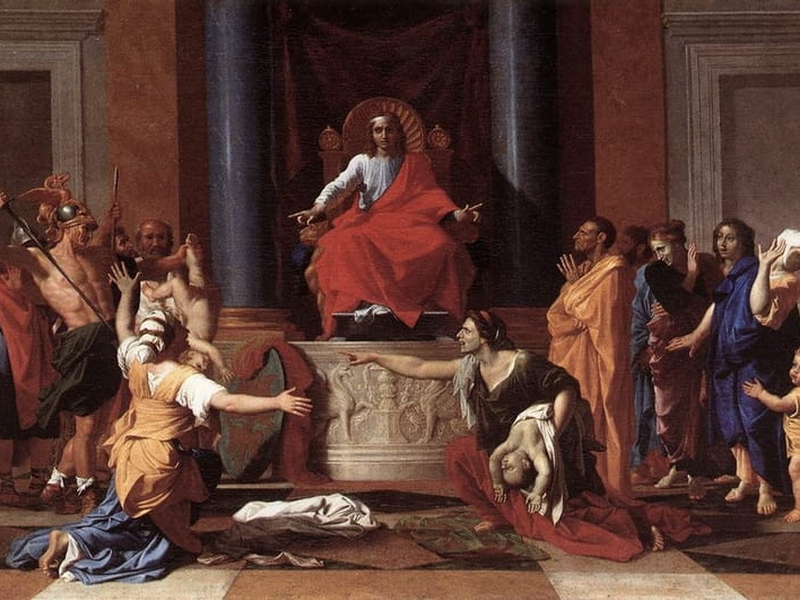
49980-nicolas_poussin_-_the_judgment_of_solomon_-_wga18330-800w-tn
Proverbs

Advice From a Sojourner, Part 1

1. The words of Agur, the son of Jakeh, the burden. The man declares to Ithiel, to Ithiel and Ucal: 2. Surely I am more stupid than any other man, And I do not have the understanding of a man. 3. And I have not learned wisdom, But I have…

by James B. JordanMay 15, 1989

hebrew-manuscript-6
Biblical Studies

The Problem of Psalm 137

Psalm 137 is widely regarded as one of the meanest of the imprecatory psalms. Certainly as we read it it is seems to be a song of pure vengeance. The exiles in Babylon, in grief over the judgment that Babylon has brought upon them, pray for the destruction of that…

by James B. JordanApril 15, 1989
timothy-eberly-djj49s6ud2o-unsplash
Biblical Studies

The Thigh of the Peace Offering

In the Levitical law, the priests received two particular portions of each peace offering: the "wave offering" of the breast and the "heave offering" (or better, "contribution") of the right thigh. The purpose of this essay is to attempt to determine the reason why the second of these, the thigh,…

by Peter LeithartApril 13, 1989
screen-shot-2022-01-07-at-6-38-22-pm
Biblical Studies

The Son of Joseph

The story of Jesus’ visit, early in His ministry, to the synagogue in His home town of Nazareth is recorded for us in Luke 4:16-30. You may remember that Jesus read from Isaiah about how the Messiah would preach the gospel, care for the poor, work miracles, and bring in…

by James B. JordanApril 12, 1989
e99a2225
Biblical Horizons

"Do This!"

(The essay that follows concerns a rather touchy subject: how the Lord’s Supper is to be done. I am not writing to insult or offend, but to challenge. To that end I have not "held back" but have "gone ahead" and said what I think needs to be said —…

by James B. JordanMarch 12, 1989
See all

Showing page 5 of 43

See all
Theology

Time and the end of actions

Why should there be a final judgment when God judges in time? Aquinas answers: “Judgment on something changeable cannot be rendered fully before its consummation. Thus judgment cannot be rendered fully regarding the quality of any action before its completion, both in itself and its results, because many actions appear…

April 6, 2006

Observations on 2 Corinthians 1

1) Verse 4 moves from the affliction of the apostles (“our”) to the comfort of “those who are in any affliction.” This movement does not depend on any similarity or identity between the affliction of the apostles and the affliction of other sufferers (though cf. v. 6b). Members of the…

April 6, 2006
Philosophy

Descartes, Meditations

A few notes on Descartes, Meditations 1-2, with lots of help from Jean-Luc Marion. Descartes’s ego cogito, ergo sum is not, Marion points out, original, at least in its form. It has origins in Augustine, who offered this response to the skeptics: “I have no fear of the arguments of…

April 6, 2006

Copernican Revolution

Some scattered thoughts inspired by comments from Chris Schlect and Doug Wilson at a faculty discussion of de Lubac today: How is it that theologians (like Norman Shepherd, Steve Wilkins, Rich Lusk, and others) who want to expunge the notion of merit from theology get accused of being “neo-nomians” and…

April 5, 2006
Theology

Surnaturel and Protestantism

Milbank asks the intriguing question of whether de Lubac’s surnaturel thesis “rather deconstructs the terms of the Schleiermacher/Barth divide.” He appears to mean that the polarization of Schleiermacher’s “intrinicism” and Barth’s “extrinicisim” is dissolved by de Lubac’s Thomist understand of nature and grace. To adopt, for the moment, an idiom…

April 5, 2006

Against Yale

Milbank contrasts de Lubac’s advocacy of patristic and medieval hermeneutics, which insists that the allegorical fulfills and completes the literal, with the Yale school, which he sees as living in “the no-man’s land of ‘history-like narrative’ which at once abolishes real history and ignores the essential allegorical underpinning of Christian…

April 5, 2006

Showing page 1862 of 2212

Browse by Category

In Medias Res

Your weekly digest for all things Theopolis.

Donate

Theopolis is nearly 100% donor-supported. Consider joining us on our mission.