Theopolis Logo

Writing

Explore our collection of theological essays, biblical studies, and reflections on faith and culture.

See all
screen-shot-2021-03-02-at-10-31-45-am
Marriage

Eating the Meat, or Inviting Colonization?

One common trope which is regularly invoked in current debates about the defensibility versus the danger of Christian engagement with critical theories (or, species of Critical Theory) is the idea of “ eating the meat but spitting out the bones .” Usually not far behind is a nod to the…

by James WoodMarch 2, 2021

screen-shot-2021-02-25-at-10-59-54-am
Proverbs

Proverbial Eschatology

I am writing about the book of Proverbs in the Bible and “Eschatology.” I don’t refer only to the end of time, or “last things” that will happen in history before it ends as we know it. I am referring to all times of God’s judgment wherein He ends an…

by Mark HorneFebruary 25, 2021
maxresdefault
Augustine

Primacy of Worship for Political Unity

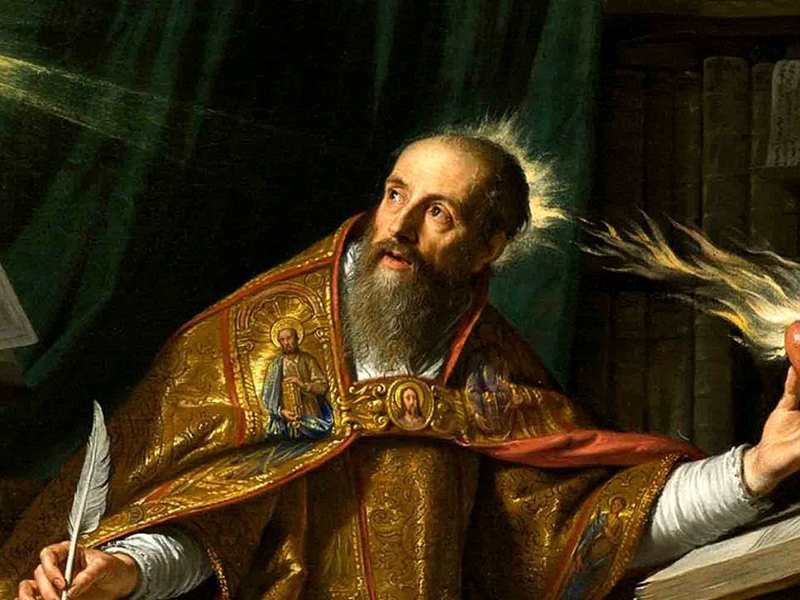
“Unity” is the word of the day. In his inaugural address, Joe Biden invoked St. Augustine to inspire Americans to come together around certain shared values. As others have recently argued, Biden misreads Augustine in important ways. My argument here is that if we seek political unity and civic health…

by James WoodFebruary 23, 2021
arseny-togulev-apq9q5pkits-unsplash
Matthew

Jesus, the Temple Tax and Four-Fold Atonement

This is part two of a series which began here ( The Half Shekel Temple Tax ) in which I answer back, hoping not to rebut but to glorify, some observations Peter Leithart made in a thought-provoking piece about the Temple Tax as atonement ( Atonement Money ). Adding economic…

by Jerry BowyerFebruary 16, 2021
simple-frame-photography-studio-facebook-cover
American Culture

Wokeness as Post-Protestant Neopaganism

It is now commonplace to characterize Wokeness (or “ Wokeism ”) as a religion , or at least religion-like . What I would like to explore is an elaboration on this emergent consensus, supplementing it with some theological analysis. Wokeness, I propose, is a form of post-Protestant neopaganism. It resembles…

by James WoodFebruary 9, 2021
960x0
Movies

Alien 3: Through New Eyes

Science Fiction movies often retell old stories and myths with greater impact for modern people. A being from another world or a technologically advanced human can embody an ancient god or demon and viewers are suddenly unwittingly enthralled by Ur tales that emerged from hundreds of years of human experience.…

by Jacob GuckerFebruary 2, 2021

Showing page 58 of 309

See all

Showing page 5 of 43

See all
Theology

Time and the end of actions

Why should there be a final judgment when God judges in time? Aquinas answers: “Judgment on something changeable cannot be rendered fully before its consummation. Thus judgment cannot be rendered fully regarding the quality of any action before its completion, both in itself and its results, because many actions appear…

April 6, 2006

Observations on 2 Corinthians 1

1) Verse 4 moves from the affliction of the apostles (“our”) to the comfort of “those who are in any affliction.” This movement does not depend on any similarity or identity between the affliction of the apostles and the affliction of other sufferers (though cf. v. 6b). Members of the…

April 6, 2006
Philosophy

Descartes, Meditations

A few notes on Descartes, Meditations 1-2, with lots of help from Jean-Luc Marion. Descartes’s ego cogito, ergo sum is not, Marion points out, original, at least in its form. It has origins in Augustine, who offered this response to the skeptics: “I have no fear of the arguments of…

April 6, 2006

Copernican Revolution

Some scattered thoughts inspired by comments from Chris Schlect and Doug Wilson at a faculty discussion of de Lubac today: How is it that theologians (like Norman Shepherd, Steve Wilkins, Rich Lusk, and others) who want to expunge the notion of merit from theology get accused of being “neo-nomians” and…

April 5, 2006
Theology

Surnaturel and Protestantism

Milbank asks the intriguing question of whether de Lubac’s surnaturel thesis “rather deconstructs the terms of the Schleiermacher/Barth divide.” He appears to mean that the polarization of Schleiermacher’s “intrinicism” and Barth’s “extrinicisim” is dissolved by de Lubac’s Thomist understand of nature and grace. To adopt, for the moment, an idiom…

April 5, 2006

Against Yale

Milbank contrasts de Lubac’s advocacy of patristic and medieval hermeneutics, which insists that the allegorical fulfills and completes the literal, with the Yale school, which he sees as living in “the no-man’s land of ‘history-like narrative’ which at once abolishes real history and ignores the essential allegorical underpinning of Christian…

April 5, 2006

Showing page 1862 of 2212

Browse by Category

In Medias Res

Your weekly digest for all things Theopolis.

Donate

Theopolis is nearly 100% donor-supported. Consider joining us on our mission.