Theopolis Logo

Writing

Explore our collection of theological essays, biblical studies, and reflections on faith and culture.

See all
cross-2
Church Calendar

The Good Friday Paradise Party

I grew up in the 1950s. This was before the "Sixties" and the democratization, informalization, and general cheapening of the church and her worship. Ministers were Father Donovan, Pastor Eckhart, Reverend MacPherson, Mister (Episcopal) Parker, and Brother Smith. Liturgical speech was high language, sounding kind of like the King James…

by James B. JordanMarch 25, 2016
music-violin
Hermeneutics

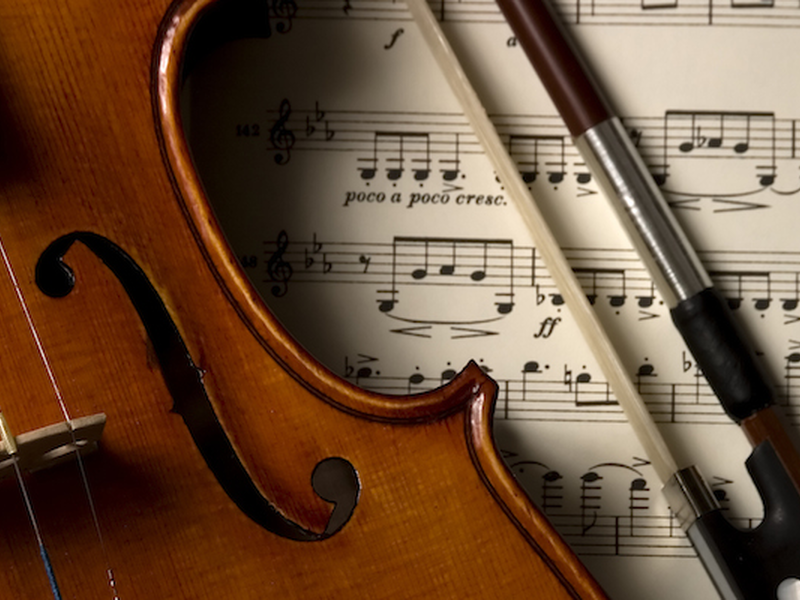
A Musical Case for Typological Realism, (Part 1)

Metaphor exerts a surprisingly powerful influence within our thinking. Although it is easily dismissed as little more than a figure of speech, when we attend more closely to the ways in which we use it, metaphor’s importance swiftly becomes more apparent. Although many of our metaphors have become quite invisible…

by Alastair RobertsMarch 24, 2016
tree-2
Creation

True Science

What is a tree, scientifically speaking? A mere googling gives the following answer: “a woody perennial plant, typically having a single stem or trunk growing to a considerable height and bearing lateral branches at some distance from the ground.” We can increase detail by describing its family, genus, species and…

by Remy WilkinsMarch 22, 2016
fasting
Church Calendar

Food for Thought from Ethiopia

The majority of Western evangelical Christians rarely, if ever, fast as a form of spiritual discipline. In our culture, fasting is more connected with dieting than worship, the other side of our deeply ambiguous fascination with food. Food is everywhere. We eat more than ever before, at greater speed, and…

by Sam BusseyMarch 17, 2016
unnamed
Biblical Theology

What is Systematic Typology? – Part Two

A Grammar of Creation An understanding of the visual-musical language of the Bible must begin with Genesis 1. This is fortunate, because when explaining biblical types to academics, as opposed to children, one is repeatedly forced to start from scratch. From birth, a healthy child is attuned to rhythm and…

by Mike BullMarch 15, 2016
wall_e_by_mrcanavan-d3f92cn
Art

Wall-E and the New Creation

In an inverse Eden, a land laid waste, one works alone tending the trash. There are none like him in all the earth, inquisitive, playful and most drawn to those mysterious, dancing bipedal creatures who lost earth and left it to go wandering the vast wilderness of space. Humans have…

by Remy WilkinsMarch 10, 2016

Showing page 134 of 309

See all

Showing page 5 of 43

See all

Reformation Rhetoric

Peter Matheson ( Rhetoric of Reformation ) recognizes that polemic is “both necessary and useful” (8). It enables underdogs to gain a foothold, and “enables us to see things as they are. Its caricatures are nearer to the truth than the smooth rhetoric and facile images beloved of politician, businessman…

April 13, 2017

Ladder to Heaven

2 Chronicles 3-4, the Chronicler's account of the temple, uses the phrase “left and right” several times. Jachin and Boaz, the two pillars, are “left and right” at the porch (3:17). Ten basins are set up in two groups of five on the left and right of the court (4:6).…

April 12, 2017

The Pillars that Huram Built

In her study of Leviticus as Literature , Mary Douglas notes the “house that Jack built” quality of the Levitical descriptions of sacrifice. Priests put animal parts on the wood that is on the fire that is on the altar. Douglas takes this as a sign that Leviticus describes sacrifice…

April 11, 2017

Pollution and Purgation in the Reformation

I n a famous essay on “rites of violence” in sixteenth-century France, Natalie Zemon Davis argued that one motivation behind mob violence was the desire to purge “the community of dreaded pollution. The word ‘pollution' is often on the lips of the violent, and the concept serves well to sum…

April 11, 2017

Creating the Temple

T he Chronicler's account of the construction of Solomon's temple (2 Chronicles 3:1-5:1) follows the creation week of Genesis 1 in general and in specific details. In general, the account moves from a description of the dimensions, materials and adornments of the three zones of the temple (porch, palace, most…

April 10, 2017

Weber the Idealist

R obert Scribner doesn't think Protestantism “disenchanted” the world. Reformers did attack certain forms of medieval “magic.” They rejected “sacramentals,” which were “functional” rituals that could be used as protection against devils. This didn't produce a “buffered” world, impervious to outside influence. No one surpassed Luther in his obsession with…

April 7, 2017

Showing page 187 of 2212

Browse by Category

In Medias Res

Your weekly digest for all things Theopolis.

Donate

Theopolis is nearly 100% donor-supported. Consider joining us on our mission.