Theopolis Logo

Writing

Explore our collection of theological essays, biblical studies, and reflections on faith and culture.

See all
cain-killing-abel-unknown-19th-century
Biblical Horizons

The Servant of the Ground

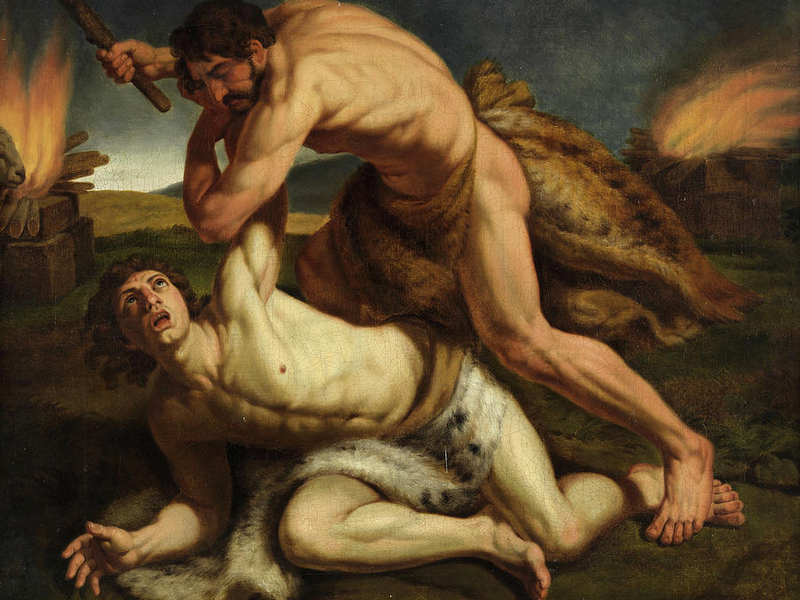
Why was Abel’s offering approved and Cain’s rejected? This question has been debated for many centuries. Some have argued that Cain’s offering was rejected because it was not a bloody offering; others that Cain’s offering was rejected because it was not from the firstfruits; others that Cain’s offering was rejected…

by Peter LeithartSeptember 19, 1990

timothy-eberly-djj49s6ud2o-unsplash
Luke

The Unjust Steward Revisited

Last year I had occasion to work through the book of Luke as I did some work for one of my editorial clients, and this year my pastor has been preaching through Luke. Thus, I have twice been reminded of the Parable of the Unjust Steward (Luke 16:1-13), a parable…

by James B. JordanSeptember 2, 1990
alfons-morales-ylswjsy7stw-unsplash-1
Biblical Chronology

The Mysterious Numbers of Edwin R. Thiele

We come now to what some have called the "Gordian Knot" of Biblical chronology: the period of the kings of Israel and Judah. We do not have a summary figure that tells exactly how long this period of time was. The book of Kings provides the years each king reigned,…

by James B. JordanSeptember 2, 1990
screen-shot-2022-02-22-at-11-59-32-am
Matthew

Additional Reflections on the Dew of Hermon

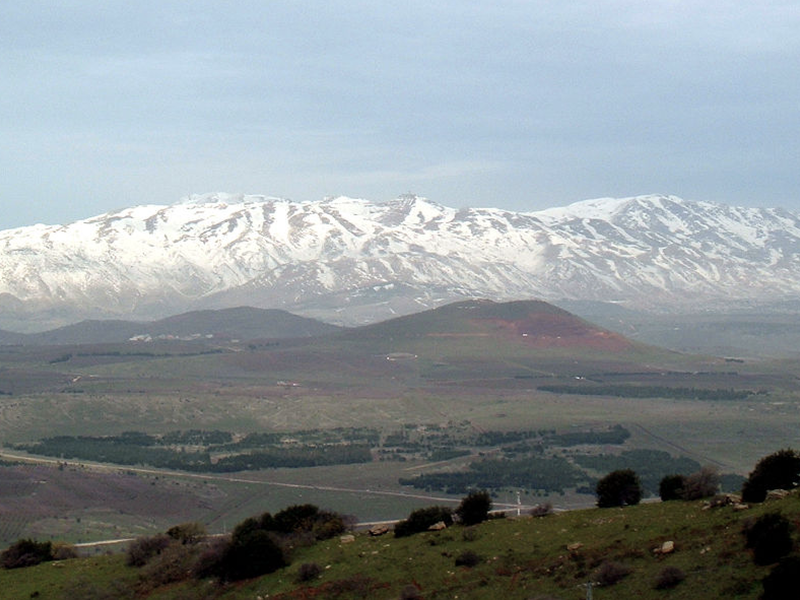
In an earlier article , while examining the biblical symbolism of dew, I noted the parallel in Psalm 133 between the dew upon Mount Hermon and the oil poured upon the head of Aaron. Both the dew of Hermon and the oil of ordination are compared to the pleasantness of…

by Peter LeithartAugust 19, 1990
screen-shot-2021-07-15-at-9-01-42-am
Biblical Horizons

Cornelius van der Waal, "The Covenantal Gospel"

The Covenantal Gospel was the last book written by the remarkable South African theologian and exegete Cornelius van der Waal. Two other works of van der Waal’s have been translated: Hal Lindsey and Biblical Prophecy , and Search the Scriptures . Because this book was written in 1979, it does…

by James B. JordanAugust 2, 1990
biljana-martinic-igj_21drt3g-unsplash
Beer

The Evangelical Cocaine Lobby

A year or so ago, my wife and I were invited to a Christian school in order to preview a film on drug abuse that was going to be shown to our children. One of the children in this film turned out, of course, to be using drugs. This child’s…

by James B. JordanAugust 2, 1990

Showing page 302 of 309

See all

Showing page 5 of 43

See all
History

Modernity and antiquity

Kumar suggests that “some of the principal hall-marks of modernity” are already evident in the Christian notions of time and history. Both Christianity and modernity separate time from nature, and humanize time; time is seen by both as “linear and irreversible”; both see history as an Aristotelian drama with beginning,…

February 24, 2006
History

First Modernity

The Latin modernus was coined in the late fifth century, as an antonym to antiquus , and variations of modernus became particularly common after the 10th century. Thus, Krishan Kumar writes, “Modernity is . . . an invention of the Christian Middle Ages,” and was used to emphasize the radical…

February 24, 2006
Philosophy

Computer Communications and the Self

Poster lists four effects that computer communications (email, chat groups, etc) have on the self: “1 they introduce new possibilities for playing with identities; 2 they degender communications by removing gender cues; 3 they destabilize existing hierarchies in relationships and re-hierarchize communications according to criterio that were previously irrelevant; and…

February 24, 2006
Philosophy

Computers, subjects and objects

Descartes famously contrasted the mind (res cogitans) with the external world (res extensa), but Mark Poster suggests that computer writing fudges that distinction: “the computer dematerializes the written trace. As inputs are made to the computer through the keyboard, pixels of phosphor are illuminated on the screen, pixels that are…

February 24, 2006
Media

Community and New Communications

Mark Poster points to a tension between the modern institutions of production and the postmodern technologies of communication, particularly as they impact the formation of the self: “If modernity or the mode of production signifies patterned practices that elicit identities as autonomous and (instrumentally) rational, postmodernity or the mode of…

February 24, 2006
Media

Telephone

Prior to World War I, Telefon Hirmondo, the telephone system of Budapest, was used as a broadcast system, with a published schedule of programs that were restricted to certain classes of people in Hungary. Only later did it develop into a communications system in which everyone could pass information to…

February 24, 2006

Showing page 1878 of 2212

Browse by Category

In Medias Res

Your weekly digest for all things Theopolis.

Donate

Theopolis is nearly 100% donor-supported. Consider joining us on our mission.