
Theopolis Logo

Writing

Explore our collection of theological essays, biblical studies, and reflections on faith and culture.

See all
giammarco-zeh-ljawhtg-unsplash
Biblical Horizons

OPEN BOOK: Views and Reviews

Isaac E. Mozeson, The Word: The Dictionary that Reveals the Hebrew Sources of English (Northvale, NJ: Jacob Aaronson Inc., 1995), 310 pp. Reviewed by James B. Jordan. Once there was only one language in the world, the language God spoke to Adam. At the Tower of Babel, there came to…

by James B. JordanJune 28, 1996
tim-wildsmith-j6jv-mkdzqs-unsplash
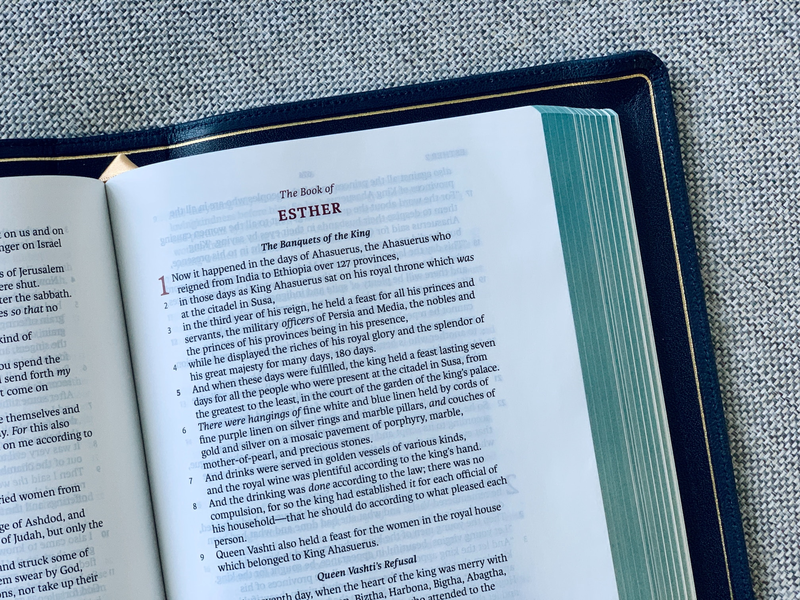
Esther

Esther: Historical & Chronological Comments (IV)

2. The Setting of the Book of Esther A. Xerxes (continued from previous issue) Ezra 6:14 says that the Jews finished building "according to the command of the God of Israel and the decree of Cyrus and Darius and Artaxerxes king of Persia." The problem with this verse is that…

by James B. JordanJune 28, 1996

ales-krivec-4mibe6zg5r0-unsplash
Acts

Jesus and Amalek

This essay goes with our previous study of the Amalek pattern back in Biblical Horizons No. 2. Since many do not have this essay, entitled "The Battle of Gog and Magog," let me cite the relevant paragraphs: Note in Genesis 12-15 that Abram moves into the land after escaping Pharaoh…

by James B. JordanJune 28, 1996

aaron-burden-1ebsmyrau-s-unsplash
Proverbs

The Strange Woman

Proverbs 7:6-23 is one of several passages early in the Proverbs in which Solomon warns his son about the wiles and dangers of the "strange woman." It is certainly quite proper to take these as straightforward warnings against sexual sins, and these are certainly warnings that need to be impressed…

by Peter LeithartJune 27, 1996
jan-kahanek-g3o5ztrk2e4-unsplash
Biblical Studies

Some Observations

1. In Luke 4:20 we read that after Jesus finished reading from Isaiah, "the eyes of all in the synagogue were fixed upon Him." This is usually taken in a psychological sense: They were amazed at Jesus somehow. I suggest that, as always, a merely psychological reading is a modern…

by James B. JordanMay 28, 1996
tim-wildsmith-j6jv-mkdzqs-unsplash
Esther

Esther: Historical & Chronological Comments (III)

2. The Setting of the Book of Esther Up to now we have assumed what we must prove, that the king in Esther is Darius the Great. While Biblical chronologists have usually taken this position, commentators on the book of Esther have often taken others as the king. One view,…

by James B. JordanMay 28, 1996

Showing page 265 of 309

See all

Showing page 5 of 43

See all
Philosophy

Meta-Narrative’s Revenge

Postmodern intellectuals believe they have seen through the arrogant or naive efforts of earlier generations of intellectuals. Now we see the folly of foundationalism, now we see that all knowledge is intertwined with regimes of power-knowledge, now we know that all thought arises from knotty aporias. We see that their…

February 22, 2006
Philosophy

Meta-Narrative’s Revenge

Postmodern intellectuals believe they have seen through the arrogant or naive efforts of earlier generations of intellectuals. Now we see the folly of foundationalism, now we see that all knowledge is intertwined with regimes of power-knowledge, now we know that all thought arises from knotty aporias. We see that their…

February 22, 2006
Philosophy

Universalism and relativism

Is truth universal? Is the only alternative to an idea of the universalism of all truth an affirmation of the relativism of all truth? This seems to be a false dichotomy from the beginning. Upon a moment’s reflection, it seems clear that the truth is that some truths are relative…

February 22, 2006
History

Tantrum of the Intellectuals

Featherstone suggests that postmodernism is in part a “loss of confidence on the part of the intellectuals in the universal potential of their project.” Thus, postmodern theory is marked by “tendencies toward indeterminacies , the recognition of openness, pluralism, randomness, eclecticism, incoherence, paralogism, intertextuality, the primacy of the many over…

February 22, 2006
Politics

Theology of punishment

In a recent First Things review, Gilbert Meilander summarized Oliver O’Donovan’s theory of punishment as follows: “anything called punishment must be ‘backward-looking’ and hence, in some sense, retributive. But he is not persuaded by any account of retribution that things of it as a simple exchange - in which the…

February 22, 2006
Literature

Hamlet again

INTRODUCTION It is often said that fourth acts in Shakespeare plays are weak. Action slows down, the principal character is sometimes off stage, and the drama seems to dissipate before the final catastrophe. Act 4 of Macbeth begins with Macbeth’s renewed contact with the witches, but then trails off in…

February 22, 2006

Showing page 1880 of 2212

Browse by Category

In Medias Res

Your weekly digest for all things Theopolis.

Donate

Theopolis is nearly 100% donor-supported. Consider joining us on our mission.