
Theopolis Logo

Writing

Explore our collection of theological essays, biblical studies, and reflections on faith and culture.

See all
giammarco-zeh-ljawhtg-unsplash
Biblical Horizons

OPEN BOOK: Views and Reviews

Isaac E. Mozeson, The Word: The Dictionary that Reveals the Hebrew Sources of English (Northvale, NJ: Jacob Aaronson Inc., 1995), 310 pp. Reviewed by James B. Jordan. Once there was only one language in the world, the language God spoke to Adam. At the Tower of Babel, there came to…

by James B. JordanJune 28, 1996
tim-wildsmith-j6jv-mkdzqs-unsplash
Esther

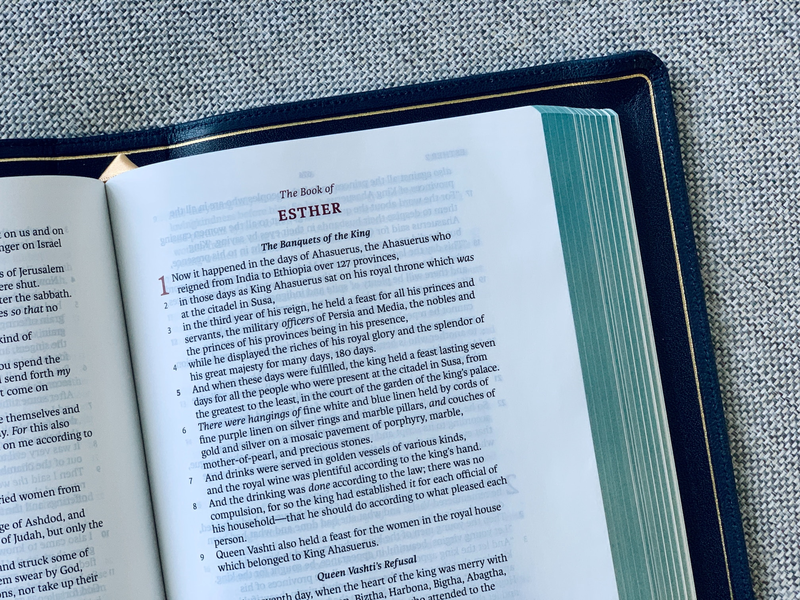
Esther: Historical & Chronological Comments (IV)

2. The Setting of the Book of Esther A. Xerxes (continued from previous issue) Ezra 6:14 says that the Jews finished building "according to the command of the God of Israel and the decree of Cyrus and Darius and Artaxerxes king of Persia." The problem with this verse is that…

by James B. JordanJune 28, 1996

ales-krivec-4mibe6zg5r0-unsplash
Acts

Jesus and Amalek

This essay goes with our previous study of the Amalek pattern back in Biblical Horizons No. 2. Since many do not have this essay, entitled "The Battle of Gog and Magog," let me cite the relevant paragraphs: Note in Genesis 12-15 that Abram moves into the land after escaping Pharaoh…

by James B. JordanJune 28, 1996

aaron-burden-1ebsmyrau-s-unsplash
Proverbs

The Strange Woman

Proverbs 7:6-23 is one of several passages early in the Proverbs in which Solomon warns his son about the wiles and dangers of the "strange woman." It is certainly quite proper to take these as straightforward warnings against sexual sins, and these are certainly warnings that need to be impressed…

by Peter LeithartJune 27, 1996
jan-kahanek-g3o5ztrk2e4-unsplash
Biblical Studies

Some Observations

1. In Luke 4:20 we read that after Jesus finished reading from Isaiah, "the eyes of all in the synagogue were fixed upon Him." This is usually taken in a psychological sense: They were amazed at Jesus somehow. I suggest that, as always, a merely psychological reading is a modern…

by James B. JordanMay 28, 1996
tim-wildsmith-j6jv-mkdzqs-unsplash
Esther

Esther: Historical & Chronological Comments (III)

2. The Setting of the Book of Esther Up to now we have assumed what we must prove, that the king in Esther is Darius the Great. While Biblical chronologists have usually taken this position, commentators on the book of Esther have often taken others as the king. One view,…

by James B. JordanMay 28, 1996

Showing page 265 of 309

See all

Showing page 5 of 43

See all
Literature

Hamlet, 3.4

This scene, like the scene that opens Act 3, shows Hamlet encountering a woman who in his mind has betrayed him. Again, he has been sent for, and probably suspects that it is another setup like the one with Ophelia. He has just come from the play, ready to drink…

February 16, 2006
Literature

Pierre and Hamlet

FO Matthiessen described Melville’s Pierre as “an American Hamlet,” a novel that attempts to “translate” Shakespeare into 19th-century American life. In part, this is a matter of Melville matching characters and plots: “Lucy’s pale innocence fails Pierre as Ophelia’s did Hamlet; the well-named Reverend Mr. Falsgrave’s cushioned voice of worldly…

February 16, 2006
Philosophy

Metaphysics of presence

Derrida, famously, challenges what he calls the metaphysics of presence. What is challenging is not the reality of presence as such, but the notion that we can arrive at some pure presence of a thing, a moment, a self that is unmixed with anything other than itself. A pure instant…

February 16, 2006
Philosophy

How Deconstruction Works

Culler offers an example from Nietzsche that provides an excellent example of the ju-jitsu of deconstruction. Nietzsche argues that causality is not something given, but is the product of a rhetorical operation, a chronological reversal ( chronologische Umdrehung ). I feel a pain, and go searching for a cause of…

February 15, 2006
Literature

New Criticism and theory

At the beginning of his book on Deconstruction , Jonathan Culler notes that critical theory, seen “as an attempt to establish the validity or invalidity of particular interpretive procedures,” is profoundly indebted to New Criticism: This movement “not only instilled the assumption that the purpose of literary study is the…

February 15, 2006
Literature

Thoughts on Beowulf

All page numbers are from the Heany translation. The central focus of the first two fights is Heorot, the mead-hall of Hrothgar. The mead-hall is the focus of a complex of imagery. (The last fight has a similar origin, as Beowulf’s hall is destroyed by the dragon. The house is…

February 15, 2006

Showing page 1884 of 2212

Browse by Category

In Medias Res

Your weekly digest for all things Theopolis.

Donate

Theopolis is nearly 100% donor-supported. Consider joining us on our mission.