Theopolis Logo

Writing

Explore our collection of theological essays, biblical studies, and reflections on faith and culture.

See all
paul-2
Romans

Notes on Scary Stuff in Romans 9

What shall we say then? Is there injustice on God’s part? By no means! For he says to Moses, “I will have mercy on whom I have mercy, and I will have compassion on whom I have compassion.” So then it depends not on human will or exertion, but on…

by Mark HorneFebruary 5, 2015
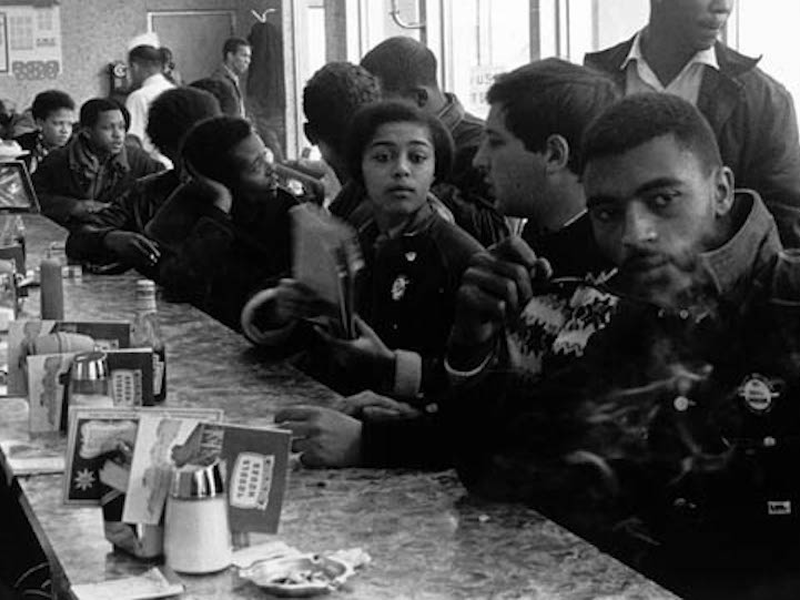
lunch-counter
American Politics

Covenants of Exclusion

A hundred years ago, William Warley signed a contract to buy a house in Louisville, Kentucky from Charles Buchanan, a white man. Before closing the sale, Warley, who was black, learned that the lot was subject to a city ordinance barring blacks from occupying the premises if most of the…

by Brendan O'DonnellFebruary 3, 2015
shakespeare-2
Literature

The Bard and the Book

I concluded the first essay on this topic by saying that I would introduce three books about Shakespeare and the Bible, but I decided to introduce four instead. The three books become four are: Naseeb Shaheen, Biblical References in Shakespeare’s Plays (London: Associated University Presses, 1999) ; Hannibal Hamlin, The…

by Ralph Allan SmithJanuary 29, 2015
augustine-2
Augustine

Augustine on Pagan Virtue

My children attend a classical Christian school, situated in the independent “free church” evangelical tradition. Over the past few years they have been growing in their acquaintance with the world of Homer, Plato, Virgil, and Livy. They enjoy it, and I envy it. The school is a great school. My…

by Gerald HiestandJanuary 27, 2015
prodigal-son
Atonement

The Prodigal and the Cross

The Prodigal Son parable (Luke 15) has been a favorite of liberal theologians for a couple of centuries. It seems to be a parable designed for liberal sensibilities: An indulgent, accepting Father; forgiveness extended without a cross; a surly older brother who might represent the "conservative" face of religion who…

by Peter LeithartJanuary 22, 2015
sky-from-bridge
Ascension

Underground Man, Ascended Man

“I want now to tell you, gentlemen, whether you care to hear it or not, why I could not even become an insect. I tell you solemnly, that I have many times tried to become an insect. But I was not equal even to that. I swear, gentlemen, that to…

by Richard BledsoeJanuary 20, 2015

Showing page 161 of 309

See all

Showing page 5 of 43

See all

Hypocrisy and Motive

W hen Jesus condemns hypocrisy, argues Oliver O'Donovan ( Desire of Nations , 109–10), He is speaking of conformity to “public expectation.” O'Donovan suggests that the sense is captured by the word “performance.” Jesus is not speaking of motives in the modern sense of the word: “A motive, as we…

April 7, 2017
Slavery

Abolition

W hy didn't the apostles move more quickly to protest and attempt to abolish slavery? There are various answers to that, but Oliver O'Donovan's gets to the heart of the issue: The church “believed that Christ had abolished it” ( Desire of Nations , 185). Of course, the church had…

April 7, 2017

Kulturkampf

P hilip Rieff notes, “That word [ Kulturkampf ] first appeared in common German use in the early 1870s during the struggle of the National Liberal political party to disarm by law the moral/educational authority, and political punditry, of a triumphalist Roman Catholic hierarchy, revitalized as it then was by…

April 6, 2017

Fences and Neighbors

K. Luria examines the Sacred Boundaries (xxvii–xxxxi) of early modern France, in an effort to correct extremes of historiography. Some have argued that sacred boundaries between religious groups led to violence; other historians have pointed to continuous interaction between Catholics and Protestants. Both are right. Symbolic boundaries separated Catholic and…

April 6, 2017

Building the Confessional State

A 1989 article by Wolfgang Reinhard on the relationships among the Reformation, Counter-Reformation, and early modern state-building is an excellent brief summary of the relationship between Reformation and post-Reformation “confessionalization” and the formation of modern states and national identities. The Reformers' turn to the state was in the first instance…

April 5, 2017

What Solomon Made

O verall, the Chronicler's account of Solomon's temple construction (2 Chronicles 3:1-5:1) is arranged chiastically: A. Solomon begins to build, 3:1-2 B. What Solomon made, 3:3-4:10 C. What Huram-abi made, 4:11-17 B’. What Solomon made, 4:18-22 A’. Solomon completes ( shalam ) work, 5:1 The long section in B is…

April 4, 2017

Showing page 189 of 2212

Browse by Category

In Medias Res

Your weekly digest for all things Theopolis.

Donate

Theopolis is nearly 100% donor-supported. Consider joining us on our mission.