Theopolis Logo

Writing

Explore our collection of theological essays, biblical studies, and reflections on faith and culture.

See all
tanner-mardis-xuxghzhibn4-unsplash-1-2
Biblical Studies

Tweets-turned-Notes on the Bible’s Chronology

Summary In what follows, I will consider the “year-stamps” employed in Scripture, i.e., statements of the form, “Such-and-such an event took place in the Xth year of Y.” In the process, I will suggest some ways in which the Biblical narrative might relate to events in the extra-Biblical world, though…

by James BejonJuly 16, 2019
durer-prodigal-son-2
Luke

Perspectives on the Prodigal, (Part 2)

In the first essay on the parable of the Prodigal Son, I suggested that the problems commentators and others encounter in interpreting Jesus three-part parable are not accidental. These are not just problems in our ignorance of cultural background. They are intentional features of the stories —stories designed to poke…

by Ralph Allan SmithJuly 11, 2019
durer-prodigal-son-2
Luke

Perspectives on the Prodigal, (Part 1)

The story of the Prodigal Son is perhaps the most well-known story in the Bible. As others have observed, it may also be one of the most misunderstood. In two short essays, I will point out features of this story that are commonly neglected, aspects of Jesus’ parable that might…

by Ralph Allan SmithJuly 9, 2019
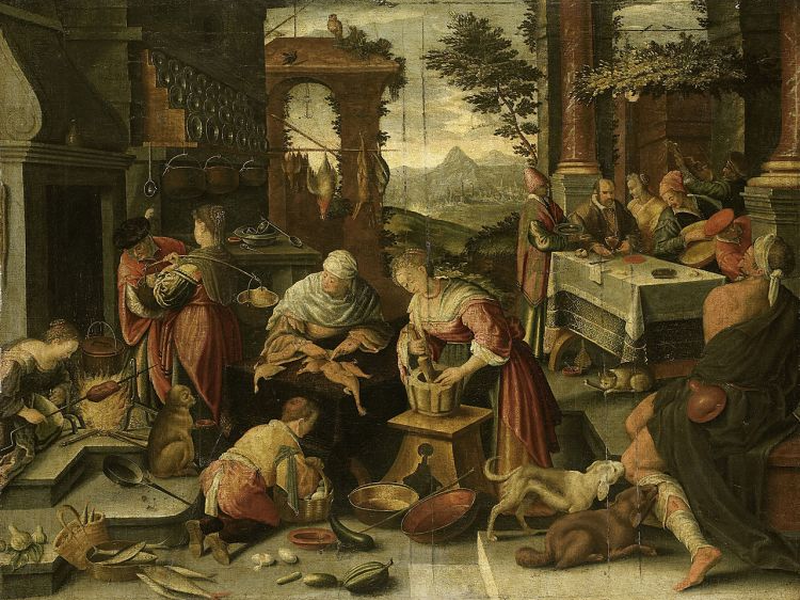
de-rijke-man-en-de-arme-lazarus-by-jacopo-da-ponte-16th-century
Luke

Lazarus and the Rich Man

The parable of Lazarus and the nameless rich man is not an independent story. It is part of a long context that begins in Luke 15:1, where Jesus is eating with tax collectors and sinners and the scribes and Pharisees grumble. In response to their hardheartedness, Jesus tells a three-part…

by Ralph Allan SmithJuly 4, 2019
aaron-burden-uynrnfdkjwg-unsplash
Luke

Everybody has Dropsy - Luke 14:1-24

The Bible is written so that even when a reader cannot pick up on what might be deeper or more detailed aspects of a text, there is virtually always a message to be heard. In the ancient world, where the “reader” of Scripture would likely be a church official facing…

by Ralph Allan SmithJuly 2, 2019
communion
Biblical Theology

Fruit Trees and Grain Plants

The distinction between garden (or vineyard) and field begins in Genesis 2. This relates to the ordering of the formless world. Plants of the field are contrasted with the garden planted by God in Genesis 2:5&8. Later on, under the Old Covenant the Israelites will be required to keep their…

by James B. JordanJune 27, 2019

Showing page 77 of 309

See all

Showing page 5 of 43

See all
Philosophy

Pure Thought

There should be - probably there is - an anthropological study of Western philosophy as a highly rarefied form of dirt avoidance. Plato with his “pure and unadulterated” access to truth; Descartes’ clear and distinct ideas; Kant’s purity of reason. I’m thinking of a history of philosophy that reads Plato…

August 25, 2005
Literature

Shakespeare the historicist

J.L. Simmons notes that Shakespeare consistently depicts Rome “as a pagan world in which the characters must perforce operate with no reference beyond the Earthly City.” As a result, “all attempts to rise above the restrictions of man and his imperfect society, are tragically affected by the absence of revelation…

August 25, 2005
Literature

Political Gratitude in Shakespeare’s Roman Plays

Some discarded fragments from a paper that got too long. As early as Xenophon, ingratitude has seen as a cause of sedition, and during the middle ages the social and political context of feudalism strengthened this link. Xenophon wrote, “And they [the Persians] bring one another to trial also charged…

August 24, 2005
Literature

Political Gratitude in Shakespeare’s Roman Plays

Some discarded fragments from a paper that got too long. As early as Xenophon, ingratitude has seen as a cause of sedition, and during the middle ages the social and political context of feudalism strengthened this link. Xenophon wrote, “And they [the Persians] bring one another to trial also charged…

August 24, 2005

Sermon Outline, August 28

INTRODUCTION In the first chapters of Ephesians, Paul describes God’s eternal plan for the human race and for the world. He has chosen us in Christ before the foundation of the world, and He has now intervened in the history of death and sin to rescue us, to exalt us…

August 23, 2005
Theology

Necessity of Anthropomorphism

Bavinck argues that without anthropomorphism, we have only skepticism and agnosticism: “Those . . . who contest our right to use anthropomorphisms, thereby in princiuple deny the possibility that God in fact reveals himself in his creatures, are logically bound to proceed to the denial of creation, and are finally…

August 23, 2005

Showing page 1952 of 2212

Browse by Category

In Medias Res

Your weekly digest for all things Theopolis.

Donate

Theopolis is nearly 100% donor-supported. Consider joining us on our mission.