
Theopolis Logo

Writing

Explore our collection of theological essays, biblical studies, and reflections on faith and culture.

See all
giammarco-zeh-ljawhtg-unsplash
Biblical Horizons

OPEN BOOK: Views and Reviews

Isaac E. Mozeson, The Word: The Dictionary that Reveals the Hebrew Sources of English (Northvale, NJ: Jacob Aaronson Inc., 1995), 310 pp. Reviewed by James B. Jordan. Once there was only one language in the world, the language God spoke to Adam. At the Tower of Babel, there came to…

by James B. JordanJune 28, 1996
tim-wildsmith-j6jv-mkdzqs-unsplash
Esther

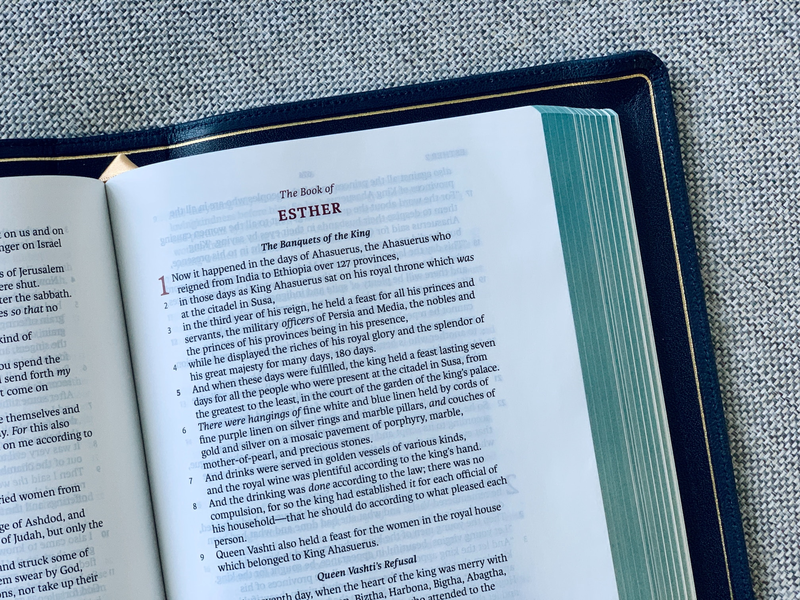
Esther: Historical & Chronological Comments (IV)

2. The Setting of the Book of Esther A. Xerxes (continued from previous issue) Ezra 6:14 says that the Jews finished building "according to the command of the God of Israel and the decree of Cyrus and Darius and Artaxerxes king of Persia." The problem with this verse is that…

by James B. JordanJune 28, 1996

ales-krivec-4mibe6zg5r0-unsplash
Acts

Jesus and Amalek

This essay goes with our previous study of the Amalek pattern back in Biblical Horizons No. 2. Since many do not have this essay, entitled "The Battle of Gog and Magog," let me cite the relevant paragraphs: Note in Genesis 12-15 that Abram moves into the land after escaping Pharaoh…

by James B. JordanJune 28, 1996

aaron-burden-1ebsmyrau-s-unsplash
Proverbs

The Strange Woman

Proverbs 7:6-23 is one of several passages early in the Proverbs in which Solomon warns his son about the wiles and dangers of the "strange woman." It is certainly quite proper to take these as straightforward warnings against sexual sins, and these are certainly warnings that need to be impressed…

by Peter LeithartJune 27, 1996
jan-kahanek-g3o5ztrk2e4-unsplash
Biblical Studies

Some Observations

1. In Luke 4:20 we read that after Jesus finished reading from Isaiah, "the eyes of all in the synagogue were fixed upon Him." This is usually taken in a psychological sense: They were amazed at Jesus somehow. I suggest that, as always, a merely psychological reading is a modern…

by James B. JordanMay 28, 1996
tim-wildsmith-j6jv-mkdzqs-unsplash
Esther

Esther: Historical & Chronological Comments (III)

2. The Setting of the Book of Esther Up to now we have assumed what we must prove, that the king in Esther is Darius the Great. While Biblical chronologists have usually taken this position, commentators on the book of Esther have often taken others as the king. One view,…

by James B. JordanMay 28, 1996

Showing page 265 of 309

See all

Showing page 5 of 43

See all

Ecclesial “denotation”

In his books, Ephraim Radner offers numerous profound insights into the complications and implications of a divided Christianity. Near the beginning of Hope Among the Fragments , he points to some of the dangers of post-Reformation efforts to “denote” the church -that is, to describe the church as “something that…

July 4, 2005

Translation, 2 Kings 13

In the twenty-third year to Yo’ash son of ‘Achazyahu king of Yehudah Reigned-as-king Yeho’achaz son of Yehu’ over Yisrael in Shomron seventeen years. And he did the evil in the eyes of Yahweh And the walked after the sins of Yarav’am son of Nevat who caused-Israel-to-sin. He did not turned…

July 4, 2005

The exodus of Jehoahaz

During the reign of Jehoahaz of Israel, the northern kingdom experienced an exodus (2 Kings 13:1-6): 1) Israel had sinned and therefore the Lord became angry and gave them into the hand of Aram, as often happened during the times of the Judges. 2) Jehoahaz “became ill.” The word is…

July 4, 2005
Theology

Salvation and Semiosis in Augustine’s de Doctrina Christiana

Augustine’s de doctrina Christiana is most relevant to contemporary theological and philosophical concerns. It anticipates Wittgenstein, Peirce, and Eco, as well as the cultural anthropologists; it has an almost postmodern feel at certain points; it is a text in theological hermeneutics. Augustine’s answers are sometimes (in my view) deeply wrong;…

July 4, 2005
Theology

Salvation and Semiosis in Augustine’s de Doctrina Christiana

Augustine’s de doctrina Christiana is most relevant to contemporary theological and philosophical concerns. It anticipates Wittgenstein, Peirce, and Eco, as well as the cultural anthropologists; it has an almost postmodern feel at certain points; it is a text in theological hermeneutics. Augustine’s answers are sometimes (in my view) deeply wrong;…

July 4, 2005

Eucharistic meditation, July 3

Luke 14:21: Then the head of the household became angry and said to his slave, “Go out at once into the streets and lanes of the city and bring in here the poor and crippled and blind and lame.” Pastor Wilson has reminded us this morning that the older members…

July 3, 2005

Showing page 1965 of 2212

Browse by Category

In Medias Res

Your weekly digest for all things Theopolis.

Donate

Theopolis is nearly 100% donor-supported. Consider joining us on our mission.