Theopolis Logo

Writing

Explore our collection of theological essays, biblical studies, and reflections on faith and culture.

See all
hebrew-manuscript-2
Hermeneutics

The Complexity of Biblical Allusion

There is no question about the fact that the book of Deuteronomy is full of literary allusion. But there is a serious problem, even a paradox, of understanding how that allusion works. To begin with, if we assume that Deuteronomy was written by Moses — with some editorial emendations added…

by Ralph Allan SmithJanuary 23, 2018

bladerunner
Culture

The Artificial Resurrection

Genesis and Genetics in Blade Runner 2049 The power of science fiction, and what’s positive about it, is that you’re able to experience the worst-case scenario without actually having to live it. (Actor Ryan Gosling, who plays Officer “K”) (Warning: The following analysis contains spoilers for both Blade Runner films.)…

by Mike BullJanuary 18, 2018
sixteen-miles-out-d40gdcd_-he-unsplash
Biblical Studies

The Battle of Gog and Magog

The battle of Gog and Magog is found in Ezekiel 38-39. My purpose in this brief essay is to propound an explanation for this passage that I have not encountered in any of my commentaries, but that makes more sense to me than any other. I offer it here in…

by James B. JordanJanuary 16, 2018
resurrection

Deep Hope

I. Varlam Shalamov in Kolyma Tales describes his experience of the Gulag, where he spent more than a dozen of years. In a story titled The Life of Engineer Kipreev Shalamov reflects on the theme of hope in the life of a prisoner: “Hope always shackles the convict. Hope is…

by Bogumil JarmulakJanuary 11, 2018
abraham-defeats-kings-g-jollain-2
Biblical Theology

Abram’s 318 Men

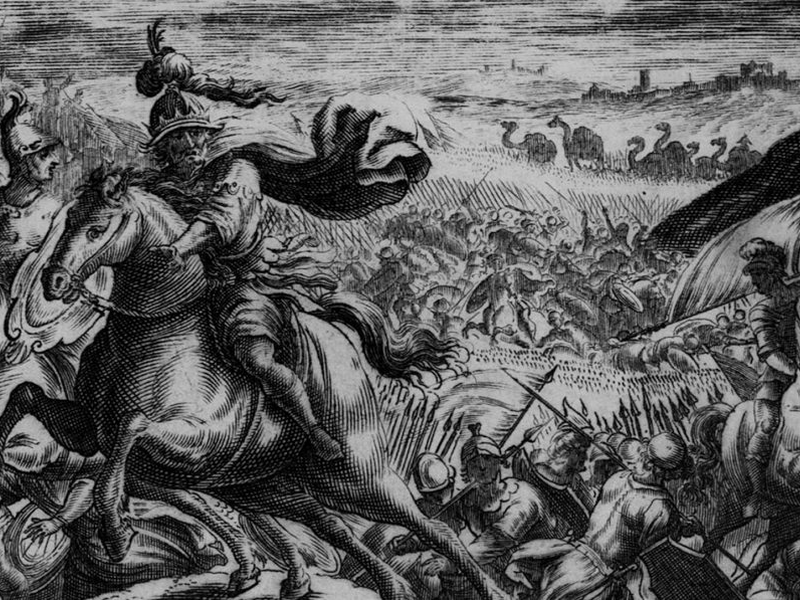
Genesis 14:14 says that Abram mustered his trained men, “born in his house,” to rescue Lot, and gives their number as 318. It is clear that the precise number is provided for some reason, but what is it? S. Gevirtz notes that 318 is the sum of all the prime…

by James B. JordanJanuary 9, 2018
tanner-mardis-xuxghzhibn4-unsplash-1
Biblical Studies

The Flying Scroll

And he said to me, "What do you see?" And I answered, "I see a flying scroll; its length is twenty cubits and its width ten cubits" (Zechariah 5:2). Immediately following his vision of the outpouring of the Spirit upon the restoration community (4:1-14), Zechariah saw a flying scroll. The…

by Peter LeithartJanuary 4, 2018

Showing page 100 of 309

See all

Showing page 5 of 43

See all

Kolb on Luther and Chemnitz, Revisited

A perceptive Lutheran reader asked whether I was endorsing an antinomian position in my favorable summary of Kolb’s article on Luther and Chemnitz. He pointed out that Kolb’s position relies on an illegitimate separation of God and His Law, and argued that instead the Law should be seen as an…

February 14, 2005

Eucharistic Meditation, First of Lent

?And the ravens brought him bread and meat in the morning, and bread and meat in the evening, and he would drink from the brook.?E In this morning sermon, we saw how the writer of Kings highlights the authority of Elijah and His power. He speaks, and the heavens become…

February 13, 2005

Exhortation, First of Lent

So what? So what if Jeroboam made golden calves and worshiped them at Dan and Bethel? So what if the house of Jeroboam was destroyed by Baasha, and the house of Baasha destroyed by Zimri, and Zimri destroyed by Omri, and the house of Omri destroyed by Jehu? What does…

February 13, 2005

Philosophy and Self-Justification

Alain de Botton notes in his book Status Anxiety that many societies see a direct relationship between reputation and self-image. If others hold me in contempt, then I must either defend myself against their contempt or accept their contemptuous assessment. Philosophy introduces a mediator, reason, which assesses and judges reputation…

February 11, 2005

The Village

I finally watched The Village . Much of it was perfectly silly. The initial explanation of the dead animals littering the village is that a coyote is on the loose, and this theory is put to rest only when it’s decided that coyotes are not big enough to leave big…

February 11, 2005

Chemnitz and Luther

Robert Kolb offers this helpful analysis of the differences between Luther and Chemnitz on justification: “Luther understood justification as the execution of the wages of sin . . . upon sinners and their simultaneous resurrectionto new life in Jesus Christ . . . . Chemnitz did not pursue this aspect…

February 10, 2005

Showing page 2007 of 2212

Browse by Category

In Medias Res

Your weekly digest for all things Theopolis.

Donate

Theopolis is nearly 100% donor-supported. Consider joining us on our mission.