Theopolis Logo

Writing

Explore our collection of theological essays, biblical studies, and reflections on faith and culture.

See all
tanner-mardis-xuxghzhibn4-unsplash-1-2
Biblical Studies

Tweets-turned-Notes on the Bible’s Chronology

Summary In what follows, I will consider the “year-stamps” employed in Scripture, i.e., statements of the form, “Such-and-such an event took place in the Xth year of Y.” In the process, I will suggest some ways in which the Biblical narrative might relate to events in the extra-Biblical world, though…

by James BejonJuly 16, 2019
durer-prodigal-son-2
Luke

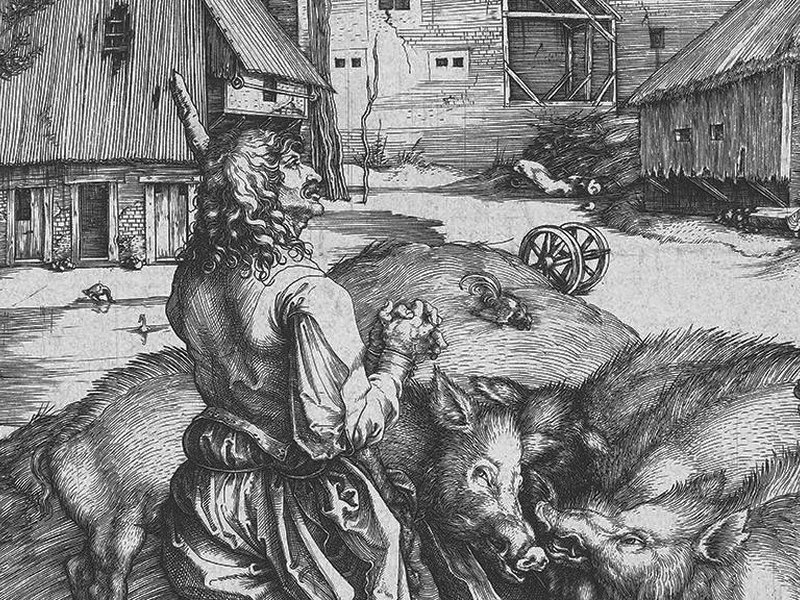
Perspectives on the Prodigal, (Part 2)

In the first essay on the parable of the Prodigal Son, I suggested that the problems commentators and others encounter in interpreting Jesus three-part parable are not accidental. These are not just problems in our ignorance of cultural background. They are intentional features of the stories —stories designed to poke…

by Ralph Allan SmithJuly 11, 2019
durer-prodigal-son-2
Luke

Perspectives on the Prodigal, (Part 1)

The story of the Prodigal Son is perhaps the most well-known story in the Bible. As others have observed, it may also be one of the most misunderstood. In two short essays, I will point out features of this story that are commonly neglected, aspects of Jesus’ parable that might…

by Ralph Allan SmithJuly 9, 2019
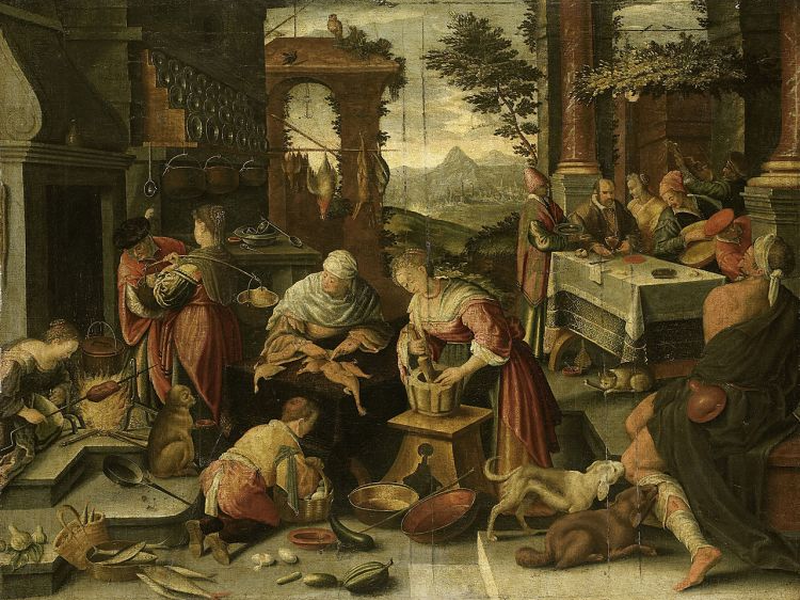
de-rijke-man-en-de-arme-lazarus-by-jacopo-da-ponte-16th-century
Luke

Lazarus and the Rich Man

The parable of Lazarus and the nameless rich man is not an independent story. It is part of a long context that begins in Luke 15:1, where Jesus is eating with tax collectors and sinners and the scribes and Pharisees grumble. In response to their hardheartedness, Jesus tells a three-part…

by Ralph Allan SmithJuly 4, 2019
aaron-burden-uynrnfdkjwg-unsplash
Luke

Everybody has Dropsy - Luke 14:1-24

The Bible is written so that even when a reader cannot pick up on what might be deeper or more detailed aspects of a text, there is virtually always a message to be heard. In the ancient world, where the “reader” of Scripture would likely be a church official facing…

by Ralph Allan SmithJuly 2, 2019
communion
Biblical Theology

Fruit Trees and Grain Plants

The distinction between garden (or vineyard) and field begins in Genesis 2. This relates to the ordering of the formless world. Plants of the field are contrasted with the garden planted by God in Genesis 2:5&8. Later on, under the Old Covenant the Israelites will be required to keep their…

by James B. JordanJune 27, 2019

Showing page 77 of 309

See all

Showing page 5 of 43

See all

Ahab and David

I have argued elsewhere that the Omride dynasty is a counterfeit Davidic dynasty, and that in this structure Ahab is a counterfeit Solomon. John Van Seters suggests in a 2000 Presidential address to La societe canadienne des etudes bibliques that Ahab is also a Davidic character, at least in the…

December 23, 2004

McCormack on Justification

Bruce McCormack?s article on justification, alluded to in an earlier post, is quite good. He rightly points out that ?the term ?justification?Ehas its home in the judicial sphere,?Ebut equally rightly points out that God?s judgments are different from human judgments: ?God?s verdict differs in that it creates the reality it…

December 23, 2004

Perichoresis Overload?

Princeton’s Bruce McCormack protests against the “uncritical expansion of the concept of perichoresis today on the past of a good many theologians.” He suggests that the term “is rightly employed in trinitarian discourse for describing that which is dissimilar in the analogy between intra-trinitarian relations among the divine ‘person’ on…

December 23, 2004

Faith and Justification

Berkhof has some intriguing comments about the distinction between “active or objective” justification and “passive or subjective” justification. The first refers to the declaration that God makes concerning the sinner, that the demands of the law have been met and the sinner is considered righteous for Christ’s sake. In this…

December 22, 2004

“Deliverdict” and Sola Gratia/Sola Fide

If ?justify?Eis both a verdict (?this person is righteous?E and the carrying out of a sentence (?this person is delivered from slavery to Sin?E, then clearly justification cannot be based on anything that the righteous person does. Justification is purely by grace. So, the ?deliverdict?Econstruction of justification does not turn…

December 21, 2004

“Deliverdict” and Sola Gratia/Sola Fide

If ?justify?Eis both a verdict (?this person is righteous?E and the carrying out of a sentence (?this person is delivered from slavery to Sin?E, then clearly justification cannot be based on anything that the righteous person does. Justification is purely by grace. So, the ?deliverdict?Econstruction of justification does not turn…

December 21, 2004

Showing page 2024 of 2212

Browse by Category

In Medias Res

Your weekly digest for all things Theopolis.

Donate

Theopolis is nearly 100% donor-supported. Consider joining us on our mission.