Theopolis Logo

Writing

Explore our collection of theological essays, biblical studies, and reflections on faith and culture.

See all
sixteen-miles-out-al48tflf4e8-unsplash
Food

Gluttony In The Bible (As Opposed To Gluttony In The American Church)

In the Bible, fatness is such a blessing, that it is especially hard to understand why wicked men are permitted to enjoy such a state. It requires a theodicy and faith in God. Thus: “For they have no pangs until death; their bodies are fat and sleek . They are…

by Mark HorneAugust 12, 2013

jeremy-yap-j39x2xx_8cq-unsplash
How to Worship

Biblical Worship (Video with James B. Jordan)

[fve]http://vimeo.com/71901553[/fve]

by Peter LeithartAugust 8, 2013
chris-bair-ndczc5739ck-unsplash
Deuteronomy

Holy Things for Holy People

The allusion to the Exodus story is contained in the first words of Deuteronomy 14:1 — “ye are the sons of Yahweh your God” — as well as in 14:2 in the use of the technical term translated “treasured possession,” “His own possession,” “peculiar people,” “precious people,” and so forth.…

by Ralph Allan SmithAugust 5, 2013
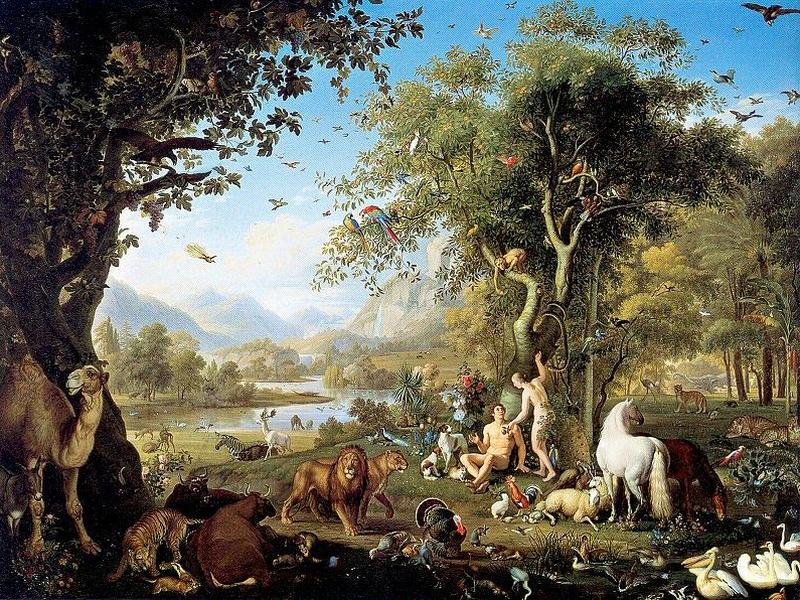
adam-and-eve-in-the-garden-of-eden-wenzel-peter
Deuteronomy

Forbidden Foods

I have argued that Deuteronomy 14:1-21 is an independent literary unit that applies the Third Word to the lives of Israelites from the time of Moses and Joshua. In this short pericope, Moses suggests broad and deep meaning by means of literary allusion to the stories of the creation and…

by Ralph Allan SmithJuly 31, 2013
david-weber-fwuo_zluhnw-unsplash
How to Worship

Pro-Sacramental Reformation

In his recently republished The New Creation , the late, delightful Herbert McCabe defends the priesthood of the plebs as roundly as anyone could want. Citing Hebrews, he claims that "there is an essential difference between the Christian community and the community of the Old Law, or any other religious…

by Peter LeithartJuly 29, 2013
eric-ward-7kqe_8meex8-unsplash
Augustine

Sexual Idolatry

Augustine famously prayed, “Our hearts our restless until they rest in You.” True indeed. Being creatures, we inherently sense our ontological poverty—our innate condition of dependence—and are compelled to find a sense of security. And it is also true—as Augustine’s own narrative painfully illustrates—that one of the things we most…

by Gerald HiestandJuly 24, 2013

Showing page 190 of 309

See all

Showing page 5 of 43

See all

Exhortation, First Advent

In this morning?s sermon, we will be looking at the role of the Spirit in the incarnation of Jesus, in the redemption achieved by Christ, and in the life of the Trinity. One way to summarize the point is that the Spirit is the divine bond, the ?glue?Eof the Trinity.…

November 28, 2004

Eucharistic Sacrifice

Vander Zee shows some chutzpah in addressing the question of Eucharistic sacrifice, and in suggesting that there are senses in which the Eucharist is properly said to be sacrificial. He offers a few quotations to show the Reformation pedigree of this perspective. The first from Calvin: “The Lord’s Supper cannot…

November 28, 2004

VanderZee on Sacraments

Leonard J. Vander Zee’s Christ, Baptism and the Lord’s Supper is the most satisfying introduction to sacramental theology that I’ve come across. VanderZee works out a Reformed understanding of sacraments in general (focusing on the fact that sacraments are God’s action - hardly a Reformed monopoly, of course), as well…

November 28, 2004

Bayer on Luther

Oswald Bayer says that for Luther faith is “divine work in us,” and that means for Luther that God “slays the old nature that belongs to the old world, the old Adam, and makes us new creatures, a new creation.” This is, in Bayers’ summary, the “decisive aspect of the…

November 27, 2004

White on NT

White in fact does not even cover all the passages concerning justification within the texts that teach the doctrine. Romans 6:7 is absent from his Scripture index, and he lists the “key Pauline passages” that deal with justification as Romans 3-5; 8:29-34; Gal 1-5 ( The God Who Justifies ,…

November 26, 2004

God the Judge

Near the heart of the Protestant doctrine of justification (as Barth saw) is the insistence that God, not man, is Judge. Efforts at self-justification are NOT merely moralistic efforts to recommend ourselves to God (though they are that). Efforts at self-justification are also (perhaps more fundamentally) assaults on God’s Lordship;…

November 26, 2004

Showing page 2034 of 2212

Browse by Category

In Medias Res

Your weekly digest for all things Theopolis.

Donate

Theopolis is nearly 100% donor-supported. Consider joining us on our mission.