Theopolis Logo

Writing

Explore our collection of theological essays, biblical studies, and reflections on faith and culture.

See all
kelly-sikkema-gpoh17dxqdm-unsplash
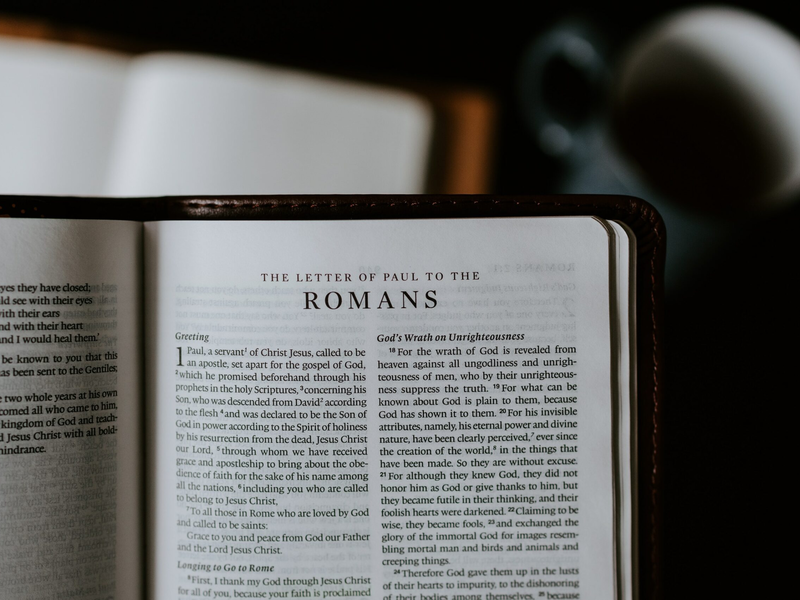
Romans

A Pathway into Romans, Addendum

An addendum to the earlier post on Romans. In my first essay, I pointed out how the role of the sin of Joseph’s brothers in bringing about Joseph’s exaltation in Egypt, and the resulting salvation of the world from famine, might show us and explanation to some of the distinctive…

by Mark HorneMarch 7, 2013

kelly-sikkema-gpoh17dxqdm-unsplash
Romans

A Pathway into Romans

When Paul wrote to the Romans, he was obviously writing a missionary support letter of a sort. One can read Romans 1.15 and then jump into 15.23 (“[S]ince I no longer have any room. . . .) without losing virtually any coherence. Yet into this letter he “dropped,” as it…

by Mark HorneMarch 5, 2013
preston-goff-xncifslw0jw-unsplash
Biblical Studies

Mapping of Time

The Westminster Confession says that each passage has one meaning , not many, and that gets picked up on by lots of people who are suspicious of and do not like typological readings of Scripture. I will defer to wiser and more learned heads than mine as to exactly what…

by Richard BledsoeMarch 1, 2013
kiwihug-l4gw27xzn1i-unsplash
John

How Jesus Saved the World | (Part 2)

By arresting, torturing, and killing Jesus, the authorities thought that they were securing well being and peace again in their society by means of the tried and true method of a single-victim scapegoat. Everyone’s thirst for violence will be satisfied and we can get on with the business of everyday…

by Jeff MeyersFebruary 28, 2013
lea-v-z2ied5ktd-8-unsplash
Ecclesiology

A Vision of Social Harmony

This is the second in a series of essays on "Continuing the Reformation." In his important though sadly unavailable book, Calvin's Doctrine of the Church (Brill, 1970), Benjamin Charles Milner argues persuasively that in Calvin's view God's perfect order for His creation, an order that was to grow and develop…

by James B. JordanFebruary 25, 2013
markus-winkler-aid-xyrtlec-unsplash
Theopolis News

Jordan Lectures

Trinity House Fellow James Jordan recently gave a series of lectures in London on how to read the Bible. They are available online at NorthLondonChurch.org .

by Peter LeithartFebruary 24, 2013

Showing page 198 of 309

See all

Showing page 5 of 43

See all

Exhortation, First Advent

In this morning?s sermon, we will be looking at the role of the Spirit in the incarnation of Jesus, in the redemption achieved by Christ, and in the life of the Trinity. One way to summarize the point is that the Spirit is the divine bond, the ?glue?Eof the Trinity.…

November 28, 2004

Eucharistic Sacrifice

Vander Zee shows some chutzpah in addressing the question of Eucharistic sacrifice, and in suggesting that there are senses in which the Eucharist is properly said to be sacrificial. He offers a few quotations to show the Reformation pedigree of this perspective. The first from Calvin: “The Lord’s Supper cannot…

November 28, 2004

VanderZee on Sacraments

Leonard J. Vander Zee’s Christ, Baptism and the Lord’s Supper is the most satisfying introduction to sacramental theology that I’ve come across. VanderZee works out a Reformed understanding of sacraments in general (focusing on the fact that sacraments are God’s action - hardly a Reformed monopoly, of course), as well…

November 28, 2004

Bayer on Luther

Oswald Bayer says that for Luther faith is “divine work in us,” and that means for Luther that God “slays the old nature that belongs to the old world, the old Adam, and makes us new creatures, a new creation.” This is, in Bayers’ summary, the “decisive aspect of the…

November 27, 2004

White on NT

White in fact does not even cover all the passages concerning justification within the texts that teach the doctrine. Romans 6:7 is absent from his Scripture index, and he lists the “key Pauline passages” that deal with justification as Romans 3-5; 8:29-34; Gal 1-5 ( The God Who Justifies ,…

November 26, 2004

God the Judge

Near the heart of the Protestant doctrine of justification (as Barth saw) is the insistence that God, not man, is Judge. Efforts at self-justification are NOT merely moralistic efforts to recommend ourselves to God (though they are that). Efforts at self-justification are also (perhaps more fundamentally) assaults on God’s Lordship;…

November 26, 2004

Showing page 2034 of 2212

Browse by Category

In Medias Res

Your weekly digest for all things Theopolis.

Donate

Theopolis is nearly 100% donor-supported. Consider joining us on our mission.