Theopolis Logo

Writing

Explore our collection of theological essays, biblical studies, and reflections on faith and culture.

See all
chris-bair-ndczc5739ck-unsplash
Ephesians

“Be Holy for I am Holy”

Below is an excerpt from Mark Horne’s manuscript from his forthcoming commentary on Ephesians, specifically on Paul’s reference to Christians as “saints” (Ephesians 1:1). “Paul, an apostle of Christ Jesus by the will of God, to the saints who are in Ephesus, and are faithful in Christ Jesus.” Paul greets…

by Mark HorneMarch 25, 2025
300129rgsdl
Exodus

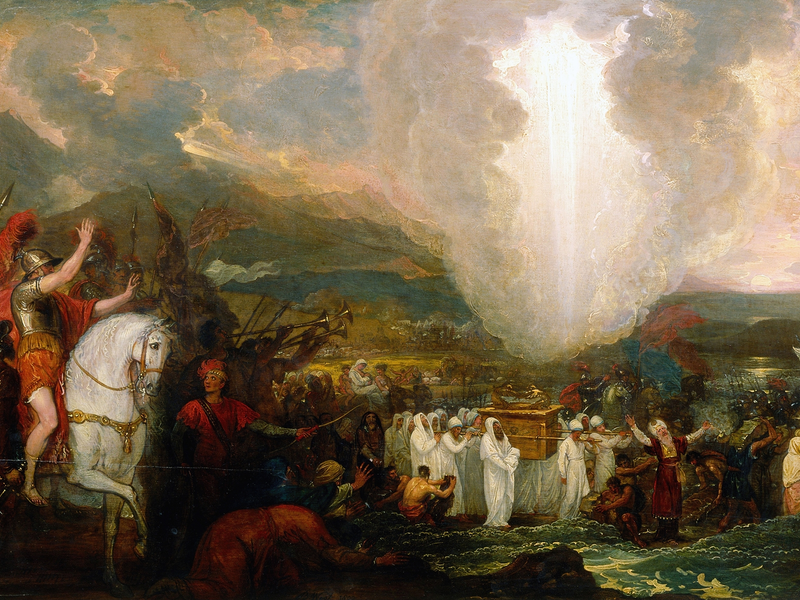
The Perishable in the Ark of the Covenant

There was nothing in the ark except the two tablets that Moses put there at Horeb, where the LORD made a covenant with the people of Israel, when they came out of Egypt (2 Chronicles 5:10). When Solomon finally brought the ark of the covenant to the finished temple in…

by Jonathan WhiteMarch 18, 2025
tim-marshall-k2u71wv2ei4-unsplash
Exodus

The Stages of a Man’s Life and the Second Table of the Law

In As You Like It , Shakespeare famously describes the seven ages of a man’s life. The division of man’s life into stages is not an invention by Shakespeare, nor merely a common medieval artifice, but an expression of the real journey taken in life. Shakespeare seems to divide up…

by Ryan HandermannMarch 13, 2025
brent-cox-2plebdf1nba-unsplash
Christology

The Essence of God’s Image

Is there a chief characteristic which best illumines the image of God in Man? What is it exactly that makes Man as a lens through which to see God? Moses thoughtfully and deliberately escorts the reader to the characteristic showcased above all else: humility. Though much ink has been spilled…

by Ben LoveladyMarch 11, 2025
josh-applegate-toksfdmznkg-unsplash
Liturgy

Two Ways of Being Liturgical: A Baptist Response to the High Church Exodus

Note: This essay is adapted from a talk delivered at the Howell E. Jackson Committee conference on “Foundations of Baptist Education,” held at Union University, Oct. 4-5, 2024. It’s no secret that evangelicals are converting to High Church traditions, a term I will use to refer to Anglo-Catholicism, Roman Catholicism,…

by Ryan SinniMarch 4, 2025
raimond-klavins-mdlseox3vzo-unsplash
Icons

Don’t Convert: Icons and Images in the Early Church

In recent years, there has been a flurry of conversions from Protestant Christianity towards Eastern Orthodoxy and Roman Catholicism, at least in part due to their supposed early church heritage relative to Protestantism. In the words of Rod Dreher, a former Methodist who converted to Eastern Orthodoxy, “Many evangelicals seek…

by John CarpenterFebruary 25, 2025

Showing page 12 of 309

See all

Showing page 5 of 43

See all

Structure in 1 Chronicles 26

1 Chronicles 26:1-19 lists the names and positions of gatekeepers at Solomon's temple. The passage is framed by references to the “allotment” or “apportionment” of assignments to Korahites (v. 1) and sons of Korah and Merari (v. 19). Within this frame, the text moves in a complex parallel fashion through…

February 21, 2017

All Great Art Is Praise

“T he art of man is the expression of his rational and disciplined delight in the forms and laws of the creation of which he forms a part.” This is the first thesis of John Ruskin's “All Great Art Is Praise,” in The Laws of Fesole . Rationality is essential…

February 21, 2017

Demonstrative Complications

I n their 1662 treatise on Logic, or the Art of Thinking , Antoine Arnauld and Pierre Nicole question the straightforwardness of the Calvinist logical analysis concerning the Eucharistic “This is my body.” They summarise the argument this way: “Their claim is that in Jesus Christ’s assertion, ‘This is my…

February 20, 2017

Passivity and Freedom

I ngolf Dalferth thinks we are Creatures of Possibility . By that, he means that “we are creatures in the making whose actual becoming depends on possibilities beyond our control that occur in our lives as opportunities and chances that we can neglect and miss or take up and use”…

February 17, 2017

The State after ‘68

A ccording to Pierre Manent ( Beyond Radical Secularism ), May 1968 marked a critical turning point in the political history ofFrance. Despite the persistence of the “Gaullist” party in political power, ‘68 undermined “collective rules, both political and merely social. The citizen of action was followed by the individual…

February 17, 2017

On Separating Church and State

S eparation of church and state, religion and politics, is not “sufficient unto itself,” argues Pierre Manent ( Beyond Radical Secularism ). After all, he points out, citizens are believers, believers citizens, and they don’t cease to be one when they take up the role of the other. Separation “suggests…

February 17, 2017

Showing page 204 of 2212

Browse by Category

In Medias Res

Your weekly digest for all things Theopolis.

Donate

Theopolis is nearly 100% donor-supported. Consider joining us on our mission.