Theopolis Logo

Writing

Explore our collection of theological essays, biblical studies, and reflections on faith and culture.

See all
aaron-burden-h8s0pf2rcqs-unsplash
Luke

The Second Isaiah and His Message

Higher critics have, for a long time, posited a Second Isaiah to account for the structural and tone differences in the book from chapter 40 on. Now, we do believe in a Second Isaiah, but believe that the form critics have generally suffered from a lack of imagination both in…

by Richard BledsoeOctober 5, 1995

whichbooksbelongintheot
Leviticus

Getting the Translation Right

A couple of the most serious mistranslations in our Bibles are found in the book of Leviticus. The main reason these errors have gone unreformed, I believe, is because Leviticus is simply not studied often enough, so the problem has never been fully addressed. The first mistranslation is found right…

by James B. JordanOctober 4, 1995
Biblical Horizons

Prophecy and the Coming Christian Revolution

Thomas Kuhn’s book, The Structure of Scientific Revolutions , is really a parenthesis inside of the larger reality of Christian history. Progress and forward movement inside of science is a footnote to the larger and more general reality of covenant renewals in both Biblical and Christian history. The fundamental mark…

by Richard BledsoeSeptember 5, 1995
luca-tosoni-wneuvexggjg-unsplash
Biblical Horizons

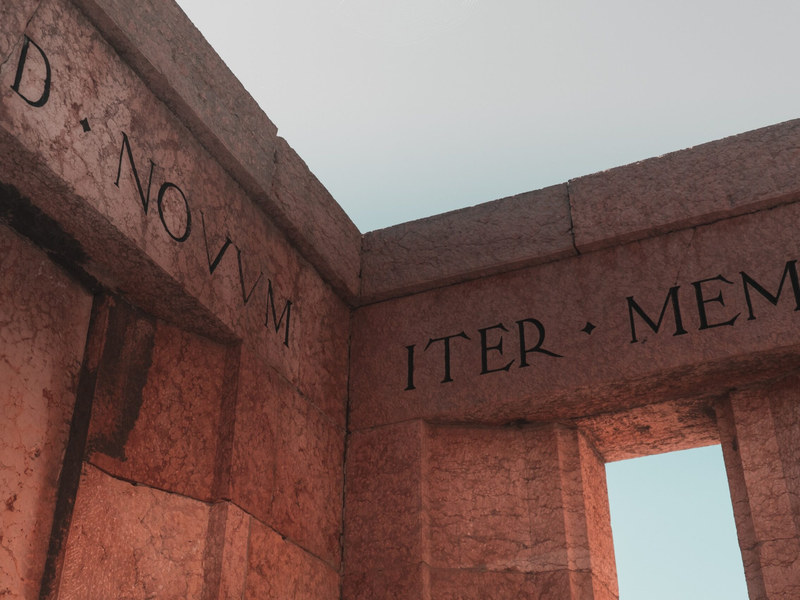
In Defense of Latin

James Jordan, in the June/July 1995 Biblical Horizons, wrote a very helpful essay, "The Great Hangover," the gist of which I entirely agree with. The theme of the essay was that the Church to move forward must shuck off the old husks of Hellenism, Rabbinism, and undo admiration for all…

by Richard BledsoeSeptember 5, 1995
pawan-sharma-vt2efwhbs-e-unsplash
Biblical Horizons

The Triune Office Reconsidered

Traditionally, the three offices in the Presbyterian churches have been teaching elder, ruling elder, and deacon. These have been associated with priest, elder, and Levite respectively. We have seen that the deacon is in fact an apprentice and assistance elder. We have also seen that Levites as well as priests…

by James B. JordanSeptember 4, 1995
jordan-wozniak-xp_agmeea6s-unsplash-2
Biblical Studies

When the Son Is Glorified

John 7:39 interprets Jesus’ offer of living water as an offer of the Spirit to those who believe, "for," John continues, "the Spirit was not yet, because Jesus was not yet glorified." John was not making an ontological statement about the Spirit, as if the Spirit did not exist until…

by Peter LeithartJuly 27, 1995

Showing page 269 of 309

See all

Showing page 5 of 43

See all

Ward on Covenant of Works

Early in Ward’s book, he surveys mid sixteenth-century treatments of the effects of Adam’s sin, mainly to determine whether writers of that period conceived of God’s relationship with Adam as a covenantal one. His evidence suggests several important conclusions: 1) The early Protestant confessions do not describe Adam’s relationship to…

June 23, 2004
Theology

Kline on Covenant of Works

In his very useful study, God & Adam: Reformed Theology and the Creation Covenant , Rowland S. Ward has this to say about Meredith Kline’s views on the un-gracious character of the covenant of works: “Contrary to his position in 1968, Kline does not wish now to admit any concept…

June 22, 2004
Theology

More Bad Taste

I should clarify my final, hurried comments on Brown’s discussion of sin and bad taste. I suggested at the end of the last post that Brown’s initial mapping of the problem contributes to an unsatisfying conclusion regarding moral and aesthetic judgment. Brown argues that taste is community-specific, and thus subject…

June 22, 2004
Theology

Sin and Bad Taste

One of the challenges of a Christian aesthetics is sorting through the connections and distinctions between holiness and good taste on the one hand, and sin and bad taste on the other. In his 1989 book, Religious Aesthetics , Frank Burch Brown offers some thoughtful reflections on this question. Here…

June 22, 2004
Theology

Don Richardson and Contextualization

Don Richardson’s Peace Child is a classic of modern mission writing. In that book, Richardson tells of his experience among the Sawi people of New Guinea, and how he used their traditional custom of exchanging a “peace child” between warring tribes to explain the gospel to them. In his 1981…

June 22, 2004

True and False Arks

When the men of Babel organize to build a tower reaching to heaven, they decide to use “tar for mortar” (Gen 11:3; NASB). The Hebrew phrase repeats two different forms of the same root word (CHMR): The word for “tar” is CHEMAR and the word for “mortar” is CHOMER. They…

June 22, 2004

Showing page 2080 of 2212

Browse by Category

In Medias Res

Your weekly digest for all things Theopolis.

Donate

Theopolis is nearly 100% donor-supported. Consider joining us on our mission.