Theopolis Logo

Writing

Explore our collection of theological essays, biblical studies, and reflections on faith and culture.

See all
dan-meyers-0agtpoaarte-unsplash
Matthew

Fertile Toledots

The Book of Genesis contains eleven distinct markers readily acknowledged as the toledot formula. 1 Commentator Nahum Sarna counts the ’elleh toledot to be “…one of the distinguishing characteristics of the Book of Genesis”. 2 Among translations, the noun is variously translated as “generations” (ESV, KJV), “records of the generations”…

by Ben LoveladyDecember 20, 2022
49980-nicolas_poussin_-_the_judgment_of_solomon_-_wga18330-800w-tn
Romans

Who was Judah's Wickedest King? (Kings & Romans 1:18ff)

The answer that immediately comes to mind to the question in the title is Manasseh, the son of Hezekiah. He was conceived during the extension of life that God granted Hezekiah in response to his ardent prayer on his sick bed (2 Kings 20:1-11, 21:1). His reign is summarized in…

by Mark HorneDecember 13, 2022
carlos-macias-pu0rodvqjl4-unsplash
Ecclesiology

The End of Premium Mediocre Church

Back in 2019, on a whim, I sketched out a setting for a modern fantasy story: a single coffee shop that is simultaneously present in multiple cities throughout the world: “...you know the one. Books by local authors, brochures for a walking tour of the city’s outdoor sculpture, a poetry…

by Tim NicholsDecember 6, 2022
screen-shot-2022-11-29-at-2-01-18-pm
Colossians

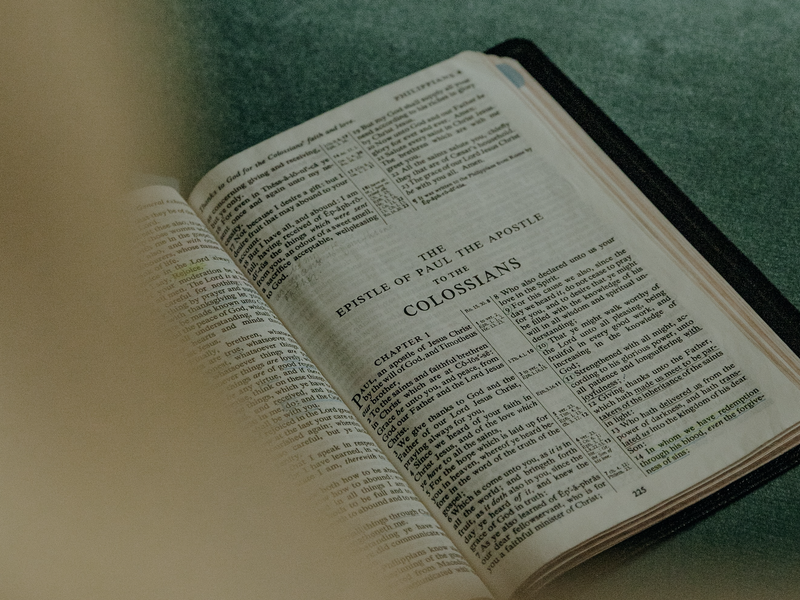
Colossians 4:2, “Watch"

Peter O’Brien’s translation of Colossians 4:2 surprised me: “Persevere in prayer as you watch for the Lord’s return, and be thankful.” 1 What is surprising about that? Well, none of my English translations mentioned “the Lord’s return” — nor does the Greek text! Translated literally, the verse just says: “In…

by Ralph Allan SmithNovember 29, 2022
cicero-denounces-catiline-painting-roman-cesare-maccari-1888
Books

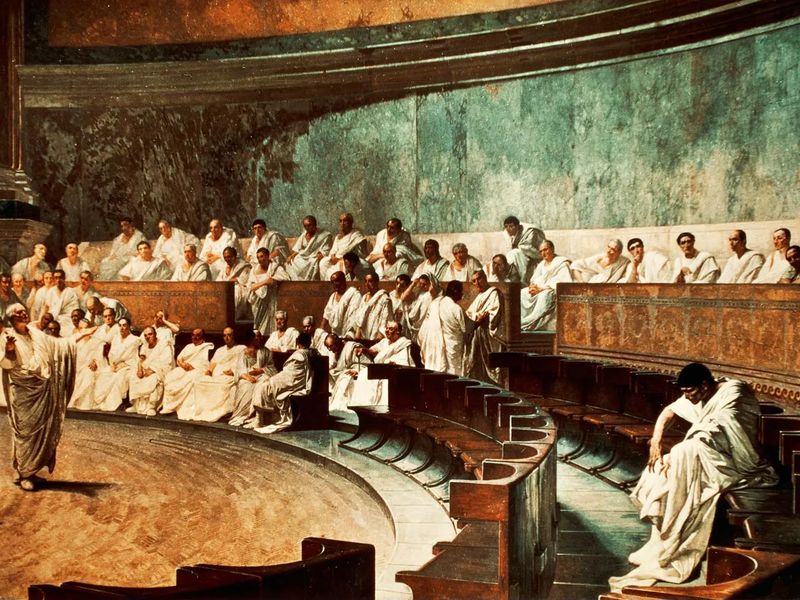
The Laws and the Cosmos: A Brief Response to Stephen Wolfe on Cicero

I Natural Law This is a brief (well, briefer than it could be) first attempt at responding to a very small section of Stephen Wolfe’s recent book The Case for Christian Nationalism . It’s partial, deeply incomplete, and does not at all address the book as a whole; it is…

by Susannah Black RobertsNovember 24, 2022
giammarco-zeh-ljawhtg-unsplash
Formation

A Bad Man Speaking Well

The scuttlebutt of the last hundred years would tell us that Albert Einstein was a horrible husband, Winston Churchill was a racist, Mother Theresa was a hypocrite, and Caravaggio a murderer. From Benjamin Britten’s boys to Gandhi’s girls, it can be depressing and confusing to hear about people of great…

by Garrett SoucyNovember 22, 2022

Showing page 37 of 309

See all

Showing page 5 of 43

See all
Literature

Michel on Tragedy

Laurence Michel, exploring the “Possibility of a Christian Tragedy,” suggests that the creation account of Genesis opens the possibility for a “tragic sense of life.” How? “To have a world imitative of the simple perfection of God one must have multiplicity and diversity of goods. Various evils and contraries will…

January 15, 2004
Theology

Evil and Good

CS Lewis says in Pilgrim’s Regress : “Evil is fissiparous, and could never in a thousand eternities find any way to arrest its own reproduction. If it could, it could be no longer evil: for Form and Limit belong to the good.” But what then of a Good and Infinite…

January 15, 2004
Literature

Niebuhr on Christianity and Tragedy

In a chapter in Beyond Tragedy , Reinhold Niebuhr considers the relationship between Christianity and tragedy. He denies that Christianity is tragic: “The cross is not tragic but the resolution of tragedy.” In the course of his discussion he makes several intriguing points about the tragic outlook: 1) He highlights…

January 15, 2004
Literature

Weil on Tragedy

Simone Weil offered one of the most thorough-going Christian defenses of tragedy, though that defense comes at considerable cost to her orthodoxy. As Katherine Brueck points out in her study of Weil’s theory ( The Redemption of Tragedy ), Weil recognized that what was at stake in a discussion of…

January 15, 2004

More Thoughts from Segal

Some more thoughts from Segal’s book: 1) He points out the optimism that gripped Athens in the Periclean period, an optimism about the ability of human LOGOS and NOMOS to stave off the savage potential of man’s PHUSIS. But that was short-lived: The Peloponnesian wars broke out, marked by several…

January 15, 2004

civilization in Sophocles

In his study of Sophocles, Tragedy and Civilization , Charles Segal points to several Greek terms that might be translated as “civilization” and that capture various aspects of civilized life: NOMOS = the established institutions, customs, and norms of a people POLITEIA = the form of government, especially the constitutional…

January 15, 2004

Showing page 2136 of 2212

Browse by Category

In Medias Res

Your weekly digest for all things Theopolis.

Donate

Theopolis is nearly 100% donor-supported. Consider joining us on our mission.