
Theopolis Logo

Writing

Explore our collection of theological essays, biblical studies, and reflections on faith and culture.

See all
foster-child
Adoption

Sometimes a Platitude is a Precious Gift

Platitudes are often sayings whose truthfulness is so apparent, so accepted, and so repeated that they are divested of their power and in fact become the object of ridicule. Their failure lies in their fame, and the contempt they invite is bred by their familiarity. To say that children are…

by Bill DeJongJanuary 15, 2015
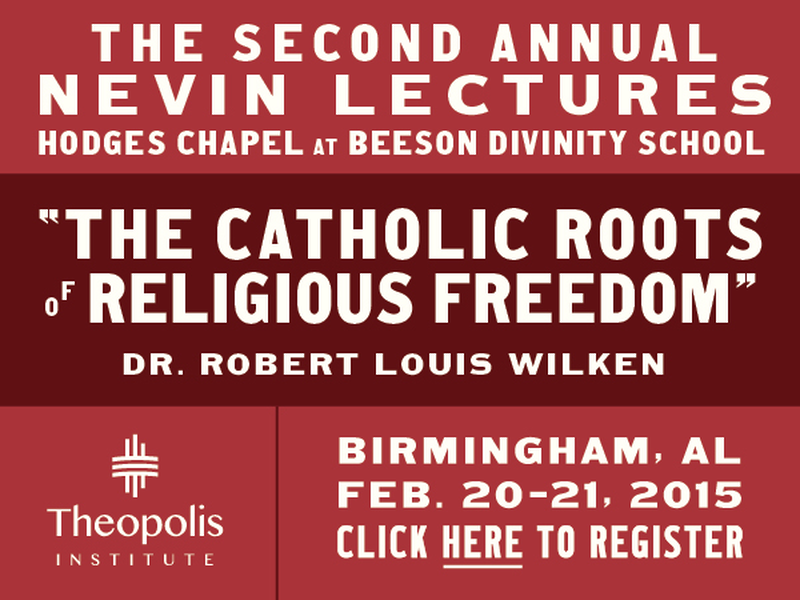
nevin_2015_square
Uncategorized

Second Annual Nevin Lectures

by TheopolisJanuary 13, 2015
emmanuel-phaeton-1bwmfmvybi8-unsplash
Psalms

Psalm 29

Click here to download the Translation Here we have the seven-fold Voice of Yahweh, bracketed by two sets of four lines about Yahweh. The central seven-fold Voice section uses "Yahweh" ten times, for a total in this psalm of eighteen usages of "Yahweh" (3 x 3 x 2). The psalm,…

by James B. JordanJanuary 13, 2015
tree-2
Creation

A Sabbath Conversation

As Adam and Eve walked to the Garden of Eden to meet with Yahweh on their first Sabbath they conversed about the origin and age of the earth. Adam: You know, honey, we spent a lot of time yesterday making preparations for this house, and we still have an awful…

by Jeff MeyersJanuary 13, 2015
mountain-top
Covenant

The Highest of the Mountains

Knowing His paths through Moses and David, in the darkness of the prophets we yet walk in His light. It shall come to pass in the latter days that the mountain of the house of the Lord shall be established as the highest of the mountains, and shall be lifted…

by Mike BullJanuary 8, 2015
bennet-sisters
Charity

Candor

These days, to be “candid” is to be frank, honest, genuine. But the word didn’t always mean that. It used to be the name for a virtue that we don’t really have a name for anymore. Its obsolete meaning is “kindliness”: a disposition to think well of others, a tendency…

by Leta SundetJanuary 7, 2015

Showing page 162 of 309

See all

Showing page 5 of 43

See all

Are Trinitarian Persons Persons?

B oethius defined persona as an “individual substance of a rational nature ( natuae rationalis individua substantia ). This definition is often cited as evidence that medieval Trinitarian theology, deeply influenced by Boethius, did not teach that the Trinitarian “Persons” are persons in the modern sense of the term -…

January 19, 2017

Justice and Righteousness

N estled within several chapters of 1 Chronicles that describe David's wars, 1 Chronicles 18:14–17 explains the purpose of those wars: To establish Yahweh's order of justice in Israel, an order of justice that David himself administers and mediates. Having conquered Philistia, Moab, Ammon, and Edom, David reigns over “all…

January 18, 2017

God's Sacramental Self-Gift

What does God give in creation and redemption? He gives us our own existence, and that the gift He gives is Himself. Both are true. Luther captures this latter point in his 1528 “Confession”: “These are the three Persons and the one God, Who has given Himself to us wholly…

January 17, 2017

Anthropomorphism and Nature

I n his Essays in Anthropology , Robert Spaemann observes that “the beginning of modern science was marked by polemics against the concept of nature. The concept of nature is now taken to be anthropomorphic, while the essentially teleological idea of things in the cosmos having ‘movement in themselves' is…

January 17, 2017

American Covenant

P hilip Gorski's American Covenant examines the American tradition of civil religion or civic republicanism from the Puritans through President Obama. Gorski contrasts this tradition with the two most belligerent contenders in contemporary American politics, religious nationalism and radical secularism. Civil religion differs from radical secularism in its anthropology (communitarian…

January 16, 2017

Conrad’s Mesmerizing Obscurity

K ate Symondson begins her TLS review of recent editions of Joseph Conrad’s letters and his novel Victory with a reminder of FR Leavis's complaint about Conrad's “insistence on inexpressible and incomprehensible mystery.” Symondson writes, “Instead of the Victorian preference for pellucid—almost pedantic—hardened detail, mist shrouds and encircles Conrad's fiction.…

January 13, 2017

Showing page 216 of 2212

Browse by Category

In Medias Res

Your weekly digest for all things Theopolis.

Donate

Theopolis is nearly 100% donor-supported. Consider joining us on our mission.