Theopolis Logo

Writing

Explore our collection of theological essays, biblical studies, and reflections on faith and culture.

See all
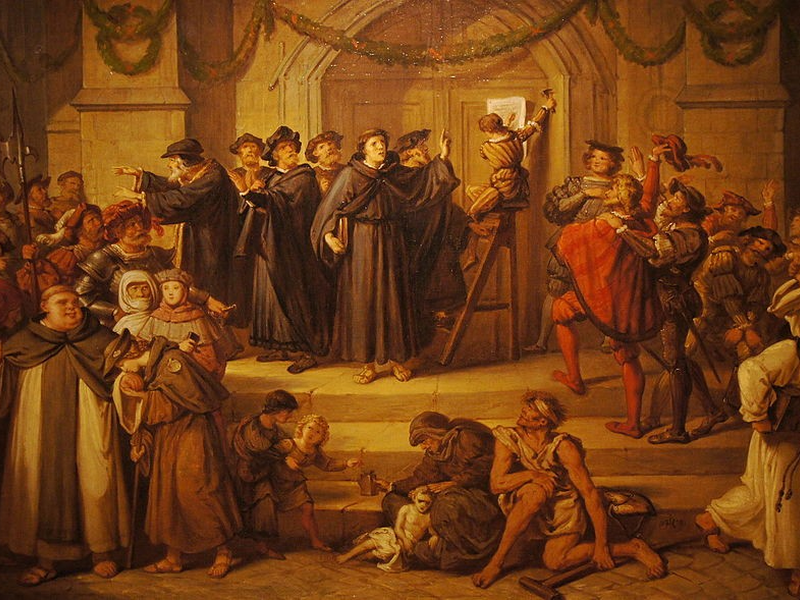
der_anschlag_von_luthers_95_thesen-1024x589
Church Calendar

Five Misconceptions of Reformation Day

For many people the date October 31 is significant not only for being the Eve of All Saints (All Hallows Eve, Halloween) but as the day in 1517 when Martin Luther nailed his 95 theses to the door of the Castle Church in Wittenburg. These theses were a list of…

by Timothy LeCroyOctober 31, 2017

sacre-bleu-r__kixb0i5m-unsplash
Church Calendar

Concerning Halloween

It has become routine in October for some Christian schools to send out letters warning parents about the evils of Halloween, and it has become equally routine for me to be asked questions about this matter. "Halloween" is simply a contraction for All Hallows’ Eve. The word "hallow" means "saint,"…

by James B. JordanOctober 26, 2017
revelation-john-with-rod
Revelation

Preaching, An Art of Division

The following is an excerpt from Peter Leithart's forthcoming two-volume commentary on Revelation (T&T Clark). Y ou must prophesy again concerning many peoples and nations and tongues and kings,” a voice tells John (Rev. 10:11). Then someone gives him a “reed like a rod” and instructs him to measure (11:1).…

by Peter LeithartOctober 24, 2017
josiah-death

Back To Egypt

Josiah is an ideal Davidic king in many ways. He not only “did right,” but he “walked in the ways of his father David” and “did not turn aside to the right or to the left” (2 Chronicles 34:2). At the age of 16, he began to seek Yahweh, and…

by Peter LeithartOctober 19, 2017
augustine
Augustine

Augustine and the Music of Time

One of the best discussions of Augustine’s views on time comes from Jeremy Begbie’s Theology, Music, and Time (ch. 3). Following Paul Ricoeur, Begbie claims that Augustine’s distentio “is conceived as the three-fold present, and the threefold present as distentio . The distentio consists in the non-coincidence of the mind’s…

by Peter LeithartOctober 17, 2017
img_1043
How to Worship

The Psalter Should be Woven into the Fabric of Worship

This has always been the position of the Christian Church, and from an historical perspective the present situation in evangelicalism is appalling. The early liturgies of the Church, which are still used in Episcopal and Lutheran worship, are laced with psalm phrases. The early hymns, such as the Te Deum…

by James B. JordanOctober 12, 2017

Showing page 104 of 309

See all

Showing page 5 of 43

See all
screenshot-2024-07-04-at-8-35-35-am
Ephesians

Chiasm in Ephesians 2:8

In the Greek text of Ephesians 2:8, the statement “and this not of ourselves, it is the gift of God” is chiastically structured. A wooden translation is: “and this not out of ourselves, of God the gift,” with the EX HUMON (“out of ourselves”) chiastically matching the genitive THEOU (“of…

September 19, 2003
main-qimg-677803682e526eb3d3440054b59433fe-lq
Philosophy

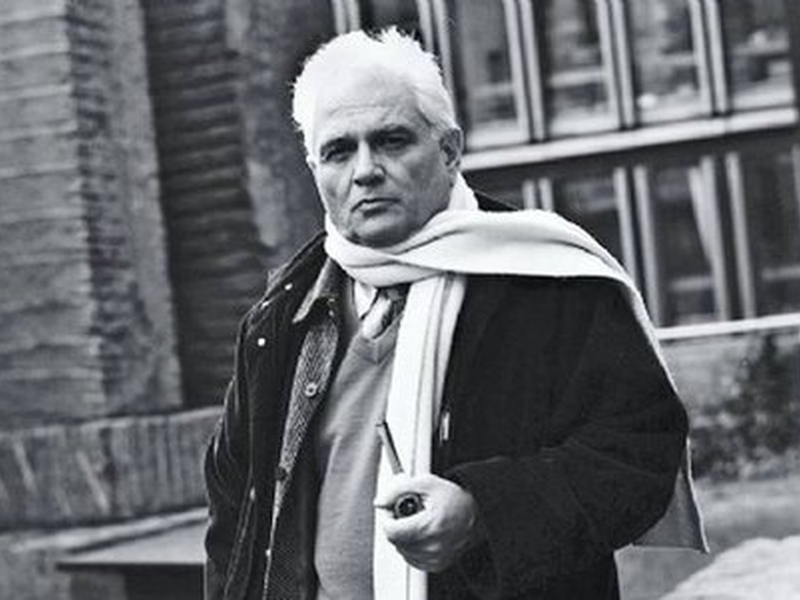
Milbank on Derrida

Here’s a summary of part of Milbank’s critique of Derrida (from Theology and Social Theory , pp. 307-311). Derrida attacks Western metaphysics by focusing on the attempt to separate a “meaning” out from the “play of signs.” In most Western systems, this meaning is associated with an original meaning that…

September 18, 2003
nicki-eliza-schinow-mg3nb1l2kdm-unsplash
Philosophy

A Note Against Empiricism: Derrida

A note against empiricism: Derrida quotes Scheler (in his essay on Levinas, “Violence and Metaphysics”) to this effect: “I see not only the eye of an other, I see also that he looks at me.” That is, what is seen is not only a thing, a dead object, but also…

September 17, 2003
jeremy-thomas-e0ahdsenmdg-unsplash
Philosophy

Levinas on Absolute Other

Levinas claims that an absolute other must necessarily be invisible. If the other is visible, I can at least “capture” and “grasp” and “encompass” him in my gaze, which is the first moment in a sequence that could lead to capturing, grasping, and encompassing and dominating him in other ways.…

September 17, 2003
505017ldsdl
BooksCulture

Yeats on the Classical World

Yeats said that the classical world was fundamentally tragic, with the Oedipus myth as the founding myth — the man kills his father and marries his mother. Yeats would have been better off pointing to the myth of Zeus, for that truly is the founding myth of the Olympian order,…

September 17, 2003
valentino-mazzariello-ndm1hhicwhc-unsplash-2
Philosophy

Progress

In his history of the ancient concept of progress, E. R. Dodds says that one fundamental limitation on the idea of progress was imposed by the theory of Forms, both in Platonic and in the Aristotelian version. For Plato all progress consists in approximation to a pre-existing model; the model…

September 17, 2003

Showing page 2196 of 2212

Browse by Category

In Medias Res

Your weekly digest for all things Theopolis.

Donate

Theopolis is nearly 100% donor-supported. Consider joining us on our mission.