
Theopolis Logo

Writing

Explore our collection of theological essays, biblical studies, and reflections on faith and culture.

See all
giammarco-zeh-ljawhtg-unsplash
Biblical Horizons

OPEN BOOK: Views and Reviews

Isaac E. Mozeson, The Word: The Dictionary that Reveals the Hebrew Sources of English (Northvale, NJ: Jacob Aaronson Inc., 1995), 310 pp. Reviewed by James B. Jordan. Once there was only one language in the world, the language God spoke to Adam. At the Tower of Babel, there came to…

by James B. JordanJune 28, 1996
tim-wildsmith-j6jv-mkdzqs-unsplash
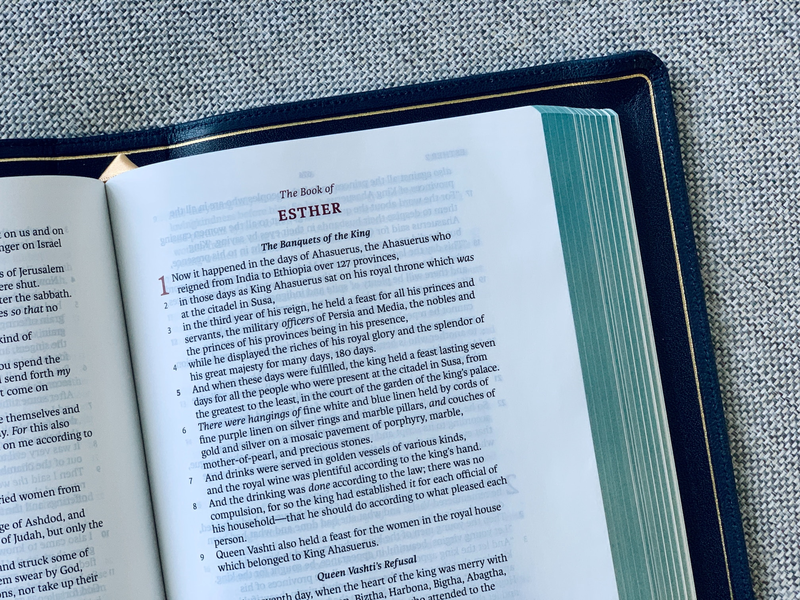
Esther

Esther: Historical & Chronological Comments (IV)

2. The Setting of the Book of Esther A. Xerxes (continued from previous issue) Ezra 6:14 says that the Jews finished building "according to the command of the God of Israel and the decree of Cyrus and Darius and Artaxerxes king of Persia." The problem with this verse is that…

by James B. JordanJune 28, 1996

ales-krivec-4mibe6zg5r0-unsplash
Acts

Jesus and Amalek

This essay goes with our previous study of the Amalek pattern back in Biblical Horizons No. 2. Since many do not have this essay, entitled "The Battle of Gog and Magog," let me cite the relevant paragraphs: Note in Genesis 12-15 that Abram moves into the land after escaping Pharaoh…

by James B. JordanJune 28, 1996

aaron-burden-1ebsmyrau-s-unsplash
Proverbs

The Strange Woman

Proverbs 7:6-23 is one of several passages early in the Proverbs in which Solomon warns his son about the wiles and dangers of the "strange woman." It is certainly quite proper to take these as straightforward warnings against sexual sins, and these are certainly warnings that need to be impressed…

by Peter LeithartJune 27, 1996
jan-kahanek-g3o5ztrk2e4-unsplash
Biblical Studies

Some Observations

1. In Luke 4:20 we read that after Jesus finished reading from Isaiah, "the eyes of all in the synagogue were fixed upon Him." This is usually taken in a psychological sense: They were amazed at Jesus somehow. I suggest that, as always, a merely psychological reading is a modern…

by James B. JordanMay 28, 1996
tim-wildsmith-j6jv-mkdzqs-unsplash
Esther

Esther: Historical & Chronological Comments (III)

2. The Setting of the Book of Esther Up to now we have assumed what we must prove, that the king in Esther is Darius the Great. While Biblical chronologists have usually taken this position, commentators on the book of Esther have often taken others as the king. One view,…

by James B. JordanMay 28, 1996

Showing page 265 of 309

See all

Showing page 5 of 43

See all

Augustinian Optimism and Modern Science

P eter Harrison points out in his The Fall of Man and the Foundations of Science (10–11) that the Reformation coincided with the rediscovery of ancient skepticism. While the Reformers were undermining traditional Catholic sources of authority from one side, Montaigne and others were corroding certainty from the other. Descartes…

December 12, 2016

Apocalypse Preserved

Karl Shuve's contribution to Apocalypses in Context traces the Christian use of Jewish apocalyptic, especially of the Book of the Watchers from 1 Enoch, which even makes it into the universal canon of the New Testament (Jude). The Watcher story appears in Justin, who “blames ‘every evil' on the Watcher…

December 9, 2016

Constructing Modernity

Thomas Fabisiak wonders, What does the New Jerusalem have to do with modernity? ( Apocalypses in Context ). Ask most modern philosophers, and the answer will be, Not much. Fabisiak speaks of the “'rhetorical construction' of modernity” that takes the form of a dismissal or expulsion of apocalyptic and all…

December 9, 2016

Chess and Soviet Man

In a 2011 New Yorker profile of Norwegian chess champion Magnus Carlsen, D.T. Max digresses to explain the logic behind the Soviet interest in chess: “Lenin, an enthusiastic player, made the game a priority for the new nation. In 1920, Alexander Ilyin-Zhenevsky, a commissar of Soviet chess, wrote that chess,…

December 9, 2016

Erotics of Reading

In the middle stanzas of “Erotikos Logos,” watching someone else reading, Scott Cairns ( Slow Pilgrim , 278) writes, “So much, of course, depends upon your own willingness to find something worthy here, even as you bring - as you must - something worthy to the effort. So much of…

December 9, 2016

From Polemic to Propaganda

Andrew Pettegree ( Reformation and the Culture of Persuasion ) observes a shift in rhetorical tone in Protestant-Catholic debates between the early and mid sixteenth century: “While much of the polemical writing of Luther’s day was rumbustious in tone, making liberal use of ridicule and ad hominem attacks, it still…

December 9, 2016

Showing page 224 of 2212

Browse by Category

In Medias Res

Your weekly digest for all things Theopolis.

Donate

Theopolis is nearly 100% donor-supported. Consider joining us on our mission.