Theopolis Logo

Writing

Explore our collection of theological essays, biblical studies, and reflections on faith and culture.

See all
sixteen-miles-out-al48tflf4e8-unsplash
Food

Gluttony In The Bible (As Opposed To Gluttony In The American Church)

In the Bible, fatness is such a blessing, that it is especially hard to understand why wicked men are permitted to enjoy such a state. It requires a theodicy and faith in God. Thus: “For they have no pangs until death; their bodies are fat and sleek . They are…

by Mark HorneAugust 12, 2013

jeremy-yap-j39x2xx_8cq-unsplash
How to Worship

Biblical Worship (Video with James B. Jordan)

[fve]http://vimeo.com/71901553[/fve]

by Peter LeithartAugust 8, 2013
chris-bair-ndczc5739ck-unsplash
Deuteronomy

Holy Things for Holy People

The allusion to the Exodus story is contained in the first words of Deuteronomy 14:1 — “ye are the sons of Yahweh your God” — as well as in 14:2 in the use of the technical term translated “treasured possession,” “His own possession,” “peculiar people,” “precious people,” and so forth.…

by Ralph Allan SmithAugust 5, 2013
adam-and-eve-in-the-garden-of-eden-wenzel-peter
Deuteronomy

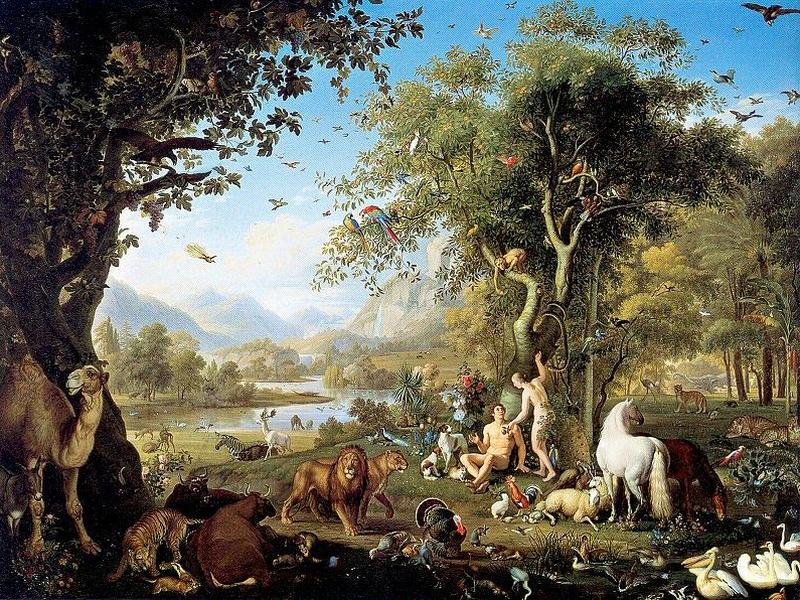
Forbidden Foods

I have argued that Deuteronomy 14:1-21 is an independent literary unit that applies the Third Word to the lives of Israelites from the time of Moses and Joshua. In this short pericope, Moses suggests broad and deep meaning by means of literary allusion to the stories of the creation and…

by Ralph Allan SmithJuly 31, 2013
david-weber-fwuo_zluhnw-unsplash
How to Worship

Pro-Sacramental Reformation

In his recently republished The New Creation , the late, delightful Herbert McCabe defends the priesthood of the plebs as roundly as anyone could want. Citing Hebrews, he claims that "there is an essential difference between the Christian community and the community of the Old Law, or any other religious…

by Peter LeithartJuly 29, 2013
eric-ward-7kqe_8meex8-unsplash
Augustine

Sexual Idolatry

Augustine famously prayed, “Our hearts our restless until they rest in You.” True indeed. Being creatures, we inherently sense our ontological poverty—our innate condition of dependence—and are compelled to find a sense of security. And it is also true—as Augustine’s own narrative painfully illustrates—that one of the things we most…

by Gerald HiestandJuly 24, 2013

Showing page 190 of 309

See all

Showing page 5 of 43

See all

Tangled

E mma Tarlo's recent Entangled is a study of the global market in human hair. In a TLS review , Kathryn Hughes describes a “multi-billion-dollar global hair market.” Tarlo explores “the processes by which the greasy hairballs unpicked in Mandalay get refashioned into ‘frothy toppers' and ‘dome bowlers' in New…

December 2, 2016

Stop!

“S cott Alexander” (a pseudonym) applies some common sense the media characterization of Trump as an “openly racist” candidate dedicated to courting the KKK. He estimates, for instance, that there are 3-5000 Klansman in the US. Over the course of the campaign, he estimates that at least 14,000 articles were…

December 2, 2016

Three Forms of Madness

I n an editorial introduction to King Lear , GK Hunter observes that the play depicts three forms of madness. First, “The Fool has a quality of savage innocence that the other two lack. . . . His stock consists in the main of songs and riddles, nonsense-rhymes and a…

December 2, 2016

Slapstick Tragedy

A lexander Leggatt ( King Lear ) captures the oddity of King Lear by calling attention to the blunt physicality of the play: “The tortured body is a recurring image. . . . According to J.I.M. Stewart, ‘The blinding of Gloucester represents a sort of crystallizing of this element of…

December 2, 2016

Structure and Theme in Lear

N ote #1: Act 1, scene 2 of King Lear , which initiates Edmund's plots against father Gloucester and brother Edgar, is structured chiastically: A. Edmund's first soliloquy. B. Edmund with Gloucester, accusing Edgar. C. Edmund's second soliloquy. B'. Edmund with Edgar, sowing suspicion that Gloucester is suspicious of Edgar.…

December 2, 2016

Freak of History

Diarmaid MacCulloch starts his study of the Reformation, All Things Made New , with a sketch of the medieval world. It's a bit rosy, emphasizing the unity of medieval Europe: “The most noticeable characteristic of Western Europe in what we call the Middle Ages was its cultural and religious unity…

December 2, 2016

Showing page 227 of 2212

Browse by Category

In Medias Res

Your weekly digest for all things Theopolis.

Donate

Theopolis is nearly 100% donor-supported. Consider joining us on our mission.