Theopolis Logo

Writing

Explore our collection of theological essays, biblical studies, and reflections on faith and culture.

See all
tanner-mardis-xuxghzhibn4-unsplash-1-2
Biblical Studies

Tweets-turned-Notes on the Bible’s Chronology

Summary In what follows, I will consider the “year-stamps” employed in Scripture, i.e., statements of the form, “Such-and-such an event took place in the Xth year of Y.” In the process, I will suggest some ways in which the Biblical narrative might relate to events in the extra-Biblical world, though…

by James BejonJuly 16, 2019
durer-prodigal-son-2
Luke

Perspectives on the Prodigal, (Part 2)

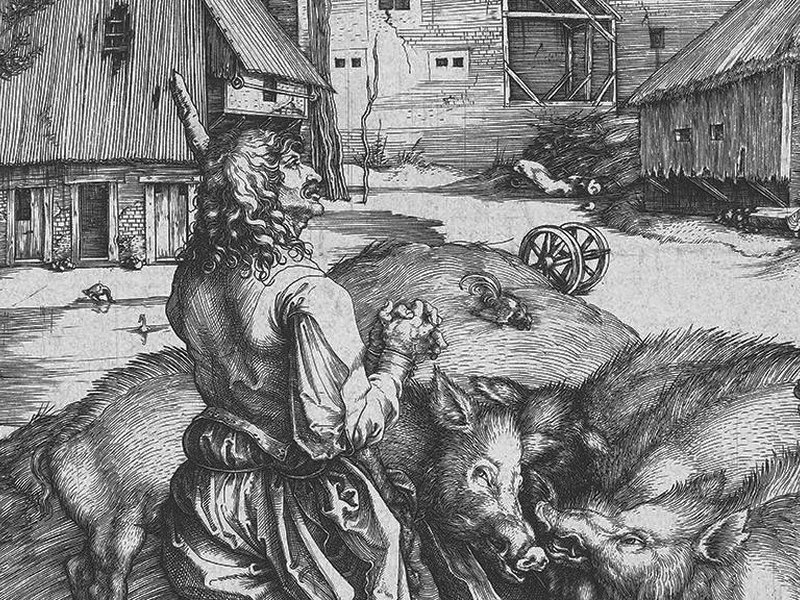
In the first essay on the parable of the Prodigal Son, I suggested that the problems commentators and others encounter in interpreting Jesus three-part parable are not accidental. These are not just problems in our ignorance of cultural background. They are intentional features of the stories —stories designed to poke…

by Ralph Allan SmithJuly 11, 2019
durer-prodigal-son-2
Luke

Perspectives on the Prodigal, (Part 1)

The story of the Prodigal Son is perhaps the most well-known story in the Bible. As others have observed, it may also be one of the most misunderstood. In two short essays, I will point out features of this story that are commonly neglected, aspects of Jesus’ parable that might…

by Ralph Allan SmithJuly 9, 2019
de-rijke-man-en-de-arme-lazarus-by-jacopo-da-ponte-16th-century
Luke

Lazarus and the Rich Man

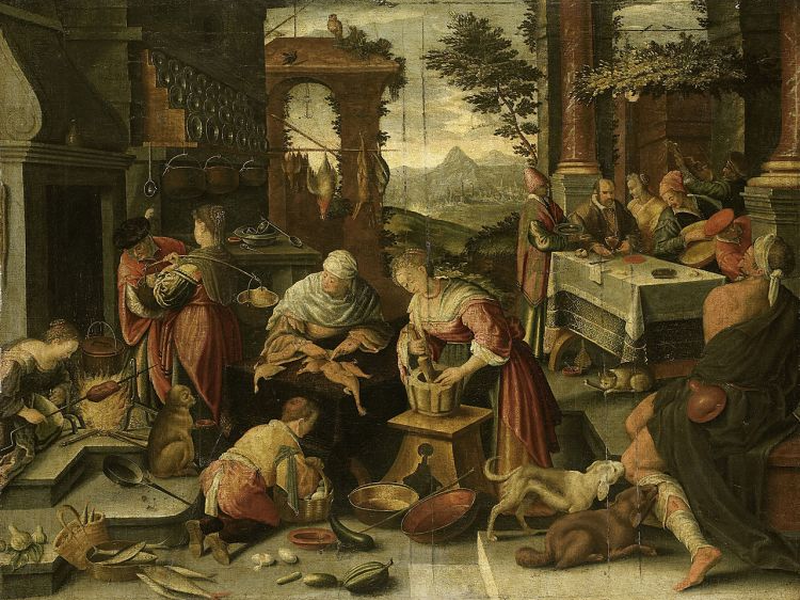
The parable of Lazarus and the nameless rich man is not an independent story. It is part of a long context that begins in Luke 15:1, where Jesus is eating with tax collectors and sinners and the scribes and Pharisees grumble. In response to their hardheartedness, Jesus tells a three-part…

by Ralph Allan SmithJuly 4, 2019
aaron-burden-uynrnfdkjwg-unsplash
Luke

Everybody has Dropsy - Luke 14:1-24

The Bible is written so that even when a reader cannot pick up on what might be deeper or more detailed aspects of a text, there is virtually always a message to be heard. In the ancient world, where the “reader” of Scripture would likely be a church official facing…

by Ralph Allan SmithJuly 2, 2019
communion
Biblical Theology

Fruit Trees and Grain Plants

The distinction between garden (or vineyard) and field begins in Genesis 2. This relates to the ordering of the formless world. Plants of the field are contrasted with the garden planted by God in Genesis 2:5&8. Later on, under the Old Covenant the Israelites will be required to keep their…

by James B. JordanJune 27, 2019

Showing page 77 of 309

See all

Showing page 5 of 43

See all

Descartes, Occasionalist

According to Norman Kemp Smith ( Problems in the Cartesian Philosophy ), “The great achievement of Galileo and Descartes in physical science consisted in a new theory of motion. Whereas by the Greek Atomists and by Aristotle motion was anthropomorphically conceived, as, like human activity, coming into being, exhausting itself…

April 21, 2016
Shakespeare

From Ceremony to Theater

Richard II is often cited as Shakespeare's prime example of a divine-right king, a king by ceremony, the paragon of sacramental kingship. His play depicts the unraveling of medieval kingship and the formation of a new basis for politics. As Alexander Leggatt ( Shakespeare's Political Drama ) argues, however, the…

April 21, 2016

Death and Resurrection in Acts

MD Goulder argues that death and resurrection is the narrative pattern of Acts ( Type and History in Acts ). In most cases, there is no actual death. There is near-death, and then deliverance: “The apostolic college, Peter, Paul, in turn go down to the pit: and from the pit…

April 20, 2016

Coriolanus to Cleopatra

Paul Cantor ( Shakespeare's Rome ) argues that Shakespeare wrote Coriolanus and Antony and Cleopatra as companion plays, marking the birth of the Republic and its decadent decline in the early empire. As evidence, he points to overlapping themes and literary features, and notes that there is a political and…

April 20, 2016

Descartes and the Mass

Descartes's early critics had many qualms about his new philosophy, but for theological critics the central question was how to square his views with the dogma of transubstantiation. Descartes claimed to be a faithful Roman Catholic, but philosophically he was opposed to the hylomorphic theory of matter on which traditional…

April 20, 2016

Geography of Mission

MD Goulder ( Type and History in Acts ) points out that the history recorded in Acts doesn't follow the Jerusalem-Judea-Samaria-ends of earth pattern that Jesus leads us to expect at the beginning of the book: “The four places are being given in their theological order: the holy city, the…

April 19, 2016

Showing page 297 of 2212

Browse by Category

In Medias Res

Your weekly digest for all things Theopolis.

Donate

Theopolis is nearly 100% donor-supported. Consider joining us on our mission.