Theopolis Logo

Writing

Explore our collection of theological essays, biblical studies, and reflections on faith and culture.

See all
andriy-nestruiev-gdbrwwh6doc-unsplash
Biblical Studies

Funerals and Flutes

Matthew 8-9 records three clusters of miracles, interspersed with snatches of Jesus’ teaching about various aspects of discipleship. Just as the Sermon on the Mount displays the authority of Jesus’ Word in teaching, these chapters display the authority of Jesus’ Word over sickness, uncleanness, the creation, demons, and death. In…

by Peter LeithartApril 17, 1992

michal-parzuchowski-w9uljjwg2fa-unsplash
Baptism

Daddy, Why Was I Excommunicated?

Since the early 1980s, several of the conservative Reformed Churches have debated and wrestled with the issue of paedocommunion (infant communion). The PCA and the OPC assigned study committees to examine the question, both of which produced useful reports both in support of and against the position. Though the debate…

by Peter LeithartApril 13, 1992
skyler-gerald-akljfvj5ym4-unsplash
Biblical Chronology

Chronologies and Kings, Part 9: Jehu, Hazael, and Assyria

(This issue of Biblical Chronology concludes a discussion of the Biblical and Assyrian chronologies, begun in previous posts. Click on the category link of "Biblical Chronology" above to see previous issues. Did Shalmaneser Know Jehu? Allis writes: "The Black Obelisk of Shalmaneser contains, in addition to brief accounts of the…

by James B. JordanMarch 23, 1992
denise-jans-dpemksg59la-unsplash
American Culture

Arts and Play, Part 4

Movies Movies as an art form have a powerful impact because they take place in a dark room, on a large screen, with no distractions, and because they entail many of the arts: music, acting, choreography, design and color, etc. A movie can be an overwhelming experience for a young…

by James B. JordanMarch 23, 1992
sincerely-media-bhaswrjttzw-unsplash-2
Leviticus

The Ecology of the Tribute Offering

The Hebrew word translated as "grain offering" or "cereal offering" is minchah . Like the translation of `olah as "burnt offering," the translation of minchah as "grain offering" is somewhat deceiving, since minchah does not refer to grain or cereal. In liturgical contexts outside of Leviticus, in fact, the word…

by Peter LeithartMarch 13, 1992
sincerely-media-bhaswrjttzw-unsplash-2
Ascension

Skinned and Cut

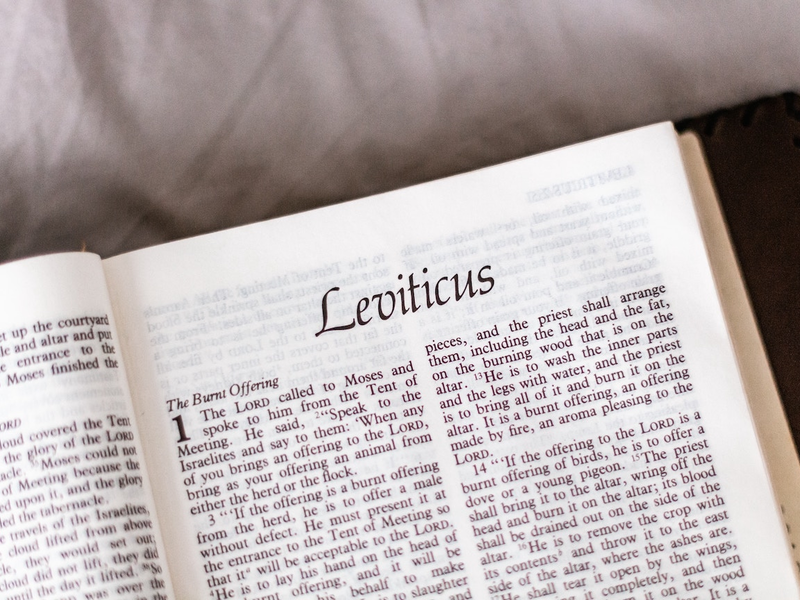
"He shall then skin the burnt offering and cut it into its pieces" (Leviticus 1:6). The normal word ( `olah ) that is translated as "burnt offering" and "whole burnt offering" has nothing to do with either burning or wholeness. It is the noun form of a verb meaning "to…

by Peter LeithartMarch 13, 1992

Showing page 291 of 309

See all

Showing page 5 of 43

See all

Why Protestants Can't Write, II

If the writer must be open to the manifestation of God in “what-is,” she must begin with the senses. Following Aquinas, Flannery O'Connor writes, “The beginning of human knowledge is through the senses, and the fiction writer begins where human perception begins. He appeals through the senses, and you cannot…

January 29, 2016

Apocalyptic Herods

C. E. Douglas's 1915 study of Revelation, The Mystery of the Kingdom , is an eccentric work in a number of ways, but for just that reason highly stimulating, provocative of insight. He rejects, for instance, both the “standard” dating of the book in the reign of Domitian (based on…

January 29, 2016

Den of Thieves

Jesus condemned the temple as a “den of thieves.” He was quoting Jeremiah, who said that the Jews of his time were using the temple as a “safe house” where they could store and enjoy their ill-gotten gains. The temple was not where their thieving took place, but their hideout.…

January 29, 2016

Holy One of Israel

Yahweh is the “Holy One of Israel” ( qedosh yisrael ). It is a name used almost exclusively in Isaiah. It appears once in Kings (2 Kings 19:22), three times in the Psalms (71:22; 78:41; 89:18), a couple of times in Jeremiah. Isaiah uses the name twenty-five times (significant? 2…

January 28, 2016

Kings and the Land

Israelite kings were not to be like kings of the nations (Deuteronomy 17). Kings from the nations multiplied wealth and lived in luxury; they built military machines to conquer their neighbors; they kept harems full of princesses, wives and concubines that represented political alliances. Israel's kings were to be different…

January 28, 2016

Why Protestants Can't Write, I

Blame it on Marburg. The 1529 Colloquy at Marburg attempted to reconcile Lutherans and Zwinglians on the doctrine of the real presence, and was nearly able to achieve its aim. To Luther's surprise, the Zwinglian party agreed with fourteen of his fifteen propositions, and even conceded most of what was…

January 28, 2016

Showing page 327 of 2212

Browse by Category

In Medias Res

Your weekly digest for all things Theopolis.

Donate

Theopolis is nearly 100% donor-supported. Consider joining us on our mission.