Theopolis Logo

Writing

Explore our collection of theological essays, biblical studies, and reflections on faith and culture.

See all
screen-shot-2021-06-03-at-8-49-15-am
Ezra

Ezra: The Aaronic Rest-Giver

If you’re a preacher looking for good commentaries on Ezra, you’ll struggle. Certainly to find ones that wrestle in good detail with the text. And certainly ones that don’t cost you an arm and a leg. There’s a good bit more for Nehemiah, which is odd, as the two are…

by Rhys LavertyJune 8, 2021

christian-lue-k1e6994p3t8-unsplash
1 John

1 John in Community

Quick thought experiment: try to pretend you’ve never read 1 John before. Read 1:1-6. Go ahead; I’ll wait. Now, on to v. 7: “But if we walk in the light as He is in the light, we have fellowship with ______….” What word would you expect in that blank, based…

by Tim NicholsJune 1, 2021
noahs-ark-genesis
Hermeneutics

Spending Time with Noah: Reflections on Prepositions in the Flood Narrative

In my work as a Bible translator, I was recently checking our translation team’s draft of Genesis 8:8, which says of Noah (translating the Hebrew quite literally): And he sent out the dove from with him to see: had the waters lessened from upon the face of the ground? Part…

by Josh JensenMay 25, 2021
86758
Philosophy

Steven Weinberg Destroyed My Faith

Just in case a reader may not know Weinberg, he is a theoretical physicist and the winner of the Nobel prize in physics in 1979, as well as countless other prizes for his research. He is also a prolific, lucid, and captivating writer. If you want to read something on…

by Ralph Allan SmithMay 18, 2021
screen-shot-2020-09-17-at-9-11-45-am
Colossians

Reconciliation in Colossians 1:20

Colossians 1:15-20 is a famous passage in Paul’s epistles because it is a succinct and powerful poem. It appears even to have been a hymn. Given the uniquely Pauline language — “reconciliation” is a term used only by Paul — it should not seem odd to attribute the poem/hymn to…

by Ralph Allan SmithMay 11, 2021
stalker_still
Movies

Terror of Knowing Myself

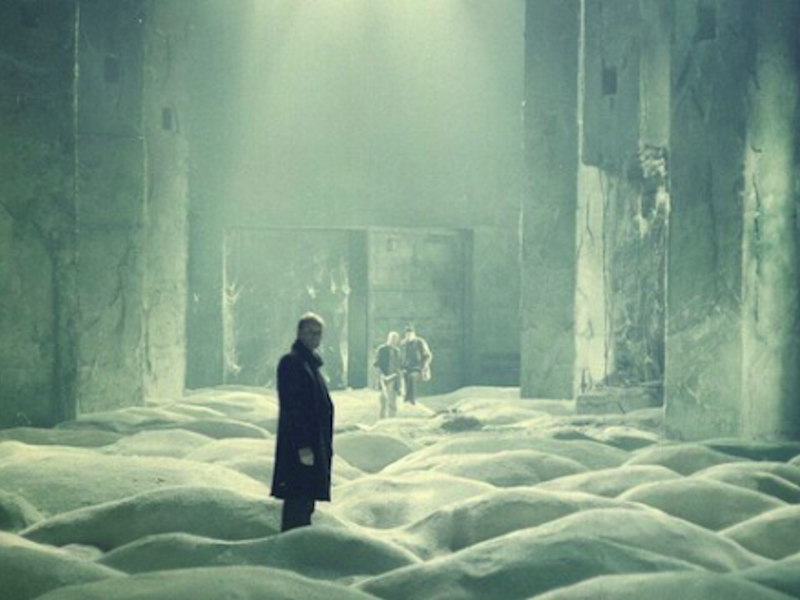
Stalker (1979) is a film by Andrei Tarkovsky based on Roadside Picnic by the Strugatsky brothers. It shows a day from the life of a stalker, a man who enters the so-called "Zone", an Alien landing site, where he leads people to a room that grants people’s innermost desires, which…

by Bogumil JarmulakMay 4, 2021

Showing page 55 of 309

See all

Showing page 5 of 43

See all

Why Protestants Can't Write, II

If the writer must be open to the manifestation of God in “what-is,” she must begin with the senses. Following Aquinas, Flannery O'Connor writes, “The beginning of human knowledge is through the senses, and the fiction writer begins where human perception begins. He appeals through the senses, and you cannot…

January 29, 2016

Apocalyptic Herods

C. E. Douglas's 1915 study of Revelation, The Mystery of the Kingdom , is an eccentric work in a number of ways, but for just that reason highly stimulating, provocative of insight. He rejects, for instance, both the “standard” dating of the book in the reign of Domitian (based on…

January 29, 2016

Den of Thieves

Jesus condemned the temple as a “den of thieves.” He was quoting Jeremiah, who said that the Jews of his time were using the temple as a “safe house” where they could store and enjoy their ill-gotten gains. The temple was not where their thieving took place, but their hideout.…

January 29, 2016

Holy One of Israel

Yahweh is the “Holy One of Israel” ( qedosh yisrael ). It is a name used almost exclusively in Isaiah. It appears once in Kings (2 Kings 19:22), three times in the Psalms (71:22; 78:41; 89:18), a couple of times in Jeremiah. Isaiah uses the name twenty-five times (significant? 2…

January 28, 2016

Kings and the Land

Israelite kings were not to be like kings of the nations (Deuteronomy 17). Kings from the nations multiplied wealth and lived in luxury; they built military machines to conquer their neighbors; they kept harems full of princesses, wives and concubines that represented political alliances. Israel's kings were to be different…

January 28, 2016

Why Protestants Can't Write, I

Blame it on Marburg. The 1529 Colloquy at Marburg attempted to reconcile Lutherans and Zwinglians on the doctrine of the real presence, and was nearly able to achieve its aim. To Luther's surprise, the Zwinglian party agreed with fourteen of his fifteen propositions, and even conceded most of what was…

January 28, 2016

Showing page 327 of 2212

Browse by Category

In Medias Res

Your weekly digest for all things Theopolis.

Donate

Theopolis is nearly 100% donor-supported. Consider joining us on our mission.