Theopolis Logo

Writing

Explore our collection of theological essays, biblical studies, and reflections on faith and culture.

See all
trnava-university-beeyeib-am8-unsplash
Biblical Chronology

Meredith G. Kline Strikes Back, Part 2

In our first essay we looked at Kline’s flawed exegesis of Genesis 2:5 as it relates to Day 3 of creation. Now we turn to Kline’s new argument against a chronological reading of Genesis 1, as found, again, in "Space and Time in the Genesis Cosmogony," Perspectives on Science and…

by James B. JordanMarch 29, 1997
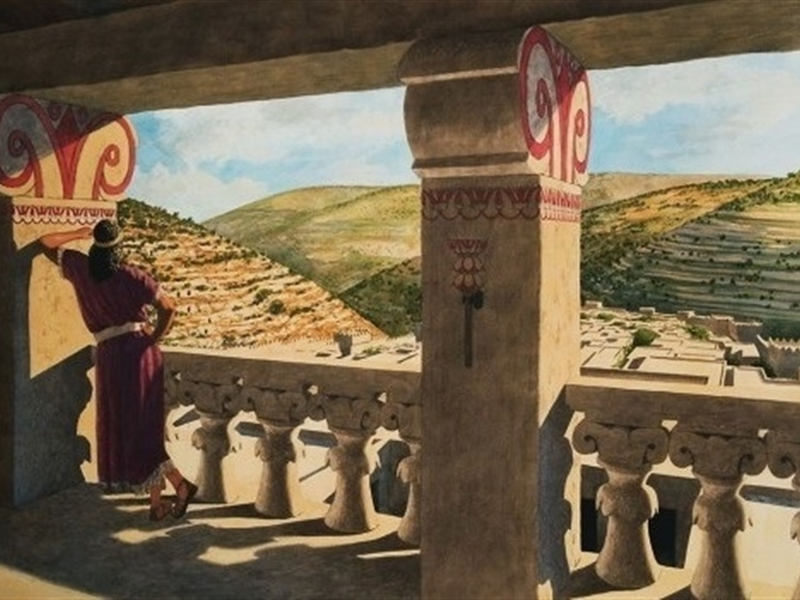
30211-bathsheba-800w-tn
Hermeneutics

Bathsheba: The Real Story

One of the advantages of paying very close attention to the details in the Bible, especially chronological and genealogical details, is that they can shed light on situations that don’t seem to make much sense apart from them. One such situation is that of Bathsheba. It appears that Bathsheba willingly…

by James B. JordanMarch 28, 1997
jonathan-cooper-ygxq7hfdjzq-unsplash
Church Calendar

Is the Church Year Biblical? | A Parking Lot Parable

Once upon a time, Jeff Meyers and Tony Rollins–old friends who had not seen each other for a few years–met in the parking lot of a neighborhood church. They were dropping off their pre-school children at the church for Mother’s Day Out. They were such conscientious and helpful fathers. As…

by Jeff MeyersMarch 20, 1997
annie-spratt-upxf6to3fea-unsplash
Daniel

The Allegory of Susanna

Years ago, when I was at the briefly-existing Geneva Divinity School, I taught a course in the Apocrypha. One thing that struck me at that time is that two of the stories are almost certainly religious allegories (as well as moral tales): Judith and Susanna. Since "Susanna" means "Lily," this…

by James B. JordanFebruary 28, 1997
serafima-lazarenko-_ivuwprfczi-unsplash
Biblical Horizons

A Blossom of Yahweh’s Field

Peter’s essay inspires me to write up some similar thoughts about the flower of the field. Rightly does Peter associate the almond with Yahweh’s garden, because the Garden of Eden is symbolically positioned as parallel to the Holy Place of the Tabernacle and Temple. To wit: Since Aaron’s rod blossomed…

by James B. JordanFebruary 28, 1997
trnava-university-beeyeib-am8-unsplash
Biblical Chronology

Meredith G. Kline Strikes Back, Part 1

We have had occasion to discuss the views of Meredith G. Kline previously in these newsletters, and now it is time to do so again. Kline teaches at Gordon-Conwell Theological Seminary and also at the Westminster Theological Seminaries (Philadelphia and San Diego). He is the author of some interesting insights…

by James B. JordanFebruary 28, 1997

Showing page 259 of 309

See all

Showing page 5 of 43

See all
Architecture

Church Made Theater

Jeanne Halgren Kilde opens her When Church Became Theatre with a comparison of New Haven's First Church of Christ (built 1814) with First Baptist of Minneapolis (built 1886). There had been a shift in the exterior, from “the classical pastiche of Greek and Roman to a medieval one with Gothic…

December 11, 2015

Woe to the Vineyard

In Psalm 80, the Psalmist is dismayed at Yahweh’s abandonment of His vine. Isaiah (Isaiah 5) laments but is not dismayed. He knows why the lover, his friend, has abandoned His vineyard-bride and now brings an indictment against her. What kind of grapes did Yahweh want? What kind of wine…

December 11, 2015

Redeeming Time

Human beings are temporal creatures, but our experience of time isn’t merely of the relentless tick-tock of clock time. Time has quality as well as duration. We can spend an hour waiting for a late bus, or we can spend an hour absorbed in a book or a lively conversation.…

December 10, 2015

Holy Synagogue

In a NYT piece on a recent Galilean artifact, Isabel Kershner writes, “Experts have long believed that in the period before Herod’s Temple was destroyed in A.D. 70, synagogues were used as a general place of assembly and learning, something like a neighborhood community center. The more formal conception of…

December 10, 2015

Reformed Learning

In an essay on “Reformation” in her recent collection, The Givenness of Things , Marilynne Robinson observes that Latin remained culturally dominant in England even into the age of Chaucer, Gower, Langland, and Julian of Norwich. Latin's hegemony “did have the advantage of making the learned classes mutually intelligible across…

December 10, 2015
Language

Speaking Matter

“The bare fact is,” says Rowan Williams ( The Edge of Words ), “that the material world speaks .” Material agents speak, “and this speech is not . . . a chance decorative addition to mechanical process, but an activity that is implicated in the entire complex of finite agency.…

December 10, 2015

Showing page 342 of 2212

Browse by Category

In Medias Res

Your weekly digest for all things Theopolis.

Donate

Theopolis is nearly 100% donor-supported. Consider joining us on our mission.