Theopolis Logo

Writing

Explore our collection of theological essays, biblical studies, and reflections on faith and culture.

See all
sunrise-2
Creation

Maker of Heaven and Earth, (Part 4)

In my previous two posts, I looked at aspects of Psalms 93, 95, 96 and 98 that declare Yahweh, the divine King, to be the world’s own Creator. In my next post, I plan to argue that the creation theology of the sub-section constituted by Psalms 93-100 contributes to the…

by Stephen LongApril 23, 2015
creation-eve
Otherness

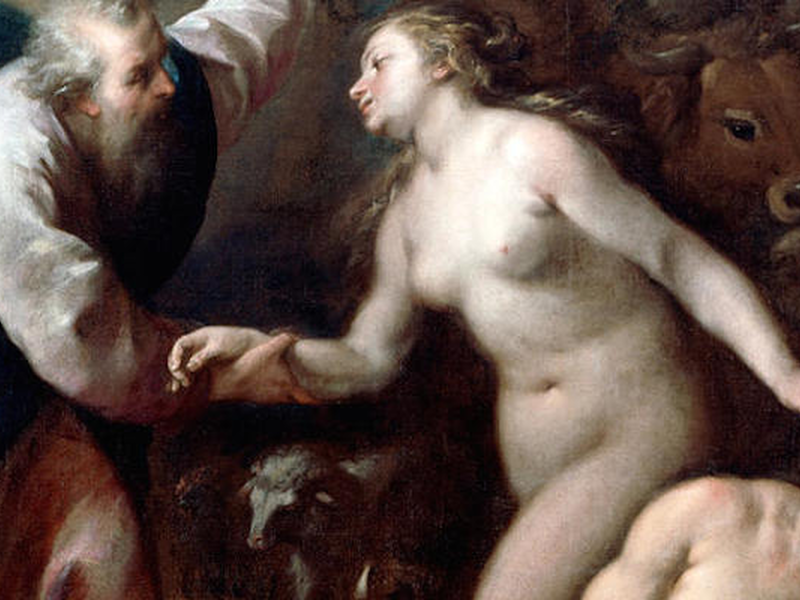
Sexual Difference, Liberal and Christian

Ethika Politika has published a fascinating interview within which the French Catholic philosopher Fabrice Hadjadj discusses his recent work on the subject of sexuality. While there are many points where our lines of reasoning as Protestants will sharply diverge from Hadjadj’s, there is also much that is deeply perceptive in…

by Alastair RobertsApril 21, 2015
giammarco-zeh-ljawhtg-unsplash
Literature

Macbeth and the Fall of Adam

For anyone in Shakespeare’s audience who knew the real story of Macbeth, his play must have been surprising. Shakespeare changed so many important details of the historical Macbeth’s life that had Raphael Holinshed, the main author of the most popular history of the British Isles in Shakespeare’s day — Holinshed…

by Ralph Allan SmithApril 16, 2015
medievalilluminatedmanuscript
Creation

Maker of Heaven and Earth, (Part 3)

I started looking at a sequence of psalms on divine Kingship (Psalms 93-100) in my last post, part of a series looking at the Old Testament’s witness to Yahweh’s exercise of absolute mastery over his cosmos. I am not trying to “prove” a doctrine of creation ex nihilo directly from…

by Stephen LongApril 14, 2015
pearls
Anxiety

(Un)Holy Fear

Most of the time I believe that dread is wise, anxiety righteous, fear a holy thing. It sounds ridiculous, but bear with me. There are days when fear seems to be not only a rational response to my circumstances, but a moral duty. After all, being a grown-up means responsibility.…

by Leta SundetApril 11, 2015
emmanuel-phaeton-1bwmfmvybi8-unsplash
Psalms

Psalm 36 Commentary

Get the Psalm 36 Translation here Psalm 36 begins with several translation problems. First, the first word in the actual psalm, as it is found in the English text, is the word "oracle." This word also begins the second verse in the medieval Massoretic Hebrew text, which is our basic…

by James B. JordanApril 10, 2015

Showing page 155 of 309

See all

Showing page 5 of 43

See all

Fated Adventure

According to Michael Nerlich ( Ideology of Adventure ), “all figures of the Greek and Latin novels of adventure are ‘involuntary’ adventurers.” Mikhail Bakhtin too ( Dialogic Imagination ) emphasizes that in earlier adventures “an individual can be nothing other than completely passive, completely unchanging” and function as “merely the…

May 1, 2015

Siegfried in Victory and Defeat

Winder McConnell ( Nibelungenleid , 98-99) sketches the changing uses of the epic in the mid-20 th century: “During the Weimar Republic, the themes and motifs of the Nibelungenlied had been employed by authors of antirepublican persuasion to express optimism for Germany’s future, but poets and dramatists sympathetic to the…

May 1, 2015

Wagner, Tristan, Love

In an essay in A Companion to Gottfried of Strassburg's Tristan , Ulrich Muller argues that “In Tristan und Isolde Wagner radically transformed the meaning and message of Gottfried’s romance, just as he had in Parsifal. As cast by Gottfried (and in all medieval versions), the lovers and their love…

May 1, 2015

Art of Divine Love

Andreas Capellanus literally wrote the book on the Art of Courtly Love , but the concluding Book 3 suggests that the book was a cautionary tale throughout. Capellanus closes the treatise with an exhortation to Walter, the man to whom the book is addressed to abstain from the desires of…

April 30, 2015

Liberal Arts in Middle Ages

Even today, when historians have abandoned the idea, many regard the Middle Ages as a time dark and ignorant, the huddled masses in shadows until the burst of light that came with the Renaissance and then the Enlightenment. For centuries, it is often thought, medieval thinkers knew little of the…

April 30, 2015

Allegorizing Homer

Allegorization was one of the techniques medieval used, adapted from ancient writers, to incorporate pagan writing in a biblical framework. As Ernst Curtius ( European Literature and the Latin Middle Ages ) writes, “the Middle Ages subjected profane writers to allegorical interpretation exactly as it did the Bible, and .…

April 30, 2015

Showing page 432 of 2212

Browse by Category

In Medias Res

Your weekly digest for all things Theopolis.

Donate

Theopolis is nearly 100% donor-supported. Consider joining us on our mission.