Theopolis Logo

Writing

Explore our collection of theological essays, biblical studies, and reflections on faith and culture.

See all
31-03-0213
Hermeneutics

Apocalyptic Eyes

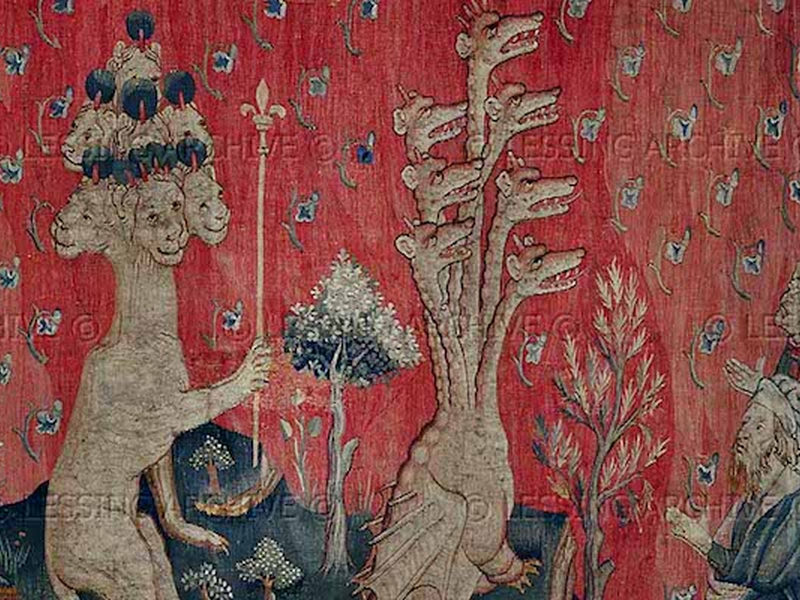
Flying scrolls. Red horses. Beasts coming out of the sea. Winged women. The list goes on. Apocalyptic literature in the Bible is like a cross between science fiction and Marvel comics. And the Bible has a fair bit of this sort of thing. Daniel sees visions in Babylon, Zechariah sees…

by Toby SumpterNovember 4, 2014

bhm-skyline-2
Theopolis News

New Name, New Look

Trinity House Institute has taken a new name, the Theopolis Institute. This striking new name expresses our unique vision and mission and captures the unified purpose behind all our specific programs and activities. We still have Bible, liturgy, and culture in our tagline. We still offer the same courses on…

by TheopolisNovember 4, 2014
istock_000012860926small
Atonement

Not Fearing the Devil

Adam Kotsko offers a socio-political variation on the Christus Victor atonement theory in his 2010 study, The Politics of Redemption: The Social Logic of Salvation . He does this by explaining "the devil" in terms of the Hegelian concept of "objective spirit," Geist . As Kotsko puts it, Geist "refers…

by Peter LeithartOctober 13, 2014
jez-timms-8muutamcwu4-unsplash
Leviticus

The Meaning of Sacrifice

Two factors keep Nahtali Meshel from discussing the meaning of sacrifice until late in his The "Grammar" of Sacrifice . The first has to do with the texts he draws from: "P says little about the meaning of its rituals" (174). The other has to do with the grammatical theory…

by Peter LeithartOctober 8, 2014
jez-timms-8muutamcwu4-unsplash
Leviticus

Praxemics

Chapter 5 of Naphtali Meshel's The "Grammar" of Sacrifice focuses on "praxemics," the physical actions of sacrificial ritual. Praxemes are constituted by six elements: an "atomact," an elementary physical act or gesture; an actor; an object that is acted up; a target for the action and often for the object…

by Peter LeithartOctober 6, 2014
markus-winkler-aid-xyrtlec-unsplash
Leviticus

Jugation and Hierarchy

Two chapters of Naphtali Meshel’s The “Grammar” of Sacrifice cover what he calls “jugation” and “hierarchies.” The first involves the addition of other materials to an animal offering. Jugates include wine, cereal, and oil that are added to the animals (zoemes) that are offered in sacrifice. Some jugates are coordinated…

by Peter LeithartOctober 1, 2014

Showing page 167 of 309

See all

Showing page 5 of 43

See all

Informative Nature

William Dembski's latest, Being As Communion , sets out a metaphysics of information, and argues for what he calls “informational realism.” Reality is information all the way down, but that information is real. It is reality. What is information? Dembski says it's “about realizing possibilities by ruling out others. Unless…

April 6, 2015

Only the beginning

John's account of the resurrection fulfills the promise of his prologue (John 20). Here is the Word made flesh, dead and buried, now risen as new Adam, the “gardener,” with Mary Magdalene, a type of the new Eve. The Word who spoke the worlds into being speaks also after death,…

April 5, 2015

First Resurrection, Second Resurrection

Elijah's life (1 Kings 17-19) tracks that of Moses. He confronts the Pharaoh-like King Ahab, then flees from the land, as Moses fled to Midian, where he is cared for by a widow. God provides miraculously for the prophet and his host, but then her child dies. In the Moses…

April 4, 2015
Fear

With Fear and Trembling

Paul Griffiths's Decreation has some harrowing passages about sin. Like this one: “What will be left of me when I am no longer a sinner? That is a question fundamental to trembling before hell's presence in the devastation [i.e., the fallen world]. Such trembling, however, like all well-formed Christian responses,…

April 3, 2015

God the Translator

A wondrous passage from Donne: “all mankind is of one author, and is one volume; when one man dies, one chapter is not torn out of the book, but translated into a better language; and every chapter must be so translated; God employs several translators; some pieces are translated by…

April 3, 2015

Why Diversions Don't Divert

Thomas considers acedia, “sloth,” as the opposite of delight. It is “sadness directed toward what ought to yield delight” (summary by Paul Griffiths, Decreation , 196). Paul Griffiths glosses: Acedia “is the mark of those sufficiently habituated to looking at nothing that when they look at something—and most especially at…

April 2, 2015

Showing page 444 of 2212

Browse by Category

In Medias Res

Your weekly digest for all things Theopolis.

Donate

Theopolis is nearly 100% donor-supported. Consider joining us on our mission.