Theopolis Logo

Writing

Explore our collection of theological essays, biblical studies, and reflections on faith and culture.

See all
sacre-bleu-r__kixb0i5m-unsplash
Death

Integrity

Integrity seems to have two meanings. It can mean the quality of being honest and having strong moral principles. A man of integrity is a person of honour, rectitude and probity, truthful and trustworthy. Integrity also describes a state – the quality of being whole and undivided. If things are…

by Arthur KayMarch 19, 2015

emmanuel-phaeton-1bwmfmvybi8-unsplash
Psalms

Psalm 32 Commentary

Get the Psalm 32 Translation here Psalm 32 is the first part of Ps. 32-33, ending with a call to praise that is answered by what follows. Ultimately the psalm needs to be considered as a whole, but what we call Psalm 32 does have its own structure and logic,…

by James B. JordanMarch 18, 2015
laughter
Humor

On Crude Humor

You wouldn’t hit a man with glasses would ya? No, of course not. I’d hit him with a bat. In our culture of frivolity it is tempting for Christians to think that solemnity should be our defining attribute. The coarseness of the world impedes us from enjoying any sort of…

by Remy WilkinsMarch 17, 2015
standingonamountain
Creation

Maker of Heaven and Earth, Part 2

Taking a cue in my last post from early Christian apologetics, I suggested that if we wish to articulate and defend a doctrine of creation ex nihilo in contemporary theology, we would do well to offer a thick description of Yahweh’s divine monarchia (his sole rule or sovereignty). Rather than…

by Stephen LongMarch 12, 2015
mountain-top-2
Creation

Catechism of the Universe

I’m not sure we really understand the insidiousness of unbelief. It is not merely to reject the gospel of Jesus, the existence of a Creator God, or to question biblical morality. At its core, unbelief is ingratitude, and by the very nature of this ingratitude, it must ultimately reject every…

by Toby SumpterMarch 10, 2015
jonah-under-gourd
Mark

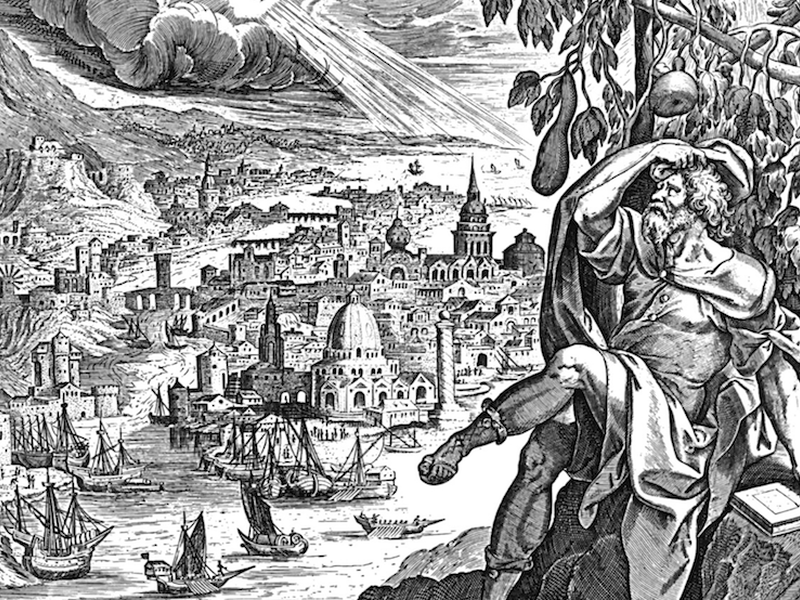
The True Jonah and Lenten Fasting

Mark’s narrative of the baptism of Jesus is characteristically brief: “In those days Jesus came from Nazareth of Galilee and was baptized by John in the Jordan. And when he came up out of the water, immediately he saw the heavens being torn open and the Spirit descending on him…

by Arthur KayMarch 9, 2015

Showing page 158 of 309

See all

Showing page 5 of 43

See all

Derived Aseity

Aseity is the property that describes a being’s self-causation. In theology, to speak of divine aseity is to say that God exists in and of Himself. He is not derived from or dependent upon anything else. He is fully Himself in Himself and of Himself. He is a se .…

January 13, 2015

Pure and Holy

Naomi Koltun-Fromm argues ( Hermeneutics of Holiness ) that the concepts of purity and holiness, while normally distinct in the Hebrew Bible, are blurred in some passages where qadash is used in contexts that speak of purity and purification rather than of consecration. In 1 Samuel 21:6, David says that…

January 12, 2015

Holy Seed

Explaining Ezra’s concern about the mixed marriages in the restoration community, Naomi Koltun-Fromm ( Hermeneutics of Holiness ) writes, “Ezra presents Israel not only as holy but as a qodesh in its own right—a freestanding holy thing, a holy seed, a sanctum. As such, it must be protected (or in…

January 12, 2015

Catholic Historiography

In his contribution to Seeing Things Their Way , Richard Muller discusses and commends the recent effort to free church history from denominational apologetics. When the Reformers are viewed in the light of late medieval theology (as in the work of Heiko Oberman), unexpected commonalities appear: “Common ground can be…

January 12, 2015
Death

Die Alone, Live Alone

At the end of Albert Camus’s The Stranger , the narrator is on death row for killing an Arab. Death is familiar to him. It is the “black wind” that has blown through his entire life. For Camus’s Stranger, the inevitability of death makes life indifferent. It does not matter…

January 12, 2015

War of Indefinites

In his recent Zero to One , Peter Thiel sets out a neat typology of philosophy, politics, and cultural attitudes based on differing stances toward the future. He distinguishes optimists and pessimists, and subdivides each into “definite” and “indefinite.” Optimists and pessimists are obvious: One is bullish about the future,…

January 9, 2015

Showing page 478 of 2212

Browse by Category

In Medias Res

Your weekly digest for all things Theopolis.

Donate

Theopolis is nearly 100% donor-supported. Consider joining us on our mission.