Theopolis Logo

Writing

Explore our collection of theological essays, biblical studies, and reflections on faith and culture.

See all
nativity-2
Advent

Joyful Humility

Christmas is a joyful season, but for many it turns into something else. Instead of joy, it is full of disappointment and unhappiness. Instead of an occasion for family fellowship, it becomes an opportunity for opening old wounds, reigniting old arguments, giving new life to rancor that should have died…

by Peter LeithartDecember 19, 2016
sagradafamilia-crop
Biblical Theology

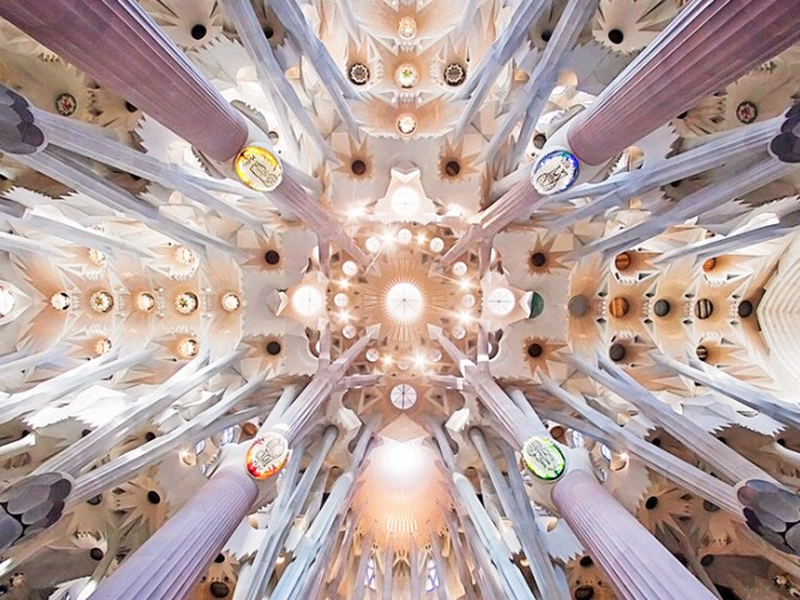
Systematic Typology (Part Five)

The Temple of Time The “covenant-literary matrix” of the Bible is not a pattern imposed upon the text, but the internal logic of its arrangement. This fundamental structure, functioning at multiple levels simultaneously, is a ceaseless reiteration of God’s primary theme. It is an algorithm forged in the furnace of…

by Mike BullDecember 16, 2016
img_1456
Hermeneutics

Exodus in 1 Kings

In the four hundred and eightieth year after the Exodus, Solomon began to build the temple of the Lord in Jerusalem. [1] That the author of Kings should date the start of the building of the temple from the Exodus is noteworthy. In Exodus 15:17, in Moses’ song following the…

by Alastair RobertsDecember 8, 2016
cross-grunwald
Cross

How Mist Gains Weight

Philip Schaff, a German Reformed theologian, states in The Principle of Protestantism that the material principle of Protestantism is “the doctrine of the justification of the sinner before God by the merit of Christ alone through faith.” This is the core message of the Church which leads “to the abandonment…

by Bogumil JarmulakDecember 6, 2016
mountain-top
Biblical Theology

Jesus and Godel's Theorem

“Religion” is an attempt to create or build a tower with a top, or to build a temple that is self-contained. The story of The Tower of Babel in Genesis 11 is the story of mankind’s attempt to create a world that is self-contained and does not need God. All…

by Richard BledsoeDecember 1, 2016
four-evangelists
Matthew

Dating Matthew, (Part 2)

In the first essay in this series, I presented a case for dating Matthew before AD 70, contrary to the present scholarly consensus. In this essay, I intend to present cultural, personal, ecclesiological, and theological arguments for a very early date for Matthew. [1] The cultural argument concerns literacy in…

by Ralph Allan SmithNovember 29, 2016

Showing page 121 of 309

See all

Showing page 5 of 43

See all

Sharing death

Matthias Grebe’s Election, Atonement, and the Holy Spirit is an impressive piece of work. Grebe is as much at home in Barth and Barthian scholarship as in Leviticus and Old Testament scholarship, and the driving question of his book has to do with dogmatic logic that connects election and atonement…

December 1, 2014

The Thunder-Spirit

John eats a book from an angel and is told to prophesy (Revelation 10:10-11). But the angel doesn’t commission him as prophet. Rather, “ they said, ‘You must prophesy’” (v. 11). Who are they? The nearest plural speakers are the thunders (10:3-4). It seems that the seven thunders commission John…

December 1, 2014

Elemental Life

After reviewing Greek texts that describe the “strife of the elements,” Eduard Schweitzer summarizes the grim world of the ancients: He stresses “how widespread the conviction was that the four elements, though originally in a harmony of equilibrium, were continually threatening the existence of the world by their ‘mighty strife’…

December 1, 2014

Purity, Life, Death

Fernando Belo’s summary of the symbolic system of purity ( A Materialist Reading of the Gospel of Mark , 38-9) is a bit too schematic, but still illuminating. He sees two overlapping systems in the Pentateuch: one of pollution/contagion and one of debt. I focus on the first. Israel’s “symbolic…

November 26, 2014

Hope of Heaven and Earth

Struggling to articulate the cosmic deliverance of Romans 8, Stanislas Breton ( A Radical Philosophy of Saint Paul , 116-7) writes that “heaven and earth . . . are traversed by a visceral yearning orienting them toward and subordinating them to another kingdom, one that is more than human precisely…

November 26, 2014

Hero-less

The incomparable Martin Hengel begins The Atonement with a question: Did Greco-Roman culture have categories to understand Jesus’ death as an expiatory sacrifice? He answers with a dense Hengelian catalog of mythic and historical instances of the apotheosis of heroes, death for the fatherland, death for the truth, expelled pharmakoi…

November 26, 2014

Showing page 493 of 2212

Browse by Category

In Medias Res

Your weekly digest for all things Theopolis.

Donate

Theopolis is nearly 100% donor-supported. Consider joining us on our mission.