Theopolis Logo

Writing

Explore our collection of theological essays, biblical studies, and reflections on faith and culture.

See all
evangelists
Matthew

Dating Matthew, (Part 1)

When might the Gospel according to Matthew have been written? Of course, any answer can only be speculation, but that does not mean we are reduced to groundless opinion. In this series of articles I point the way to an approach different from the general consensus among scholars today which…

by Ralph Allan SmithNovember 22, 2016

hebrew-manuscript-3
Hermeneutics

Synopticity, (Part 2)

In my first essay on “synopticity” I offered a rather rough definition of the phenomenon and important, though not exhaustive examples. In this essay, I want to introduce broader aspects of the phenomenon of “synopticity.” The first example that I have in mind is conventional stories, stories of different historical…

by Ralph Allan SmithNovember 17, 2016
screen-shot-2016-03-31-at-9-32-11-am
Ascension

Brexit and the Binding of Satan, Part 4

Since the judgment of Babel was followed by the initiation of the circumcision, the impending end of the circumcision in AD70 explains the significance of the first century miracle of foreign tongues. Except for a few Aramaic “teasers” in the book of Daniel, the Word of God was monolingual and…

by Mike BullNovember 15, 2016
four-evangelists
Hermeneutics

Synopticity, (Part 1)

To the best of my knowledge “synopticity” is not a word used in theology or Biblical studies, but it seems an appropriate word to describe the kind of phenomena associated with the Synoptic Gospels, Matthew, Mark, and Luke. These three Gospels tell essentially the same story with significant — sometimes…

by Ralph Allan SmithNovember 10, 2016
laughing_statue_by_xxbobbiie-d5f0meh-2
Humor

Learning to Laugh

Humor is a funny thing. It is altogether familiar yet also mysterious. What makes us laugh? Why do we find things funny? There are academic fields of study dedicated to discovering what makes things humorous. These academicians even have a journal entitled International Journal of Humor Research . No joke.…

by Bill SmithNovember 8, 2016
chaucer
Literature

Flawed Means of Grace: Liturgy in The Pardoner's Tale

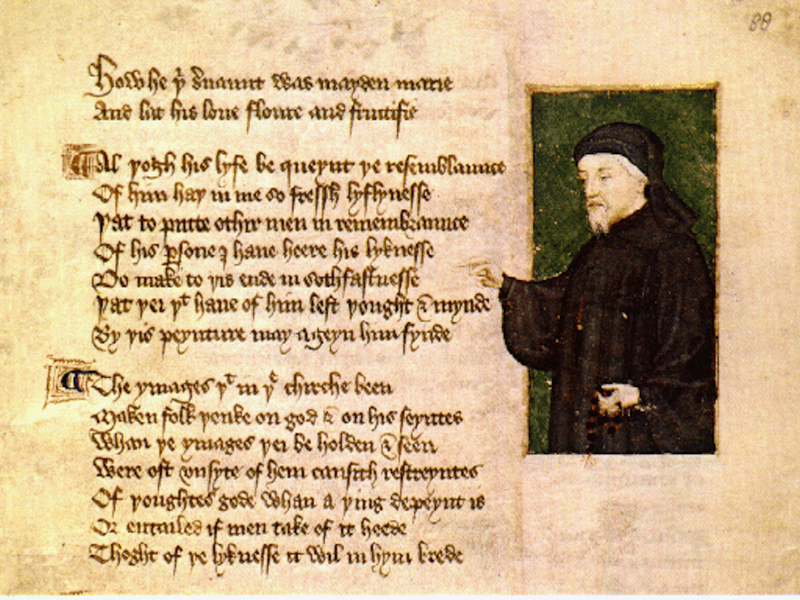
Out of all the characters in Geoffrey Chaucer’s The Canterbury Tales , the Pardoner has been called the “one lost soul.” The pious Parson, who closes out the collection of tales with a sermon on the seven deadly sins and how a sinner can absolve himself of them, connects the…

by Christian LeithartNovember 3, 2016

Showing page 122 of 309

See all

Showing page 5 of 43

See all

Tent of Meeting

Leviticus 1 tells us that Yahweh called Moses from the tent of meeting to deliver instructions about sacrifice. What is that "tent of meeting" ( 'ohel mo'ed )? Judging by the usage of Leviticus, it would seem to be the tabernacle or a portion of the tabernacle. Most of the…

January 8, 2019

Don't Do, Don't Desire

The Ten Words include twelve negative commands. Most of the verbs that are negated are unique: 1) Thou shalt not have ( lo' yihyeh-leka ; literally, "there shalt not be to thee") other gods. 2) Thou shalt not prostrate ( lo'-tishtachweh ) to them (i.e., images). 3) Thou shalt not…

January 7, 2019
Philosophy

Theology's Maidservant

Thomas Aquinas summed up a long tradition when he said that philosophy is theology's ancilla , its maidservant. That's an apt description, and applies as well to natural science, social science, poetry, literary criticism, history, etc. etc. Philosophy has a special role only because her work often resembles theology's, and…

December 20, 2018

The Limits of Natural Law

John Milbank currently has a series of essays on natural law running a Church Life Journal . It's a "revisionist" account of natural law. And one of the revisions is Milbank's post-Kantian conception of the relation of nature and culture, something he lays out in his essay, " Only Theology…

December 19, 2018

Simplicity: Further Exploration

Steven Duby ( Divine Simplicity ) addresses the sort of argument I offered in yesterday's post . I quote a long paragraph (p. 148), with comments interspersed. "One might contend," Duby writes, "for a divine complexity that is necessary and irrevocable with no risk of divisibility. Such a hypothesis elicits…

December 18, 2018

Divine Simplicity: An Experimental Response

This is a response to the notion of divine simplicity. It's not a refutation. It's an experiment designed to tease out the logic of the claim. Simplicity means that God is without parts. He has no physical parts, and He's not a composite of any metaphysical "parts" either. He's not…

December 17, 2018

Showing page 50 of 2212

Browse by Category

In Medias Res

Your weekly digest for all things Theopolis.

Donate

Theopolis is nearly 100% donor-supported. Consider joining us on our mission.