
Theopolis Logo

Writing

Explore our collection of theological essays, biblical studies, and reflections on faith and culture.

See all
emmanuel-phaeton-1bwmfmvybi8-unsplash
Federal Vision

The Righteous Judge

God is a righteous judge, And a God who has indignation every day. If a man does not repent, He will sharpen His sword; He has bent His bow and made it ready (Psalm 7.11, 12). David’s inspired lyrics do not sound very encouraging to modern ears–especially to modern Christian…

by Mark HorneJune 7, 2003
screenshot-2024-06-07-at-11-46-17-am
Luke

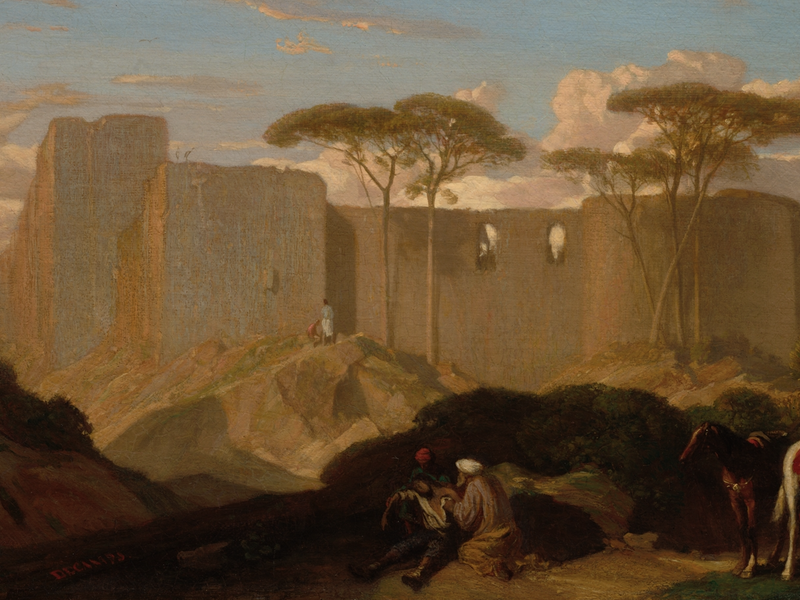
The Justification of the Good Samaritan

The story of the Good Samaritan (Lk. 10:25-37) is one of the best known and most loved of Jesus’ parables. I am not going to attempt to exegete the passage, as that has been done admirably and ably by others. Rather, I want to briefly examine what bearing the passage…

by Rich LuskJune 7, 2003
kelly-sikkema-gpoh17dxqdm-unsplash
1 Corinthians

The Grace of Judgment According to Works

In Romans 2.6-16, Paul writes, He will render to each one according to his works: to those who by patience in well-doing seek for glory and honor and immortality, he will give eternal life; but for those who are self-seeking and do not obey the truth, but obey unrighteousness, there…

by Mark HorneJune 7, 2003
karsten-wurth-imegmbunara-unsplash
Matthew

The Extra Mile: Matthew 5:38-42

It was still dark as David approached the crest of the little ridge. The eastern horizon was not even gray. It was early. But he knew this trail well. Every morning before dawn and every evening before dark, he would walk down to the well and carry water back to…

by Jeff MeyersJune 7, 2003
briana-tozour-mrfapsuyy8a-unsplash
Romans

Romans and God's Covenant Loyalty

The theme of Romans is the righteousness of God (Rom. 1:16-17). That is to say, Romans is something of a theodicy. Paul is defending God’s covenant faithfulness, particularly in light of Jewish unfaithfulness. How does it work? Without getting into exegetical details, we can still sketch out the big picture.…

by Rich LuskJune 6, 2003
jan-kahanek-g3o5ztrk2e4-unsplash
Federal Vision

Putting the New Perspective into Perspective: Some Thoughts on Second Temple Judaism

The New Perspective on Paul (NPP) is a loosely defined movement held together primarily by a common understanding of Second Temple Judaism. All NPP theologians basically adhere, with varying degrees of intensity and consistency, to Ed Sanders’ claims with regard to the nature of pre-70 A.D. Judaism. Sanders has sought…

by Rich LuskJune 6, 2003

Showing page 229 of 309

See all

Showing page 5 of 43

See all

Bloody Christians

Rabbinic Judaism, Stephen Geller suggests, is the “triumph of Deuteronomy and the Word.” After the fall of the temple especially, the place of the cult was taken by prayer and the liturgy. The literary temple became far more important than any possible future building. And with the end of the…

March 7, 2014

Vocal Silence

Michel Anteby’s Manufacturing Morals is an “ethnography” of the Harvard Business School. It’s an odd book, very insight-the-HBS, but along the way he develops the intriguing notions of “vocal silence.” Routine seems to rob individuals of responsibility. But most routines, Anteby points out, require some degree of responsible judgment: “Police…

March 6, 2014

Traumatic Neighbors

In his contribution to The Neighbor , Zizek offers this typically contrarian, typically extreme, description of the impact of God’s command to love the neighbor: “What gets lost in this ‘critique of ethical violence’ is precisely the most precious and revolutionary aspect of the Jewish legacy. Let us not forget…

March 6, 2014

Rivers

Rivers have a unique place in biblical cosmology. Though watery, rivers are unlike the sea, which always threatens to overwhelm the land. Channeled, water becomes life-giving. They keep land fruitful, set boundaries between peoples or join them as liquid roads. A river is water brought into service to human needs,…

March 6, 2014

Gratitude according to Barth

Someone asked me recently if my Gratitude includes a section on Barth. It doesn’t, and I’m sure this is not the last time I will turn sheepish as I confess to a large, unconscionable gap in the book. It doesn’t make up for the oversight, but here are some summary…

March 6, 2014

Literary Facts

Stephen Geller opens an essay on blood in “P” by stating that he is treating the Pentateuch as a literary unit. What the “priestly editor” produced, he argue is not “patchwork aggregate signifying nothing” but “a work meaningful in the whole, a tapestry more than the sum of its woven…

March 6, 2014

Showing page 666 of 2212

Browse by Category

In Medias Res

Your weekly digest for all things Theopolis.

Donate

Theopolis is nearly 100% donor-supported. Consider joining us on our mission.









