Theopolis Logo

Writing

Explore our collection of theological essays, biblical studies, and reflections on faith and culture.

See all
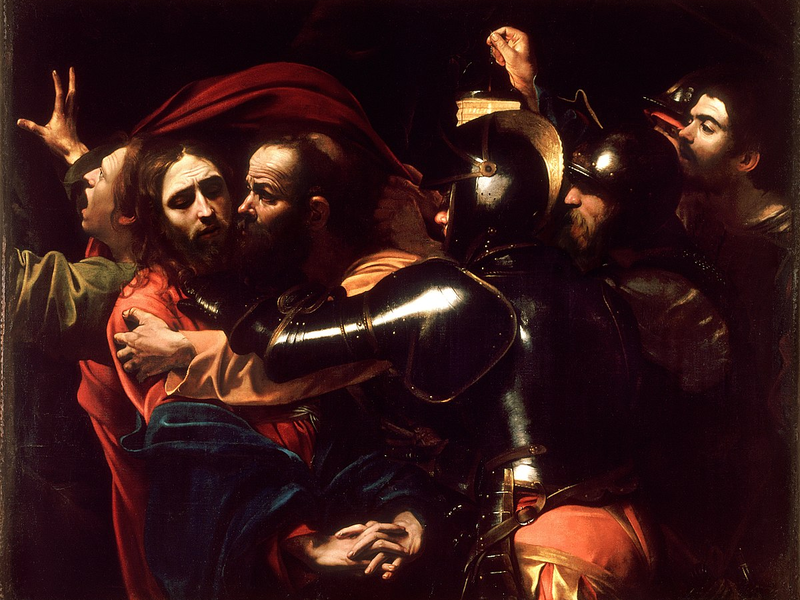
1200px-the_taking_of_christ-caravaggio_c-1602
John

Jesus, David, Adam: A Reading of John 18:1-11

John 18:1-11 appears on the surface to be a straightforward, if somewhat unusual, narrative of Jesus’ arrest by officers of the chief priests and Pharisees accompanied by an apparently large group of Roman soldiers, all of them led by the betrayer, Judas. But there is much more here than what…

by Ralph Allan SmithJuly 3, 2013

taylor-brandon-y8r0rtnriwm-unsplash
American Politics

Not So Special

Why is the US embroiled in the Middle East? There are two primary answers: Oil and Israel. Both are fairly intractable problems, the latter in significant part because of the unique convergence of theology and politics that has forged American policy in the region. Dispensationalists insist that we must bless…

by Peter LeithartJuly 1, 2013
screenshot-2023-09-20-at-11-21-06-am
Hermeneutics

Raven of the Gospel

There’s a common theme that arises in the study of theologians James B. Jordan and Peter Leithart. It is this: Context matters. Details matter. This is God’s Word. The details are not arbitrary “filler” hiding the kernel of truth in the husk of the text. The husk and the kernel…

by Troy GreeneJune 26, 2013
zoriana-stakhniv-puvghybgzn8-unsplash
Anxiety

Marriage and Betrayal

Perhaps the most fearful of all possibilities in the world is the possibility of betrayal on the part of someone who is in a “position of trust.” This, unfortunately, is the first block in what ought to be the foundation of every marriage in the world. Every woman has a…

by Richard BledsoeJune 24, 2013
markus-winkler-aid-xyrtlec-unsplash
Theopolis News

One More Week

Only one more week to register to the Trinity Term class on "How to Read the Bible," taught by James Jordan and Peter Leithart. Sign up today!

by Peter LeithartJune 24, 2013
korney-violin-b6ihcrsxnke-unsplash
Homosexuality

Reorienting our Sex Talk

The way we talk about the world matters. Our doctrine of creation tells us that words do not simply reflect reality. They also shape it and the way we inhabit it. Among the world’s many language groups, the Church is distinct. She is called to name things with Scriptural language,…

by Matthew MasonJune 19, 2013

Showing page 192 of 309

See all

Showing page 5 of 43

See all

The argument of Romans

Mark Horne continues his studies in Romans at the Trinity House site.

June 17, 2013
American Religion

Founded on founding

Prior to the founding of America, argues Hannah Arendt in On Revolution , political orders were justified and legitimated by appeal to absolutes: “a divinity, not nature but nature’s God, not reason but a divinely informed reason” gave validity to political order and buttressed political power. Over time, the early…

June 16, 2013
Philosophy

Piety and Nihilism

Theory, Nietzsche argued, arises from the will to “correct existence.” Taking his cues from Nietzsche, Lyotard describes the difference between “pious” and “pagan” theorizing. The former is guilty of Nietzsche’s charge: Since Plato, Lyotard argues, philosophers have attempted to formulate a perfect theory of justice or freedom on the grounds…

June 16, 2013

New Frontiers

In their contribution to American Space/American Place: Geographies of the Contemporary United States , John Agnew and Joanne Sharp describe the context and import of Frederick Jackson Turner’s famed “Frontier Thesis.” Turner wrote in the context of the downturn of the 1890s, and his argument was partly about the future…

June 16, 2013
Economics

Papal economics

Michael Miller’s essay in Christian Theology and Market Economics focuses on “Business as a moral enterprise.” In part, he offers a summary of John Paul II’s teaching on economics and business, especially as expressed in the encyclical Centessimus Annus . As one might expect, John Paul puts business into the…

June 13, 2013

Productive Money

In his contribution to Christian Theology and Market Economics , Stephen Grabill reviews the “pre-Enlightenment” history of economic theory. That is to say, scholastic economics. For many economic historians, the notion of a scholastic economic theory is fallacious, and Exhibit #1 is always the scholastic prohibition of usury, grounded in…

June 13, 2013

Showing page 719 of 2212

Browse by Category

In Medias Res

Your weekly digest for all things Theopolis.

Donate

Theopolis is nearly 100% donor-supported. Consider joining us on our mission.