Theopolis Logo

Writing

Explore our collection of theological essays, biblical studies, and reflections on faith and culture.

See all
aaron-burden-h8s0pf2rcqs-unsplash
Galatians

The Restoration of the Galatians

While controversies over the writings of Paul continue in various corners of the intellectual globe, the word of God given through Paul and his scribe and all of the church’s interpreters and translators over the last two millennia is still readily available to the lofty and the lowly. Paul, as…

by Grace LangnessMarch 25, 2013

kiwihug-l4gw27xzn1i-unsplash
Deuteronomy

Law and History: How to Read the Law of Moses (Part 2)

The second in a series of studies in Deuteronomy. Deuteronomy 22:30: A man shall not take his father’s wife, and shall not uncover his father’s wing (Hebrew: kanaf ). There are a number of unusual features in this law that mark it out from the previous context, indicating that it…

by Ralph Allan SmithMarch 20, 2013
200403-moss-pilate-tease_pncfq5
History

Victimhood and the Gospel

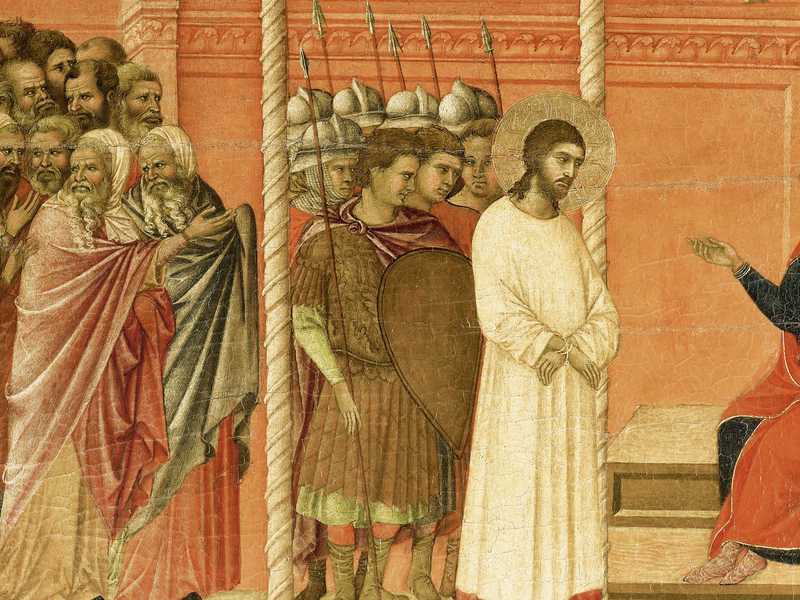
The texts of Christianity have been slowly at work, under the power of the Holy Spirit for 2000 years now. If we could be magically transported back into the world of two millennia ago, modern Americans would be shocked at the cruelty of that world. There was no concern for…

by Richard BledsoeMarch 18, 2013
aaron-burden-1ebsmyrau-s-unsplash
Luke

The Dysfunctional Family of the Gadarene Madman

The Story of the Gadarene Madman is told in all three synoptic Gospels (Matthew 8:28-34, Mark 5:1-20, Luke 8:26-37). Jesus ventures into a Gentile area when He passes over the Sea of Galilee. Upon disembarking from his boat, he is immediately met by a demon-possessed madman. Upon meeting Jesus, he…

by Richard BledsoeMarch 13, 2013
aaron-burden-1ebsmyrau-s-unsplash
Deuteronomy

Law and History: How to Read the Law of Moses

Part 1 of a multi-part series of studies on Deuteronomy 22:30-23:8. Eric Auerbach, in his classic work on Western literature, devotes his first chapter to contrasting Homer with the Bible. Of Homer, he writes of the “need of Homeric style to leave nothing which it mentions half in darkness and…

by Ralph Allan SmithMarch 12, 2013
markus-winkler-aid-xyrtlec-unsplash
Theopolis News

James Jordan in Korea, Japan

Trinity House Fellow James B. Jordan will be a speaker at an International Conference on Biblical Symbolism that will be held in Seoul on Monday, May 27 in 2013. He will address "The Importance of Biblical Symbolism and Symbolic Interpretation of the Bible." The conference will have three other speakers…

by Peter LeithartMarch 9, 2013

Showing page 197 of 309

See all

Showing page 5 of 43

See all

Death of the Death of God

Zizek ( The Monstrosity of Christ: Paradox or Dialectic? ) thinks that John Caputo and Giorgio Agamben are right to say that Nietzsche’s declaration of the death of God could only turn inside out. According to them ( After the Death of God ), “if there’s no overarching principle, that…

March 23, 2013

American exceptionalism

In his effort to “think with” Carl Schmitt ( Political Theology: Four New Chapters on the Concept of Sovereignty ), Paul Kahn uses a “sacrificial” conception of sovereignty to isolate differences between America and Europe, and between pre-modern and modern states. America v. Europe first (16-17): “To the question of…

March 23, 2013
History

Convenient bombing

Bauman ( Collateral Damage: Social Inequalities in a Global Age , 144-5) gives several examples of how the pressure of research and military planning lead to atrocities. One occurred in the German town of Wurzburg in March 1945, “when Nazi Germany was already on its knees and the speedy end…

March 23, 2013
History

Nagasaki Syndrome

In his Collateral Damage: Social Inequalities in a Global Age , Zygmunt Bauman refers to the work of Gunther Anders on the “Nagasaki syndrome,” which Anders warned carried “the fully and truly apocalyptic potential of ‘globicide.’” The Nagasaki syndrom “means that ‘what has been done once can be repeated over…

March 23, 2013

Punishment

Some punishments, Thomas says ( ST , I-II, 87), are punishments strictly speaking, some are satisfactory, some are medicinal. Punishment strictly speaking is the repression of order that retaliates against an offense committed against the order (art. 1). A violation of man’s own order of reason is punished by remorse…

March 22, 2013

A typology of Satanic attack

James Jordan has pointed out that the book of Revelation gives us seven names for Satan: Wormwood (8:10-11), the poisoner of wells; Abaddon and Apollyon (9:11), both of which mean “destroyer” but which speak of destruction of Hebrew and Greek worlds respectively; Dragon (12:1), devourer of children; Serpent (12:9, 15),…

March 21, 2013

Showing page 769 of 2212

Browse by Category

In Medias Res

Your weekly digest for all things Theopolis.

Donate

Theopolis is nearly 100% donor-supported. Consider joining us on our mission.