Theopolis Logo

Writing

Explore our collection of theological essays, biblical studies, and reflections on faith and culture.

See all
sixteen-miles-out-al48tflf4e8-unsplash
Food

Gluttony In The Bible (As Opposed To Gluttony In The American Church)

In the Bible, fatness is such a blessing, that it is especially hard to understand why wicked men are permitted to enjoy such a state. It requires a theodicy and faith in God. Thus: “For they have no pangs until death; their bodies are fat and sleek . They are…

by Mark HorneAugust 12, 2013

jeremy-yap-j39x2xx_8cq-unsplash
How to Worship

Biblical Worship (Video with James B. Jordan)

[fve]http://vimeo.com/71901553[/fve]

by Peter LeithartAugust 8, 2013
chris-bair-ndczc5739ck-unsplash
Deuteronomy

Holy Things for Holy People

The allusion to the Exodus story is contained in the first words of Deuteronomy 14:1 — “ye are the sons of Yahweh your God” — as well as in 14:2 in the use of the technical term translated “treasured possession,” “His own possession,” “peculiar people,” “precious people,” and so forth.…

by Ralph Allan SmithAugust 5, 2013
adam-and-eve-in-the-garden-of-eden-wenzel-peter
Deuteronomy

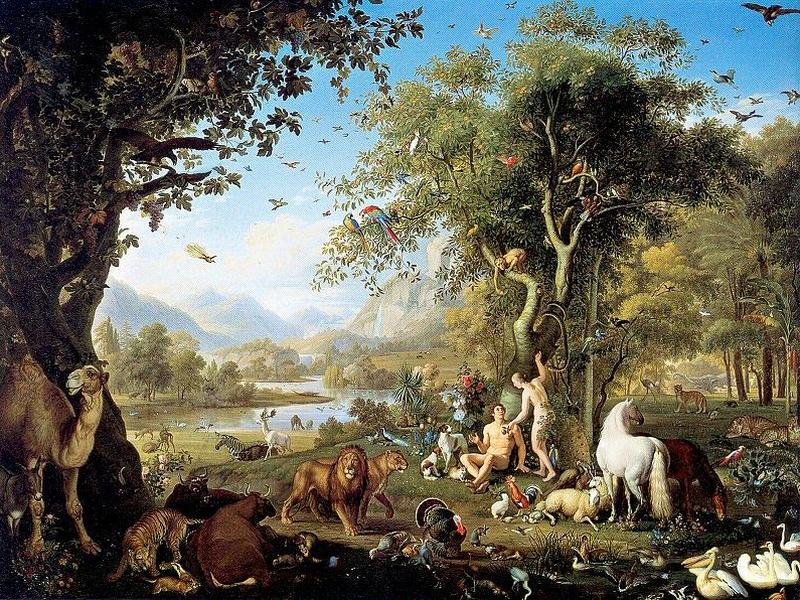
Forbidden Foods

I have argued that Deuteronomy 14:1-21 is an independent literary unit that applies the Third Word to the lives of Israelites from the time of Moses and Joshua. In this short pericope, Moses suggests broad and deep meaning by means of literary allusion to the stories of the creation and…

by Ralph Allan SmithJuly 31, 2013
david-weber-fwuo_zluhnw-unsplash
How to Worship

Pro-Sacramental Reformation

In his recently republished The New Creation , the late, delightful Herbert McCabe defends the priesthood of the plebs as roundly as anyone could want. Citing Hebrews, he claims that "there is an essential difference between the Christian community and the community of the Old Law, or any other religious…

by Peter LeithartJuly 29, 2013
eric-ward-7kqe_8meex8-unsplash
Augustine

Sexual Idolatry

Augustine famously prayed, “Our hearts our restless until they rest in You.” True indeed. Being creatures, we inherently sense our ontological poverty—our innate condition of dependence—and are compelled to find a sense of security. And it is also true—as Augustine’s own narrative painfully illustrates—that one of the things we most…

by Gerald HiestandJuly 24, 2013

Showing page 190 of 309

See all

Showing page 6 of 43

See all

Reconciling Reason and Faith

In Truth and Tolerance , Benedict XVI argues that the Western world is in a crisis that can only be solved if "reason and religion . . . come together again, without merging into each other" (144). He insists this isn't a matter of protecting the interests of religion, Rather,…

October 20, 2017

Future and the Christian Era

Dead time, Rosenstock-Huessy says, is entirely a product of the past, a result of a cause. That conception of time works for physics, but it fails to account for the reality of human time, which always involves surprise and a break with the past. Through speech, we initiate new times,…

October 19, 2017
timothy-eberly-djj49s6ud2o-unsplash

God Is Love

According to the doctrine of the Trinity, the ultimate source of all things, the God in whom we live, move and have our being, is both one and plural, one God in three persons. This has enormous implications for how we think of the world. In ancient philosophy, the highest…

October 19, 2017

God, Time, Eternity

Rosenstock-Huessy believes that God has a unique relationship to time that no human being has, but he describes this unique relationship in ways that are unusual for the Christian tradition. Instead of saying that God is “timeless,” he says that God is “pure time.” This suggestion is based on the…

October 18, 2017

Calendars and Cultural Memory

Modernity’s reduction of time to clock-time is not socially or psychically healthy. As Rosenstock-Huessy puts it: "We need the intersecting of many rhythms of time. Our stomach and our consciousness respond to a 24-hour rhythm. Our faith and our hopes respond to centuries. Our noble passions like the love of…

October 17, 2017

Freedom To Unfreedom

Enlightenment secularism is committed to “freedom” as its overarching value. In an address on “Freedom and Truth” (published in The Essential Pope Benedict XVI ), Benedict XVI describes the Enlightenment as a “will to emancipation” (citing Kant’s sapere aude ). Kant’s plea for philosophical freedom has political dimensions. According to…

October 17, 2017

Showing page 132 of 2212

Browse by Category

In Medias Res

Your weekly digest for all things Theopolis.

Donate

Theopolis is nearly 100% donor-supported. Consider joining us on our mission.