Theopolis Logo

Writing

Explore our collection of theological essays, biblical studies, and reflections on faith and culture.

See all
31-03-0213
Hermeneutics

Apocalyptic Eyes

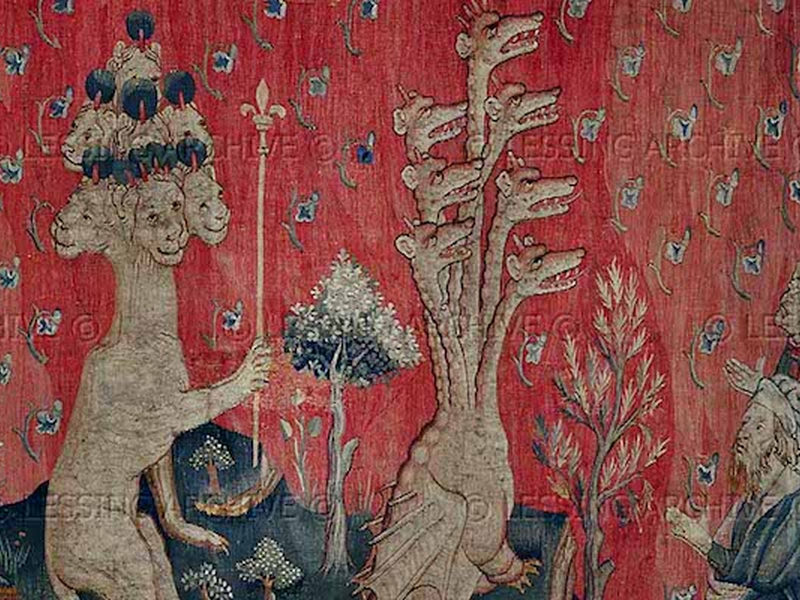
Flying scrolls. Red horses. Beasts coming out of the sea. Winged women. The list goes on. Apocalyptic literature in the Bible is like a cross between science fiction and Marvel comics. And the Bible has a fair bit of this sort of thing. Daniel sees visions in Babylon, Zechariah sees…

by Toby SumpterNovember 4, 2014

bhm-skyline-2
Theopolis News

New Name, New Look

Trinity House Institute has taken a new name, the Theopolis Institute. This striking new name expresses our unique vision and mission and captures the unified purpose behind all our specific programs and activities. We still have Bible, liturgy, and culture in our tagline. We still offer the same courses on…

by TheopolisNovember 4, 2014
istock_000012860926small
Atonement

Not Fearing the Devil

Adam Kotsko offers a socio-political variation on the Christus Victor atonement theory in his 2010 study, The Politics of Redemption: The Social Logic of Salvation . He does this by explaining "the devil" in terms of the Hegelian concept of "objective spirit," Geist . As Kotsko puts it, Geist "refers…

by Peter LeithartOctober 13, 2014
jez-timms-8muutamcwu4-unsplash
Leviticus

The Meaning of Sacrifice

Two factors keep Nahtali Meshel from discussing the meaning of sacrifice until late in his The "Grammar" of Sacrifice . The first has to do with the texts he draws from: "P says little about the meaning of its rituals" (174). The other has to do with the grammatical theory…

by Peter LeithartOctober 8, 2014
jez-timms-8muutamcwu4-unsplash
Leviticus

Praxemics

Chapter 5 of Naphtali Meshel's The "Grammar" of Sacrifice focuses on "praxemics," the physical actions of sacrificial ritual. Praxemes are constituted by six elements: an "atomact," an elementary physical act or gesture; an actor; an object that is acted up; a target for the action and often for the object…

by Peter LeithartOctober 6, 2014
markus-winkler-aid-xyrtlec-unsplash
Leviticus

Jugation and Hierarchy

Two chapters of Naphtali Meshel’s The “Grammar” of Sacrifice cover what he calls “jugation” and “hierarchies.” The first involves the addition of other materials to an animal offering. Jugates include wine, cereal, and oil that are added to the animals (zoemes) that are offered in sacrifice. Some jugates are coordinated…

by Peter LeithartOctober 1, 2014

Showing page 167 of 309

See all

Showing page 6 of 43

See all

Names and Words

One of the key distinctions in Rosenstock-Huessy’s grammatical sociology is that between names and words. In his brief discussion of this distinction in The Christian Future (CF), he begins with an expression of his horror at John Dewey’s notion that “We have to find another set of words to formulate…

October 11, 2017

Rehoboam's Cities and House

After the northern tribes abandon the house of David (2 Chronicles 10), Rehoboam settles in Jerusalem (2 Chronicles 11:5). He builds cities for defense and for storage (11:5-12), receives the Levites and priests who flee from idolatrous Israel (11:13-17), marries and has children (11:18-23). The chapter moves from land to…

October 10, 2017

Language and Relation

Underlying Rosenstock-Huessy's entire discussion of the diseases of speech is the assumption that language establishes relations. In this, Rosenstock-Huessy is again assaulting one of the premises of modernity, namely, the centrality of the Ego, and the consequent notion that language exists so that the Ego can express its thoughts and…

October 10, 2017

Learning to Sit in the Sun

My Firstthings.com column last week was about Scottish poet Thomas A. Clark (not to be confused with the American poet Tom Clark). Here are the first few paragraphs: T homas A. Clark is ambitious. In a short essay on “Imaginative Space,” the Scottish poet describes our “late culture,” which is…

October 9, 2017

Purity and Holiness

Though sometimes conflated, purity and holiness aren't the same thing in the Old Testament. There are two overlapping spectra: A spectrum from profane or common on the one side and holiness/sanctity on the other, and a spectrum with unclean/impure to clean/pure on the other. The difference is evident in the…

October 9, 2017

Logos Enables Dia-logos

Truth has a bad rap these days. A claim to know truth sounds dogmatic, oppressive, perhaps even racist. Truth-claims shut down dialogue: If you already know the truth, there's nothing for us to talk about. In his 2009 encyclical Caritas in Veritate , Benedict XVI took on this hostility to…

October 6, 2017

Showing page 135 of 2212

Browse by Category

In Medias Res

Your weekly digest for all things Theopolis.

Donate

Theopolis is nearly 100% donor-supported. Consider joining us on our mission.