Theopolis Logo

Writing

Explore our collection of theological essays, biblical studies, and reflections on faith and culture.

See all
tanner-mardis-xuxghzhibn4-unsplash-1-2
Biblical Studies

Tweets-turned-Notes on the Bible’s Chronology

Summary In what follows, I will consider the “year-stamps” employed in Scripture, i.e., statements of the form, “Such-and-such an event took place in the Xth year of Y.” In the process, I will suggest some ways in which the Biblical narrative might relate to events in the extra-Biblical world, though…

by James BejonJuly 16, 2019
durer-prodigal-son-2
Luke

Perspectives on the Prodigal, (Part 2)

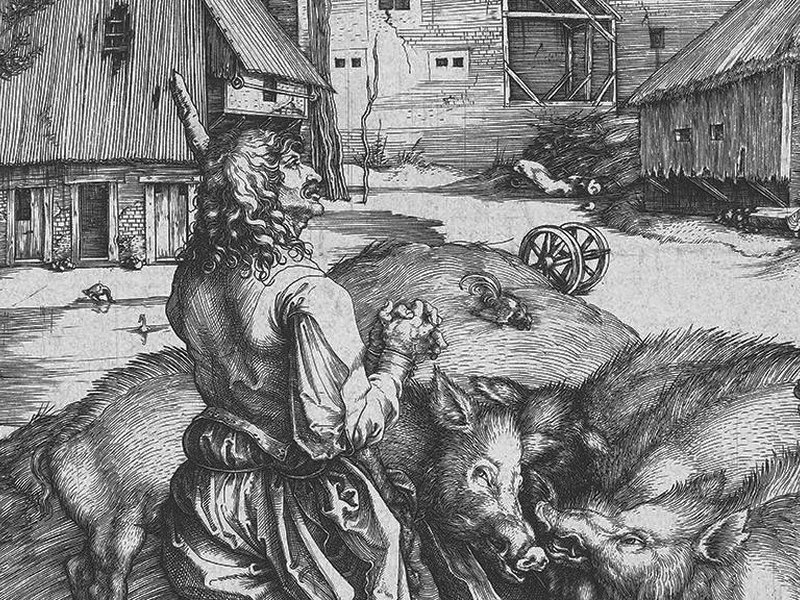
In the first essay on the parable of the Prodigal Son, I suggested that the problems commentators and others encounter in interpreting Jesus three-part parable are not accidental. These are not just problems in our ignorance of cultural background. They are intentional features of the stories —stories designed to poke…

by Ralph Allan SmithJuly 11, 2019
durer-prodigal-son-2
Luke

Perspectives on the Prodigal, (Part 1)

The story of the Prodigal Son is perhaps the most well-known story in the Bible. As others have observed, it may also be one of the most misunderstood. In two short essays, I will point out features of this story that are commonly neglected, aspects of Jesus’ parable that might…

by Ralph Allan SmithJuly 9, 2019
de-rijke-man-en-de-arme-lazarus-by-jacopo-da-ponte-16th-century
Luke

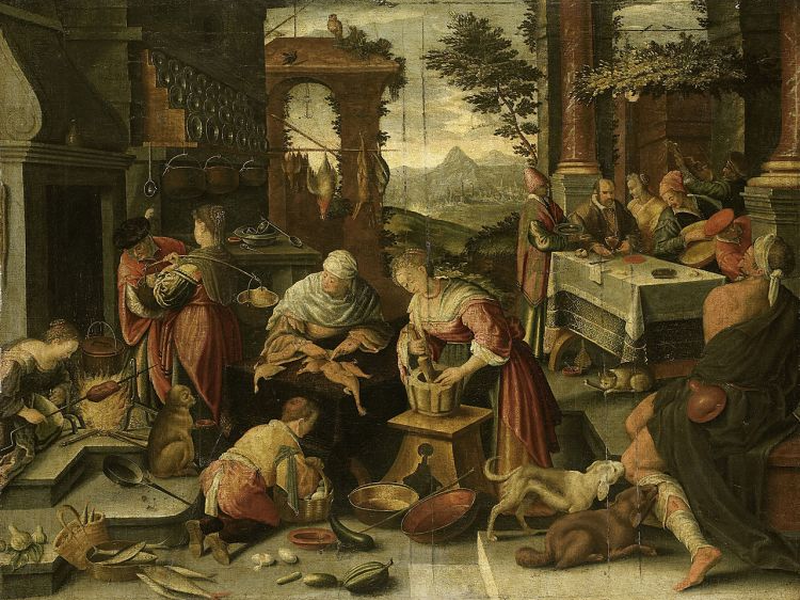
Lazarus and the Rich Man

The parable of Lazarus and the nameless rich man is not an independent story. It is part of a long context that begins in Luke 15:1, where Jesus is eating with tax collectors and sinners and the scribes and Pharisees grumble. In response to their hardheartedness, Jesus tells a three-part…

by Ralph Allan SmithJuly 4, 2019
aaron-burden-uynrnfdkjwg-unsplash
Luke

Everybody has Dropsy - Luke 14:1-24

The Bible is written so that even when a reader cannot pick up on what might be deeper or more detailed aspects of a text, there is virtually always a message to be heard. In the ancient world, where the “reader” of Scripture would likely be a church official facing…

by Ralph Allan SmithJuly 2, 2019
communion
Biblical Theology

Fruit Trees and Grain Plants

The distinction between garden (or vineyard) and field begins in Genesis 2. This relates to the ordering of the formless world. Plants of the field are contrasted with the garden planted by God in Genesis 2:5&8. Later on, under the Old Covenant the Israelites will be required to keep their…

by James B. JordanJune 27, 2019

Showing page 77 of 309

See all

Showing page 6 of 43

See all
Philosophy

The Will Behind the Veil

Julian Young offers a neat summary of the Arthur Schopenhauer (the "first European Buddhist") at the TLS . Schopenhauer's philosophy can be pinpointed by contrast with two better-known thinkers. Against Hegel's fantastic " Bildungsroman , a story of the ever-increasing realization of 'reason' in human affairs," Schopenhauer offered a thoroughgoing,…

September 15, 2017

Toscanini Rules

"How is it possible," asks Terry Teachout , "that a man who made his conducting debut when Grover Cleveland was president should still be sufficiently well known and revered that most of his recordings remain in print to this day?" Teachout thinks that Harvey Sachs's Toscanini: Musician of Conscience comes…

September 15, 2017

Self-Published Borges

The first published book of Jorge Luis Borges, the great Argentinian poet and short-story writer, was Fervor de Buenos Aires . Borges later wrote, “ Fervor de Buenos Aires foreshadows everything I would do afterward.” It was a slapdash production, Borges claimed in his autobiography: “The book was actually printed…

September 15, 2017

Secular Salvation

John Colmer observes in his study of E.M. Forster that Forster's novels transpose Christian terms into a secular key: "a whole set of religious terms - salvation, grace, conversion, transfiguration - become assimilated into an essentially secular vision. . . . Men now seek their happiness on this earth not…

September 15, 2017

Fall of the Creative Class?

Richard Florida's 2002 Rise of the Creative Class was a manifesto for urban hipness. As Joseph Bottum sums up the book , Florida argued that "cities thrive when these creative types are allowed to build the creative economy. Their tolerance for alternative lifestyles and their acceptance of unconventional housing broke…

September 15, 2017

Medieval Tolerance

"Medieval tolerance" sounds like an oxymoron. Everyone knows the medievals were in tolerant. Everyone knows that tolerance was invented in the modern world. Everyone who knows such things is wrong. Istvan Bejczy demonstrates in a 1997 essay that medieval thinkers had a well-developed concept of tolerance. He goes further than…

September 14, 2017

Showing page 144 of 2212

Browse by Category

In Medias Res

Your weekly digest for all things Theopolis.

Donate

Theopolis is nearly 100% donor-supported. Consider joining us on our mission.