Theopolis Logo

Writing

Explore our collection of theological essays, biblical studies, and reflections on faith and culture.

See all
aaron-burden-h8s0pf2rcqs-unsplash
Galatians

The Restoration of the Galatians

While controversies over the writings of Paul continue in various corners of the intellectual globe, the word of God given through Paul and his scribe and all of the church’s interpreters and translators over the last two millennia is still readily available to the lofty and the lowly. Paul, as…

by Grace LangnessMarch 25, 2013

kiwihug-l4gw27xzn1i-unsplash
Deuteronomy

Law and History: How to Read the Law of Moses (Part 2)

The second in a series of studies in Deuteronomy. Deuteronomy 22:30: A man shall not take his father’s wife, and shall not uncover his father’s wing (Hebrew: kanaf ). There are a number of unusual features in this law that mark it out from the previous context, indicating that it…

by Ralph Allan SmithMarch 20, 2013
200403-moss-pilate-tease_pncfq5
History

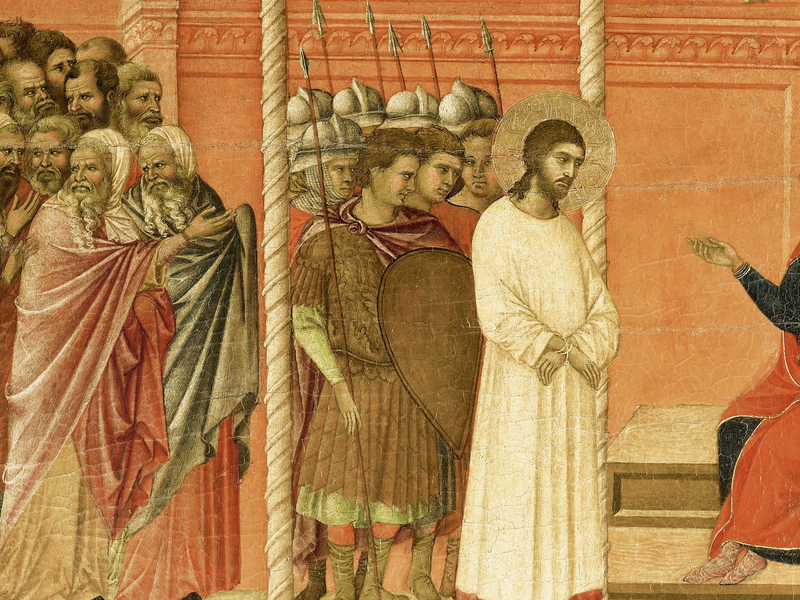
Victimhood and the Gospel

The texts of Christianity have been slowly at work, under the power of the Holy Spirit for 2000 years now. If we could be magically transported back into the world of two millennia ago, modern Americans would be shocked at the cruelty of that world. There was no concern for…

by Richard BledsoeMarch 18, 2013
aaron-burden-1ebsmyrau-s-unsplash
Luke

The Dysfunctional Family of the Gadarene Madman

The Story of the Gadarene Madman is told in all three synoptic Gospels (Matthew 8:28-34, Mark 5:1-20, Luke 8:26-37). Jesus ventures into a Gentile area when He passes over the Sea of Galilee. Upon disembarking from his boat, he is immediately met by a demon-possessed madman. Upon meeting Jesus, he…

by Richard BledsoeMarch 13, 2013
aaron-burden-1ebsmyrau-s-unsplash
Deuteronomy

Law and History: How to Read the Law of Moses

Part 1 of a multi-part series of studies on Deuteronomy 22:30-23:8. Eric Auerbach, in his classic work on Western literature, devotes his first chapter to contrasting Homer with the Bible. Of Homer, he writes of the “need of Homeric style to leave nothing which it mentions half in darkness and…

by Ralph Allan SmithMarch 12, 2013
markus-winkler-aid-xyrtlec-unsplash
Theopolis News

James Jordan in Korea, Japan

Trinity House Fellow James B. Jordan will be a speaker at an International Conference on Biblical Symbolism that will be held in Seoul on Monday, May 27 in 2013. He will address "The Importance of Biblical Symbolism and Symbolic Interpretation of the Bible." The conference will have three other speakers…

by Peter LeithartMarch 9, 2013

Showing page 197 of 309

See all

Showing page 6 of 43

See all

TheoUrban Dreams

The following was delivered as a Convocation Address at the beginning of the 2017-18 Theopolis Institute's Junior Fellows Program on August 14, 2017 . Theopolis is the embodiment of a dream. Our name expresses the contents of that dream. We dream of a polis , a city. Every city is…

August 15, 2017

Hearts Prepared

Hezekiah's Passover (2 Chronicles 30) has a prominent place in the Chronicler's account of his reign. As William Johnstone points out ( 1 & 2 Chronicles ), Hezekiah's reign moves out from the temple to the city to the nations. He reopens and purifies the house of Yahweh (2 Chronicles…

August 15, 2017

Welcome to Leithart

Welcome to Leithart the blog. For those who are coming to the blog for the first time, please allow me to introduce myself. I am Peter Leithart, President of the Theopolis Institute , a study center and leadership training program based in Birmingham, Alabama. After spending several decades in the…

August 14, 2017
Gratitude

Pillars of Gratitude

Philip Watkins ( Gratitude and the Good Life ) identifies three “pillars of gratitude.” These are components of gratitude as an emotional “trait,” as opposed to gratitude expressed in response to specific good received or as an emotional state: “These are presumed to be three subordinate facets that contribute to…

August 11, 2017

Inventing “Emotion”

No one before the twentieth century, writes Robert Solomon ( The Passions ), paid serious philosophical attention to the emotions. There's a good reason for that, writes Thomas Dixon ( From Passions to Emotions ): The category “emotion” didn't exist prior to the 19th century. Between 1800 and 1850, there…

August 11, 2017
Epistemology

Dehumanizing Skepticism

God made us to be knowers. We long to know. Esther Meek argues ( Longing to Know ) that the frustration of this desire is one of the effects of skepticism and relativism: “To be human is to make sense of experience. There are voices today that would discourage the…

August 11, 2017

Showing page 153 of 2212

Browse by Category

In Medias Res

Your weekly digest for all things Theopolis.

Donate

Theopolis is nearly 100% donor-supported. Consider joining us on our mission.