Theopolis Logo

Writing

Explore our collection of theological essays, biblical studies, and reflections on faith and culture.

See all
tanner-mardis-xuxghzhibn4-unsplash-1-2
Biblical Studies

Tweets-turned-Notes on the Bible’s Chronology

Summary In what follows, I will consider the “year-stamps” employed in Scripture, i.e., statements of the form, “Such-and-such an event took place in the Xth year of Y.” In the process, I will suggest some ways in which the Biblical narrative might relate to events in the extra-Biblical world, though…

by James BejonJuly 16, 2019
durer-prodigal-son-2
Luke

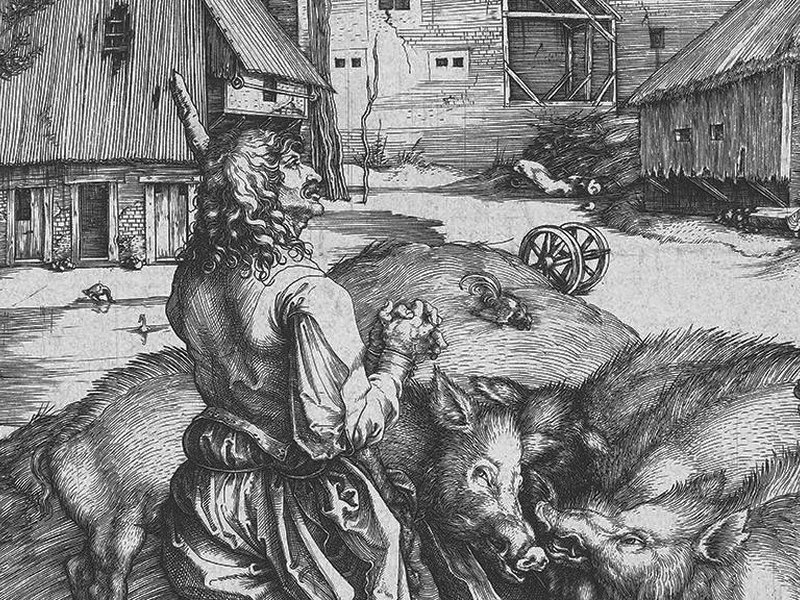
Perspectives on the Prodigal, (Part 2)

In the first essay on the parable of the Prodigal Son, I suggested that the problems commentators and others encounter in interpreting Jesus three-part parable are not accidental. These are not just problems in our ignorance of cultural background. They are intentional features of the stories —stories designed to poke…

by Ralph Allan SmithJuly 11, 2019
durer-prodigal-son-2
Luke

Perspectives on the Prodigal, (Part 1)

The story of the Prodigal Son is perhaps the most well-known story in the Bible. As others have observed, it may also be one of the most misunderstood. In two short essays, I will point out features of this story that are commonly neglected, aspects of Jesus’ parable that might…

by Ralph Allan SmithJuly 9, 2019
de-rijke-man-en-de-arme-lazarus-by-jacopo-da-ponte-16th-century
Luke

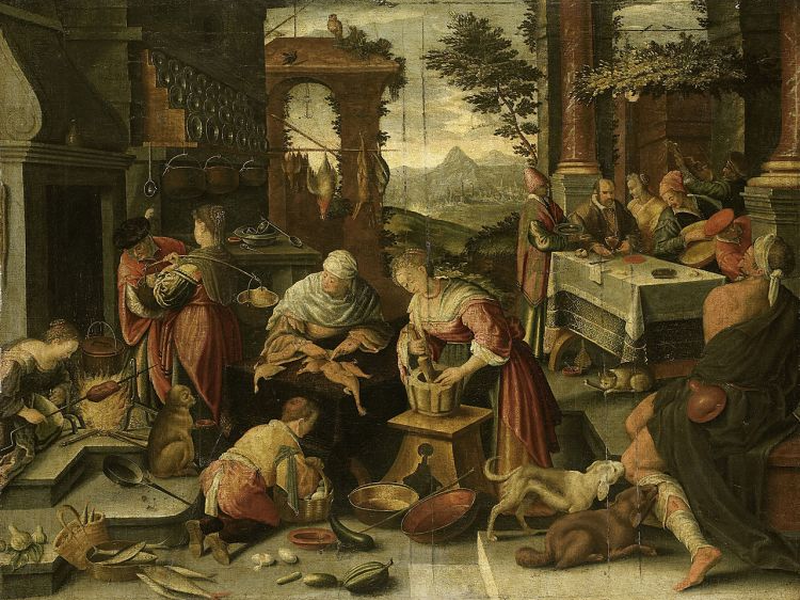
Lazarus and the Rich Man

The parable of Lazarus and the nameless rich man is not an independent story. It is part of a long context that begins in Luke 15:1, where Jesus is eating with tax collectors and sinners and the scribes and Pharisees grumble. In response to their hardheartedness, Jesus tells a three-part…

by Ralph Allan SmithJuly 4, 2019
aaron-burden-uynrnfdkjwg-unsplash
Luke

Everybody has Dropsy - Luke 14:1-24

The Bible is written so that even when a reader cannot pick up on what might be deeper or more detailed aspects of a text, there is virtually always a message to be heard. In the ancient world, where the “reader” of Scripture would likely be a church official facing…

by Ralph Allan SmithJuly 2, 2019
communion
Biblical Theology

Fruit Trees and Grain Plants

The distinction between garden (or vineyard) and field begins in Genesis 2. This relates to the ordering of the formless world. Plants of the field are contrasted with the garden planted by God in Genesis 2:5&8. Later on, under the Old Covenant the Israelites will be required to keep their…

by James B. JordanJune 27, 2019

Showing page 77 of 309

See all

Showing page 6 of 43

See all

Absenteeism

N ineteenth-century radical Henry Hunt was once offered a clerical post worth a thousand pounds a year. His duties? Nothing “for six days out of seven but to hunt, shoot, and fish by day, and play cards, talk scandal with the old maids of the parish, and win the money…

July 21, 2017

Painter of Passion

R aphael is, we might think, a painter of abstract and ethereal scenes. Andrew Butterfield says in a review of a recent showing of Raphael's drawings that this impression is due to our lack of direct exposure to Raphael's work. Looked at up close, Raphael's drawings reveal an artist obsessed…

July 21, 2017

Austen's Defects?

J ane Austen has been in the news this week, what with the 200th anniversary of her death on July 18, 1817. To mark the day, the TLS republished a 1913 review of an Austen biography by Virginia Woolf. Woolf has some very insightful things to say about Austen, but…

July 21, 2017

Cormac McCarthy's Gnosticism

A TLS review of two books of the Cambridge Companion to Cormac McCarthy notes the hints of holiness in his novels: Often in his work . . . there are residual glimmers of the numinous. McCarthy, who was raised a Roman Catholic, is often read as an unconventional religious writer,…

July 21, 2017

Misrepresenting Moltmann?

I n his opening essay in Christian Dogmatics , co-editor Mike Allen quotes George Hunsinger's claim that Jurgen Moltmann, Wolfhart Pannenberg, and Eberhard Jungel are all guilty of historicizing eternity and subjecting it to eschatology. They all start from what Allen calls a “hard” or “ontological” interpretation of Rahner's Rule…

July 21, 2017

Coleridge on Utilitarianism

R esponding to a piece defending utilitarianism by one O. P. Q. in the Morning Chronicle, Coleridge writes : He is for the greatest possible happiness for the greatest possible number, and for the longest possible time! So am I; so are you, and every one of us, I will…

July 21, 2017

Showing page 160 of 2212

Browse by Category

In Medias Res

Your weekly digest for all things Theopolis.

Donate

Theopolis is nearly 100% donor-supported. Consider joining us on our mission.