Theopolis Logo

Writing

Explore our collection of theological essays, biblical studies, and reflections on faith and culture.

See all
screen-shot-2020-07-28-at-7-12-05-am
Wisdom

iMago Moi

So God created man in His own image, in the image of God He created him; male and female He created them. Genesis 1:27 In an ever-increasing barrage of self-obsession and tailor-made realities, how does the Christian navigate the waters of being someone who experiences life in the first person…

by Garrett SoucySeptember 29, 2020

img_4726-copy
Economics

Theses on Church Music and Economics

American church music is in a slump. To get out of the slump, we need a 10-year plan, a 50-year plan, and a 100-year plan. Many are doing extraordinary work on reforming church music in the near-term, and a few in the mid-term. What is desperately needed is the 100-year…

by John AhernSeptember 22, 2020
lazarus-2-2
Parables

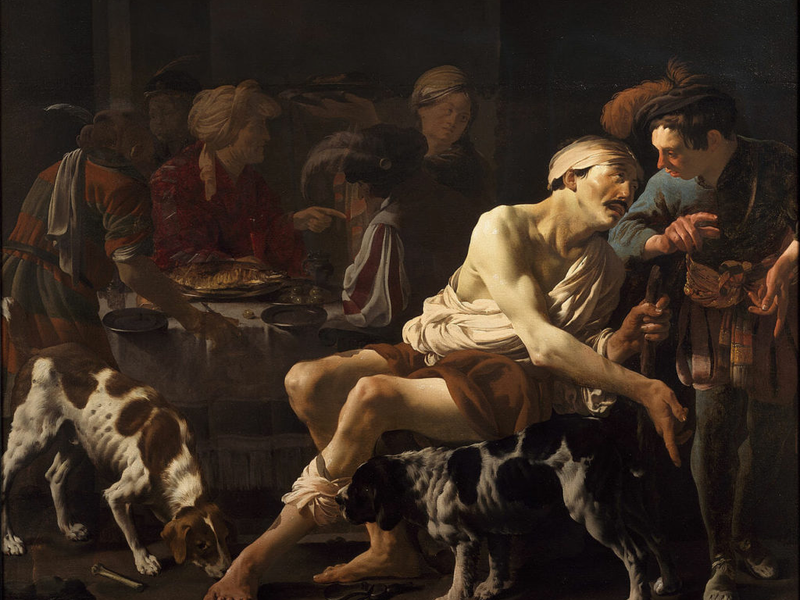
The Parable of Lazarus and the Rich Man

The following is an excerpt from The Maker Versus the Takers: What Jesus Really Said About Social Justice and Economics ¸ by Jerry Bowyer (New York, Fidelis Books, Post Hill Press, 2020), release date Sept. 15 th . The section below argues that the ‘Rich Man’ in the parable refers…

by Jerry BowyerSeptember 15, 2020
absaloms_death
Biblical Studies

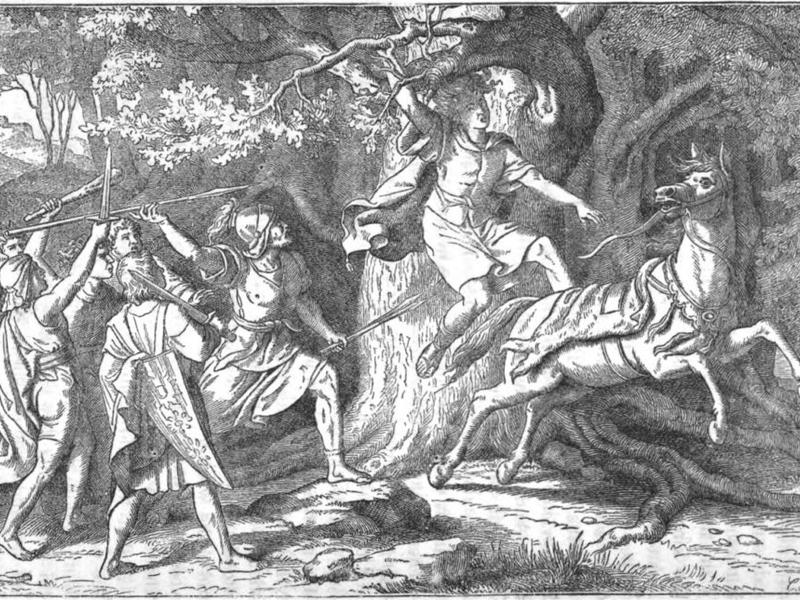
Death on a Tree: Absalom as Jesus-Type

Could Absalom be a Christ-type? If you know much about the Bible, you likely have an immediate aversion to even the possibility of answering this question in the affirmative. Absalom was third among David’s sons, while Amnon—his brother from another mother—was first (2 Sam. 3:2-3). As Absalom’s story begins, it…

by Eric RobinsonSeptember 8, 2020
giveusbarabbas
Biblical Studies

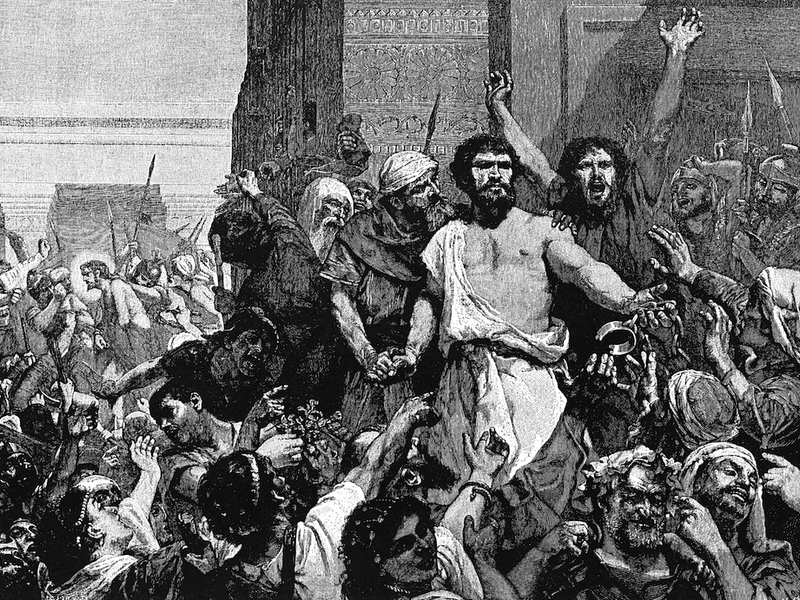
Barabbas

All four Gospels not only associate Barabbas and Jesus quite unabashedly, they do so emphatically and with a deep theological message. The scene is well-known. In His trial before Pontius Pilate, though Jesus had been declared innocent more than once, there seemed to be no hope of releasing Him. Pilate…

by Ralph Allan SmithSeptember 1, 2020
jim-jordan-teaching-2
Theopolis News

Announcement: The James B. Jordan Prize

The Theopolis Institute is pleased to announce the second round of the James B. Jordan Prize to honor outstanding doctoral dissertations in biblical theology. James Jordan is one of the most insightful biblical scholars of our time. The Jordan Prize exists to encourage more of the deep Scriptural investigation of…

by TheopolisAugust 31, 2020

Showing page 63 of 309

See all

Showing page 6 of 43

See all
History

Converted Jerusalem

In his fascinating Rise of Christianity , Rodney Stark cites estimates that there were between 10,000 and 20,000 inhabitants of Jerusalem in the first century. Stark uses this to falsify Luke’s claims that there were 5000 Christians in Jerusalem (Acts 4:4) and “many thousands” of Jews (Acts 21:20): “Had there…

March 30, 2007

Hebraic hermeneutics

One Rhonda Wauhkonen discusses Nicholas of Lyra’s “Hebraic” semiotics and hermeneutics in a 1992 article on Chaucer. She begins by contrasting Augustine’s signum/res distinction to Lyra’s Hebraic viewpoint: “In the Hebrew system as evidenced in Scripture and as adapted by Nicholas, such stratification of signification did not exist, for the…

March 29, 2007

Last and first

Nicholas of Lyra is known for his notion of a “double literal” sense to Scripture. For him, interpretation ad litteram includes both the historical and the doctrinal/christological senses, and he suggests that the ancient Hebrews could well have seen the Messianic sense as the literal sense. He also suggests that…

March 29, 2007

Nicholas of Lyra’s afterlife

In Book 3 of Gargantua and Pantagruel, Rabelais attributes an odd opinion to the 14th-century exegete, Nicholas of Lyra: “Pantagruel, having wholly subdued the land of Dipsody, transported thereunto a colony of Utopians, to the number of 9,876,543,210 men, besides the women and little children, artificers of all trades, and…

March 29, 2007

Nicholas of Lyra’s afterlife

In Book 3 of Gargantua and Pantagruel, Rabelais attributes an odd opinion to the 14th-century exegete, Nicholas of Lyra: “Pantagruel, having wholly subdued the land of Dipsody, transported thereunto a colony of Utopians, to the number of 9,876,543,210 men, besides the women and little children, artificers of all trades, and…

March 29, 2007

Thomas on the Parable of the Workers

Steinmetz summarizes Thomas’s remarkably “NTWrightian” commentary on Matthew 20:1-16. While acknowledging an Origenist tradition that sees the hours as moments of an individual life, Thomas is more interested in the Irenaean tradition that interprets the parable in terms of redemptive history: “The hours mentioned in the parable are not stages…

March 29, 2007

Showing page 1699 of 2212

Browse by Category

In Medias Res

Your weekly digest for all things Theopolis.

Donate

Theopolis is nearly 100% donor-supported. Consider joining us on our mission.